Google’s September Spam Update Is Complete, & Three AI Launches Follow

Last updated:
|
11 minutes readKey Takeaways
- Google’s September 2026 spam update officially finished rolling out on October 8 after almost two weeks, with several periods of ranking volatility reported throughout the rollout.
- Shopify now automatically enrols eligible stores in every new AI shopping channel it adds, including direct checkout, unless merchants opt out manually.
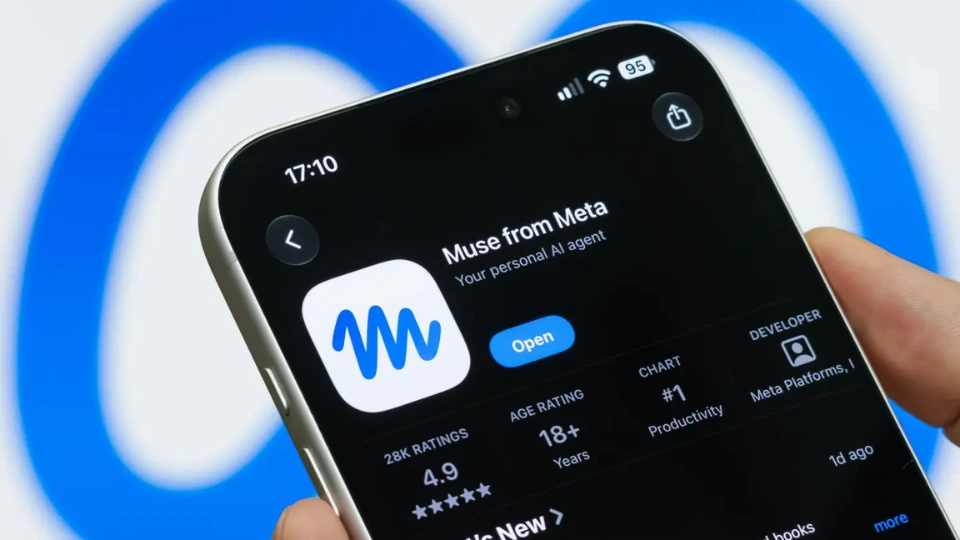
- Meta launched Muse for Small Business, an agentic AI tool that connects with apps like Canva, Stripe and Shopify to help SMBs manage content, finances and customer communications.
- LinkedIn is testing a Creator Discovery tool inside its Creator Marketplace, adding filters for industry, job function and audience demographics to help B2B brands find the right creators.
- Pinterest shared guidance for the post-holiday period, recommending brands shift creative from gifting to self-focused, planning-oriented messaging once Christmas passes.
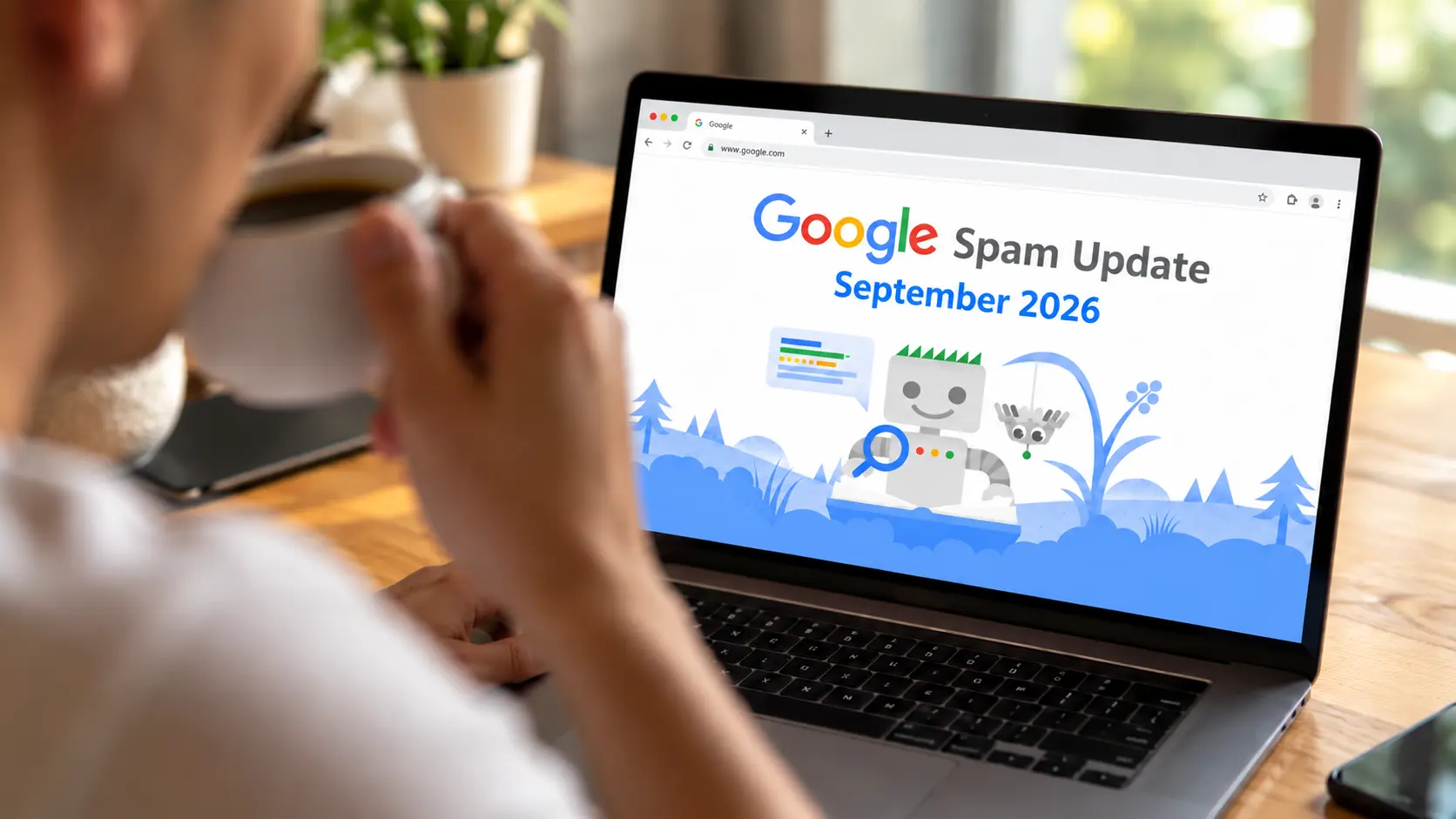
Google’s September 2026 spam update has officially finished rolling out. For any brand or digital marketing agency tracking SEO performance, that gives us a much clearer window for reviewing its impact.
We covered the update when Google first announced it on September 24. Now that the rollout has ended, marketers can see when the strongest ranking volatility appeared and whether those changes lasted. Shopify has also changed how stores enter AI shopping channels. Meanwhile, Meta, LinkedIn and Pinterest have introduced new AI, creator and campaign tools.
Whether you manage your marketing in-house or work with a digital marketing agency, these developments deserve more than a place on the watchlist.
Google’s September Spam Update Finishes After a Two-Week Rollout
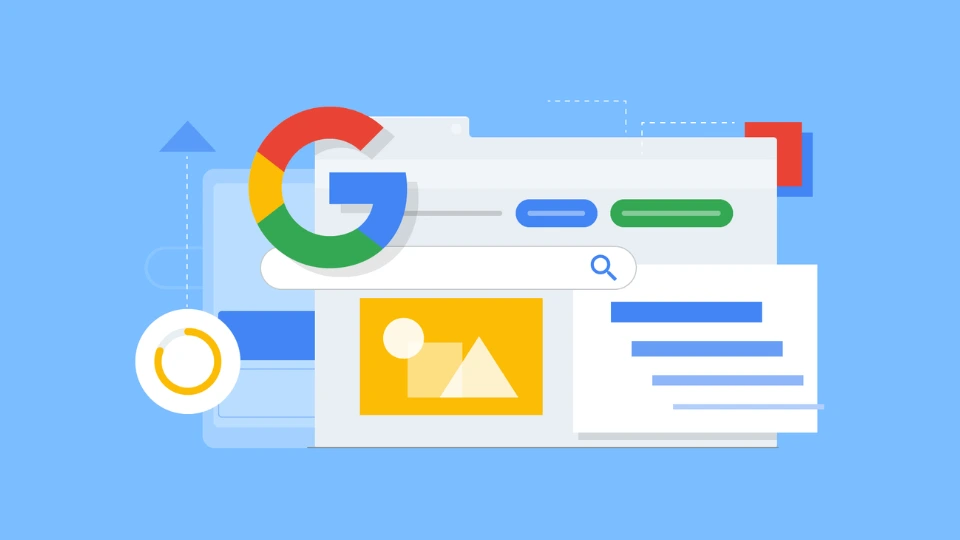
When we first covered Google’s September 2026 spam update, the rollout had only just begun.
Google said the update could take up to two weeks. That already made it longer than the previous spam updates seen earlier this year.
The rollout is now complete. Google confirmed that the update finished on October 8 after starting on September 24. Search Engine Roundtable reported several periods of stronger ranking volatility during that window. Those periods included September 25 to 27, September 30, and October 4 to 6.
Some parts of the SEO community described these movements as separate phases. Google, however, has not announced a second or third phase.
Instead, Google continues to describe it as one global spam update affecting all languages. The update targets sites that violate its existing spam policies.
The gurus’ take
The biggest difference now is simple: we have the full rollout window. When the update first launched, businesses had good reason to avoid reacting too quickly. Rankings were still moving, and early changes could easily reverse.
Now that Google has confirmed completion, you can review performance across the full September 24 to October 8 period. Look for changes that continued after the rollout ended. Those matter more than temporary movements during individual days.
The reported volatility periods can still help with your analysis. Just avoid treating them as separate Google-confirmed phases.
Google ran one spam update over nearly two weeks. It has not announced a new spam policy or identified a specific new tactic behind it. If rankings or organic traffic moved significantly, start with the affected pages and queries. Then look for patterns across templates, topics and sections of your site.
A digital marketing agency with strong SEO expertise can also help separate update-related movement from technical issues or changes in search demand.
Your action plan
- Review rankings, impressions, clicks and organic traffic before September 24 and after October 8. Focus on sustained changes rather than daily fluctuations.
- Compare major movements with September 25 to 27, September 30 and October 4 to 6. Remember that Google did not define these as separate phases.
- If visibility dropped, identify the pages, templates, queries or site sections that experienced the biggest changes.
- Avoid assuming that a site-wide issue caused every decline. Some areas of the site may have moved while others remained stable.
- Google has not announced a new spam policy for this update. Keep your focus on its existing spam guidance.
- Google says recovery after a spam update can take months. Its systems need time to recognise sustained improvements after you address any issues.
Shopify’s New Default: Automatic Enrolment in AI Shopping Channels
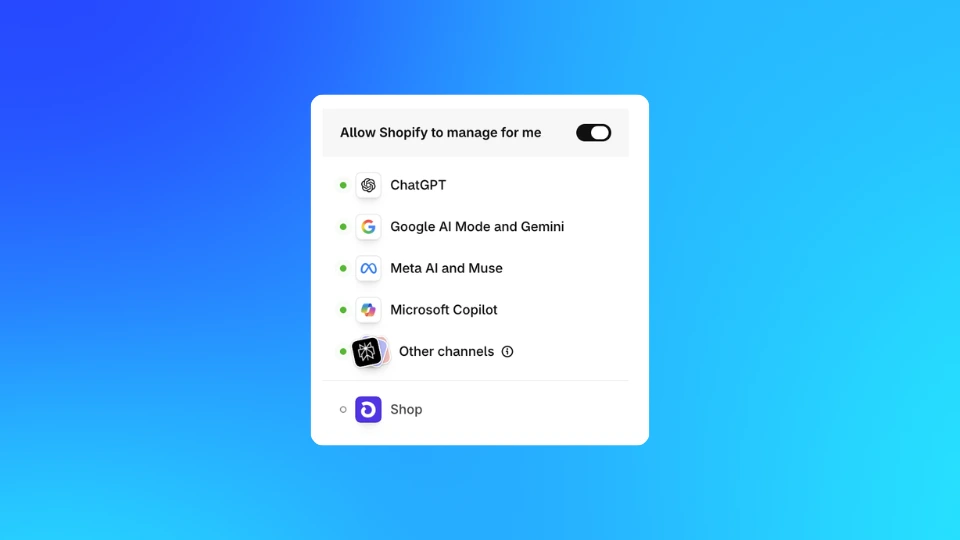
Shopify has confirmed a significant change to how eligible stores enter AI shopping channels.
A setting called “Allow Shopify to manage for me” now appears in eligible Shopify stores and switches on by default. When enabled, Shopify can automatically enrol a store in new AI shopping channels as they become available.
That explains how Meta became a connected channel for eligible stores on September 8. Meta launched its Muse AI agent on the same day.
Shopify’s changelog also confirmed that Shopify Catalog shared eligible product data with Meta by default. Eligible stores can also use direct checkout on Meta, Google AI Mode and Gemini, and Microsoft Copilot.
That means shoppers can complete a purchase inside the AI or chat experience. They may never need to visit the merchant’s website.
These channels do not currently charge a fee. Meta, however, has indicated that it may introduce a transaction-based fee later.
Merchants who switch off the default setting gain more control. Shopify then shows separate settings for catalogue access, new-channel enrolment and direct checkout.
The gurus’ take
Tracking deserves more attention here. Shopify has confirmed that standard analytics and advertising pixels do not fire during direct checkout on Google, Copilot or Meta.
The reason is straightforward. The customer completes the purchase without visiting the merchant’s website as that can create a measurement gap.
A retailer relying only on Google Analytics or an advertising dashboard could miss sales that Shopify records elsewhere.
Any digital marketing agency managing ecommerce performance will need to account for that gap when reporting on acquisition and revenue.
There is also a bigger question around control. Automatic enrolment can place a merchant’s products inside a new AI shopping environment before the marketing team reviews it.
Brands once decided where they wanted to appear. Now they may need to actively opt out of channels they do not want. For businesses investing in AI search optimisation, that makes channel governance just as important as visibility.
Your action plan
- Check your Agentic settings now: Log into Shopify admin under Sales channels, find the Agentic section, and confirm whether auto-enrolment and direct checkout are switched on.
- Reconcile sales data across sources: Check the Shopify admin’s orders list filtered by channel against your Google Analytics and ad dashboards to see whether direct checkout sales are being missed elsewhere.
- Decide deliberately, not by default: Review each connected channel individually and choose which ones fit your brand and support needs, rather than leaving every setting as Shopify configured it.
Meta Launches Muse AI, a Creative Tool Built for SMBs
Meta has launched Muse for Small Business, extending its personal AI agent into a dedicated tool for small and medium business owners. Muse connects with a growing list of partner apps, including Zoom, Figma, Canva, Stripe, GitHub, QuickBooks, Slack and Shopify. These let business owners manage tasks through conversational requests rather than switching between separate platforms.
Meta has highlighted use cases including analysing content to build promotional campaigns, reviewing cash flow and flagging savings opportunities, drafting responses to customer messages, and assessing existing marketing plans for improvements.
Meta says users retain control over every action, and nothing is published, sent or spent without explicit approval.
The gurus’ take
The connector list is what separates this from a generic AI assistant. A small business owner who already uses Canva for creative, Stripe for payments and Shopify for their store can, in theory, have Muse working across all three without manually exporting and re-uploading between tools. That’s a genuine time saving for an owner-operator juggling every function of the business alone, including the kind of day-to-day work a Meta ads management role would normally cover.
The trust question Meta itself has flagged is the real variable here. Handing an AI agent visibility into cash flow, customer messages and marketing plans means handing over a meaningful amount of business data, and how comfortable a business is with that depends entirely on how it’s used day to day, not just on Meta’s stated safeguards.
Your action plan
- Start with low-stakes tasks: Test Muse on something reversible first, like drafting a promotional campaign idea or reviewing a marketing plan, before connecting financial or customer-facing tools.
- Review what each connector actually shares: Check what data access Meta requests before linking Canva, Stripe, Shopify or any other partner app, and connect only what the task genuinely needs.
- Get expert input on where it fits your workflow: A Meta ads management team can help assess whether Muse complements your existing creative and campaign process or risks duplicating it.
LinkedIn Tests a New Way for Brands to Match With Creators
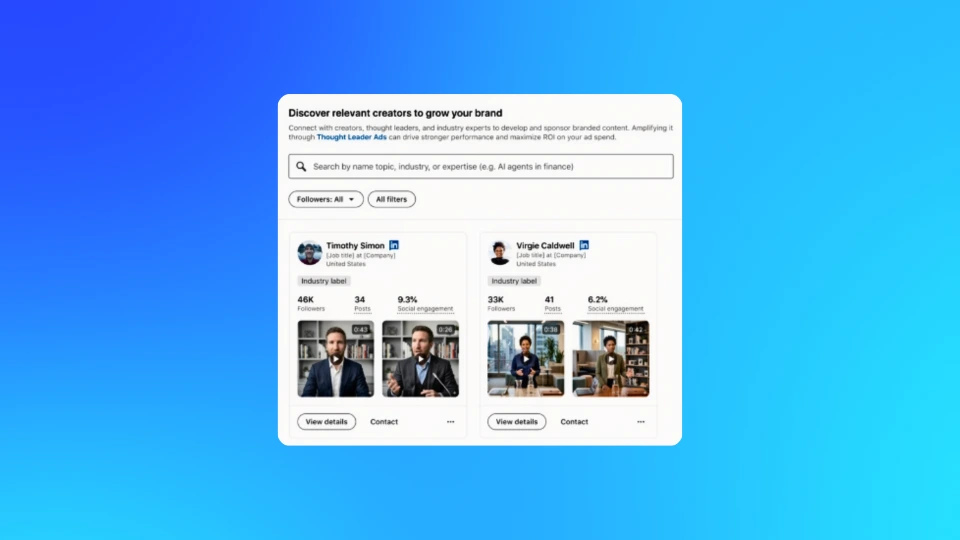
LinkedIn is testing a Creator Discovery feature inside its Creator Marketplace, adding search filters for content type, creator industry, job function, audience demographics and Top Voices status to help B2B marketers find relevant creators faster. General availability is expected in early 2027. The move comes as LinkedIn reports 63% of B2B buyers now rely on creators for research and insights early in their buying journey.
LinkedIn also shared performance data on its existing creator-driven formats: Thought Leader Ads deliver a 252% higher click-through rate than standard single-image ads, with a 45% CTR lift at the awareness stage and 48% at conversion, while BrandLink promotions, which run pre-roll ads on approved creator content, see a 130% higher video completion rate than standard in-feed ads.
The gurus’ take
The numbers LinkedIn is sharing alongside this test matter as much as the tool itself. A 252% lift in click-through rate for Thought Leader Ads is a substantial gap, and it reflects something B2B marketers have suspected for a while: audience trust responds differently to a credible individual voice than to brand-authored content, even when the underlying message is similar.
Creator Discovery’s real value will be in reducing the vetting work that’s historically made B2B creator partnerships harder to scale than consumer influencer marketing. Finding someone with genuine subject-matter credibility in a specific industry or function has been a manual, relationship-driven process, and it’s the kind of groundwork internal marketing teams or digital marketing agencies have had to do largely on instinct. Structured filters won’t replace that judgement entirely, but they should narrow the search considerably.
Your action plan
- Audit your current creator relationships: Map out which creators or subject-matter voices you already work with and where gaps exist by industry or function.
- Test Thought Leader Ads or BrandLink on a small scale: Given the performance lift LinkedIn is reporting, trial one of these formats with an existing or new creator partnership before committing a larger budget.
- Register interest in the Creator Discovery beta: A LinkedIn advertising specialist can help you prepare a creator strategy ready to use the tool once it reaches general availability.
Pinterest’s New Guide for Post-Holiday Campaigns
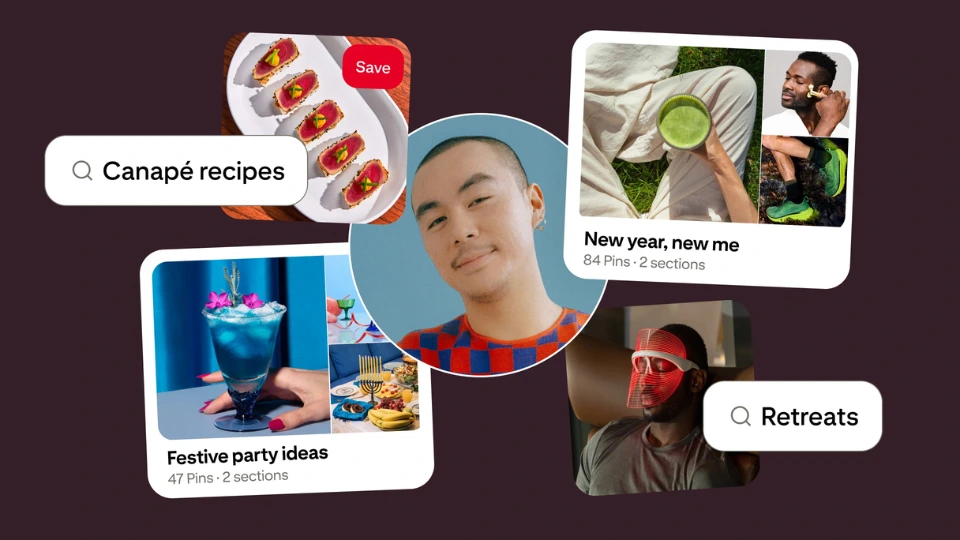
Pinterest published guidance for what it calls Q5, the week between Christmas and New Year’s, describing it as a high-engagement period driven by a shift in mindset rather than a drop in attention.
Searches and saves stay strong through this window, but intent moves from gifting to self-purchase, celebration to planning, and browsing for others to acting on ideas for yourself. This shift might be worth building into any Pinterest advertising calendar that currently stops at Christmas.
Pinterest recommends three shifts for brands. Creative focus should move from gift-led presentations to everyday use cases. Messaging should lean into planning and fresh-start themes rather than festive urgency. And product messaging should shift towards daily routines, using Pinterest’s Media Library and Smart Assembly tools to repurpose existing holiday assets.
The gurus’ take
Most retail calendars treat the period after Christmas as a wind-down. Pinterest’s data suggests that’s a missed opportunity, since engagement doesn’t drop, only what people are looking for does.
Brands running gift-focused creative into late December are talking to an audience that’s already moved on to planning their own year. The upside is that this doesn’t require new creative from zero. Repurposing existing assets through Smart Assembly turns the shift into a reframing exercise rather than a production one.
Your action plan
- Plan your Q5 creative shift now: Identify which existing holiday assets could be reframed around self-purchase, planning or routine themes before the post-Christmas window arrives.
- Match messaging to campaign goal: Use fresh-start and possibility-led messaging for awareness, routine-fit messaging for consideration, and product-led creative for sales, as Pinterest recommends.
- Get your campaign calendar built around this window: Plan your Pinterest advertising strategy around the handoff from holiday to Q5 creative now, so the transition doesn’t rely on last-minute scrambling.
Check Your Defaults Before They Check You
Google’s September spam update is now complete, which means businesses can move from watching the rollout to reviewing what actually changed in their own search performance.
At the same time, Shopify’s automatic enrolment in AI shopping channels and the latest developments from Meta, LinkedIn and Pinterest show how quickly platform defaults and new tools can affect where brands appear, how customers interact with them and how performance gets measured.
Online Marketing Gurus is a digital marketing agency helping Australian businesses manage changes across SEO, Google Ads, generative engine optimisation and paid social. Whether you need your rankings reviewed after the spam update, your Shopify settings audited or your Q5 campaign planned properly, our specialists can help.
Get in touch for a free strategy session and see how our approach to digital marketing in Australia can help you make the most of these changes.

About the author
Read More Blogs
-


Last updated on:
-
 11 minutes read
Google’s Fourth Spam Update of the Year Landed, and Search Console Got Multimodal Filters
Last updated on:
-
Last updated on:


Stop Guessing What Your Marketing Should Do Next.
Your free $4,000 strategy session shows where your digital marketing is leaking performance across search, paid media, content and conversion. You leave knowing what to fix first and what a stronger strategy could produce.