

Google’s Fourth Spam Update of the Year Landed, and Search Console Got Multimodal Filters

Last updated:
|
11 minutes readKey Takeaways
- Google’s September 2026 spam update is rolling out globally, so avoid making major SEO changes until the update has finished settling.
- Search Console’s new multimodal filters make it easier to separate text-led and image-led search behaviour and spot where visibility is really coming from.
- Pinterest Performance+ now gives advertisers stronger predictive signals around campaign setup, creative variety and targeting.
- Google Demand Gen continues to grow into a bigger part of the paid media mix, with new features designed to shorten the path from discovery to conversion.
- YouTube’s dynamic product tag testing could give retailers more control over when shopping prompts appear without overwhelming the viewing experience.
- Across SEO, paid media and social, the smartest move is still the same: test deliberately, read the data properly and avoid reacting to every new feature on day one.
Google has been busy this September to make seasoned marketers keep one eye on the dashboards and the other on the news feed.
Search visibility is shifting, and the lines between text, image, video and AI-led discovery keep getting blurrier. For Australian brands, the challenge is not chasing every update, but knowing which changes deserve attention now and which ones can safely stay in the “watch this space” pile.
This is your weekly update from Online Marketing Gurus, so you’re across what matters in digital marketing in Australia and beyond.
Google’s September 2026 Spam Update Is Live

Google deployed its September 2026 spam update on the 24th, with the rollout expected to take up to two weeks. It applies globally and across all languages.
Spam updates are improvements to Google’s automated systems for detecting behaviour that violates its search spam policies. That includes SpamBrain, Google’s AI-based spam prevention system. Sites caught by these systems can lose rankings or disappear from some results altogether.
Google’s advice for affected sites is straightforward: review its spam policies, fix genuine compliance issues, then give its systems time to reassess the site.
The gurus’ take
The first thing we would avoid is treating every traffic wobble as evidence that Google has caught you in the spam net. Search volatility was already being reported before the update officially began, and Google confirmed that movement before the rollout was not caused by this update. That timing matters.
If rankings moved on 23 or early 24 September, lumping the change into the spam update could send your diagnosis completely in the wrong direction. Our approach during a rollout like this is to separate observation from intervention. Watch organic sessions, impressions, clicks and ranking groups, but resist the urge to start rewriting pages simply because a graph turned red for 48 hours. Google still lists the update as active, so the picture is not settled yet.
Once the rollout finishes, look for patterns rather than isolated keyword losses. Did an entire template decline? A particular content type? One directory? Pages relying heavily on scaled, derivative or weakly differentiated content? That’s where a proper technical SEO audit becomes useful.
Your action plan
- Hold off on knee-jerk changes. Let the rollout finish before making major SEO or GEO (generative engine optimisation) decisions.
- Separate the dates. Movement before 24 September shouldn’t automatically be attributed to this spam update.
- Compare directories, templates, page types and query groups instead of looking only at sitewide traffic.
- Review Google’s spam policies and check for genuine policy risks rather than hunting for speculative “algorithm fixes”.
- If losses persist, investigate technical, content and quality patterns before deciding what needs to change.
Google Search Console Adds Multimodal Search Filters
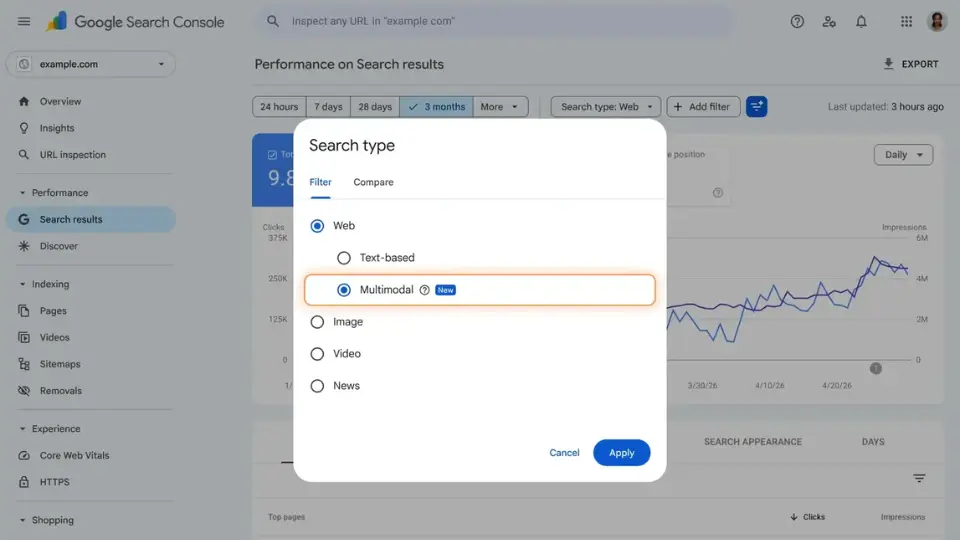
Google Search Console now gives marketers a separate view of multimodal web searches, meaning searches triggered using an image, photo or screenshot rather than text alone. The new filter covers activity from Google Lens, Circle to Search on Android, image uploads to Google Search and Chrome’s “Search this image” function.
Inside Performance, Web search is now split between text-based and multimodal activity, so site owners have clearer visibility into how image-led searches surface their pages. Google has also added multimodal reporting to its Generative AI performance reporting. One important limitation remains: query-level data is not available for multimodal searches.
The gurus’ take
This is one of those Search Console updates that looks like a reporting tweak until you consider what it says about search behaviour. People are increasingly searching with cameras, screenshots and products sitting directly in front of them. For marketers, that means the traditional keyword is no longer always the starting point. When we review Search Console performance, we already look beyond headline clicks and rankings to understand which pages and formats are doing the heavy lifting. Multimodal reporting adds another useful layer to that diagnosis.
There’s also an important distinction worth making. This is not simply Google giving you prettier reporting for Images and Video. It is separating image-led web searches from text-led web searches, which is much more interesting.
If product pages, guides or visual explainers start attracting multimodal impressions, that can influence how you approach imagery and page structure. With no query data available, the Pages report becomes especially valuable. Look at what Google is choosing to surface, then work backwards. For retailers in particular, strong product photography may now contribute to discoverability in ways your old keyword report could barely show.
Your action plan
- Open Search Console Performance and compare Web: multimodal activity against your text-based search performance.
- With no multimodal query data available, identify which landing pages are earning impressions and clicks instead.
- Review whether important products, services and concepts are represented by clear, relevant and high-quality visual assets.
- Segment performance by device to see where visual search behaviour is appearing most strongly for your audience.
- Multimodal reporting is new, so start tracking performance before larger trends make your early signals harder to spot.
Pinterest Adds Predictive Optimisation to Performance+ Campaigns
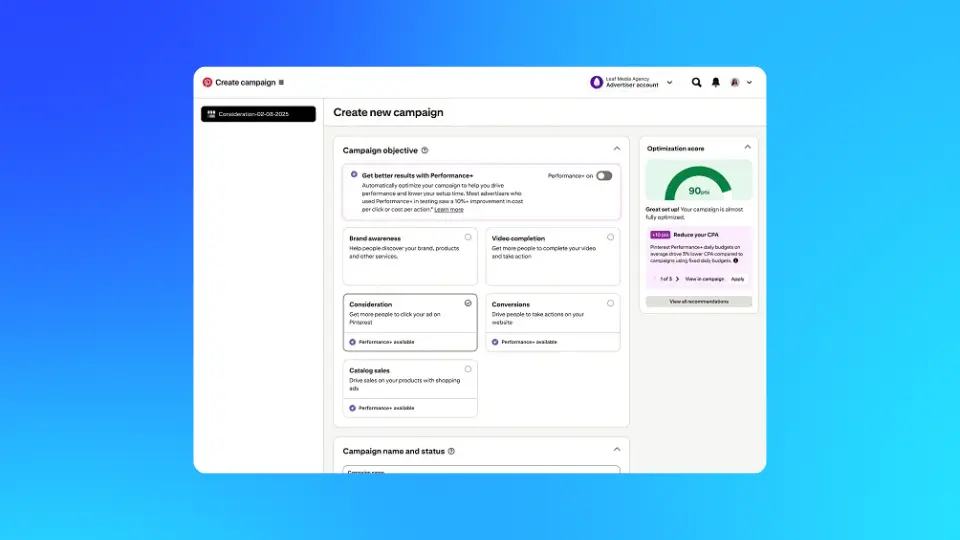
Pinterest has added a new campaign optimisation score to Performance+, using AI to assess how closely a setup aligns with practices the platform associates with stronger performance. The score considers Performance+ adoption, creative variety, broad targeting and consistent budget delivery.
The appeal is obvious for brands doing Pinterest advertising. Instead of waiting for spend to expose weak campaign settings, you get earlier signals about where the setup could be improved. Pinterest also recommends running at least three ad formats and five or more distinct ads to give its system richer creative signals.
The gurus’ take
The optimisation score is useful, but don’t confuse a high score with a forecast carved in stone. Higher scores correlate with better campaign performance, which is not the same as promising that a 95-point campaign will beat an 80-point one.
When we assess campaigns, platform recommendations are best treated as diagnostic inputs rather than instructions to follow blindly. A score can expose missing creative variety, overly restrictive targeting or a budget that keeps interrupting the learning phase, but your commercial numbers must still get the final vote.
The more interesting opportunity is using the score before Q4 pressure hits. Retailers tend to spend more aggressively when competition, promotional calendars and internal expectations are all rising at once. That’s a bad time to discover your campaign structure is starving the algorithm of useful signals.
Give that system enough quality inputs now, then judge it against revenue, CPA and ROAS.
Your action plan
- Review your scores now and identify which setup recommendations could materially affect performance before Q4 budgets increase.
- Build enough genuine creative variation to test different formats, messages and products rather than feeding Performance+ near-identical assets.
- Avoid narrowing audiences unnecessarily when broader targeting could give Pinterest’s delivery system more useful signals to learn from.
- Keep budgets reasonably stable during testing so frequent changes do not continually disrupt the platform’s optimisation process.
- Judge Pinterest’s recommendations against CPA, ROAS and revenue because a stronger platform score is useful only when the commercial numbers agree.
Google Adds New Features to Demand Gen Ads
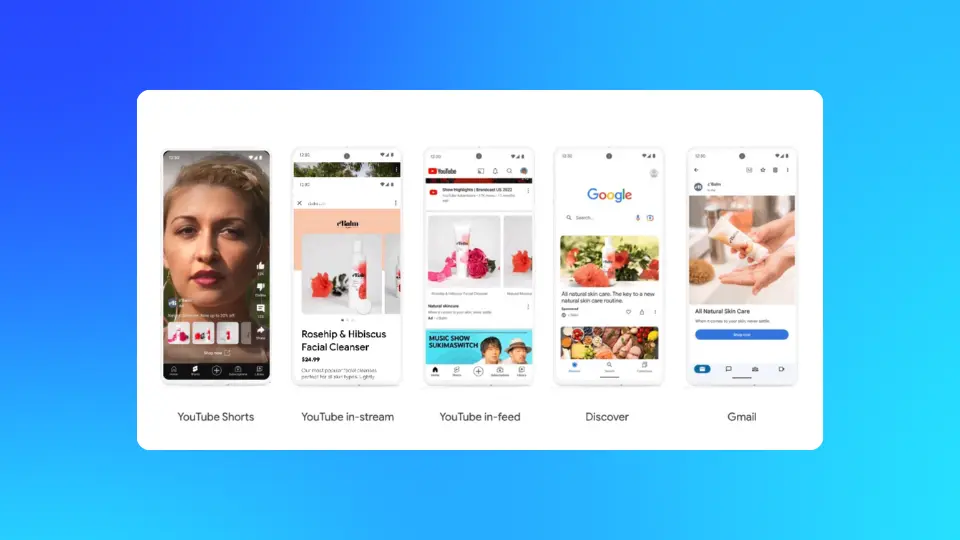
Google has expanded Demand Gen with several features aimed at shortening the distance between discovery and conversion. Business Agent for YouTube Ads lets viewers ask AI-powered questions about products alongside eligible video ads, while one-click experiences on YouTube Shorts and Gmail can send users straight to an advertiser’s landing page. Google has also added affiliate location extensions to Maps.
Demand Gen already runs across visual Google surfaces including YouTube, Discover, Gmail, Maps and the Google Display Network. If you’re an advertiser or a PPC agency, these additions create more ways to connect creative exposure with an immediate next step inside the wider Google Ads ecosystem.
The gurus’ take
Demand Gen is becoming harder to dismiss as that thing that sits between paid social and the rest of Google Ads. Google has been steadily adding channel controls, creative preferences and more inventory, and these latest features push it further towards being a serious consideration for those trying to create demand rather than simply harvest existing search intent.
In our paid media experience, the mistake to avoid is switching on every shiny new feature simply because Google put it in the interface. Start with the customer journey. A conversational product assistant could be genuinely useful when buyers have questions before converting, while one-click Shorts experiences make more sense when your landing page is fast, mobile-first and tightly matched to the creative. If the page cannot carry the momentum, reducing the number of clicks will not magically fix the funnel.
The other angle worth watching is creative fit. Google specifically calls out 9:16 full-screen imagery for the new Shorts experience, which is another reminder that simply recycling one asset across every placement leaves performance on the table. Use Demand Gen’s placement and format controls deliberately, then compare incremental conversion quality against your existing mix rather than celebrating cheaper clicks in isolation.
Your action plan
- Test the new Demand Gen features against existing campaigns rather than moving significant budget before you have comparative performance data.
- Build dedicated 9:16 creative for YouTube Shorts instead of relying on assets designed for feeds or traditional display placements.
- Check that landing pages are fast and conversion-ready before testing one-click experiences that can send users there more quickly.
- Use channel-level reporting to identify whether YouTube, Gmail, Discover, Maps or Display is actually creating valuable conversions.
- Trial Business Agent where customers commonly need product information before purchasing, and judge it by downstream conversion quality rather than engagement alone.
YouTube Tests New Product Tag Placements
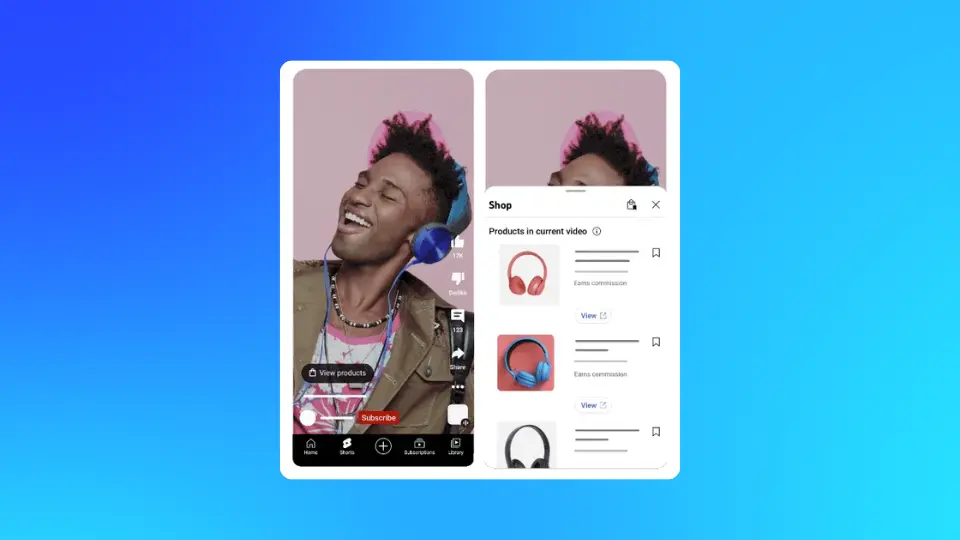
YouTube is testing dynamic product tag placements that make shopping prompts more visible when viewers appear interested. Under the test, tagged products can surface directly on the video and in the description when engagement signals suggest shopping intent; when interest is low, the tags stay in the description instead.
For brands investing in YouTube advertising, this creates a more flexible middle ground between promoting a product and plastering a sales prompt over every viewer’s experience. YouTube says the placement change itself will not affect reach, discovery or recommendations.
The gurus’ take
The way we see it, YouTube is trying to decide when a shopping prompt deserves that extra visibility. Product tags already give eligible creators and brands a direct route from video to product discovery, but commerce features work best when they feel like a useful next step rather than an interruption. YouTube Shopping currently supports tagged products across videos, Shorts and live streams, with performance available through YouTube Analytics.
When we assess shoppable video, one of the first things worth checking is whether the product appears at the moment the viewer is most likely to care about it. A tag for running shoes makes more sense while the creator is discussing the shoe than five minutes later during an unrelated segment. The same principle should guide this test. Don’t treat dynamic placement as permission to tag everything in sight. Tag products that are clearly shown or discussed, and give YouTube clean signals to work with. Better placement can reduce friction, but relevance still does most of the selling.
Your action plan
- Tag products that are genuinely featured in the video rather than turning every upload into a crowded catalogue.
- Review shopping analytics to see which videos and tagged products are driving clicks, engagement and purchases.
- Match product mentions with the strongest buying-intent moments in each video so the shopping journey feels natural.
- Test shoppable formats across Shorts and long-form video because viewer behaviour can differ substantially between them.
- Keep watching the experiment before rebuilding your strategy around it because YouTube is still testing how these dynamic placements are displayed.
Keen to Make the Next Update Work in Your Favour?
This week’s updates do not require five immediate strategy changes. They require five informed checks. Review unexplained organic movement before editing, watch how Discover changes the route from summary to source, strengthen the data feeding Google Ads, prepare for Pinterest’s visual-search beta and lock in Meta holiday foundations before the peak period.
Online Marketing Gurus is a digital marketing agency helping ambitious Australian businesses turn platform news into commercially grounded action. Our specialists connect SEO, generative engine optimisation, Google Ads and paid social with clear measurement, so you can test new opportunities without chasing every announcement.
If you want a clearer plan for digital marketing in Australia, talk to our Gurus. We can assess what these updates mean for your channels, identify the highest-impact next steps and build a strategy around growth rather than platform noise.

About the author
Read More Blogs
-


Last updated on:
-
 11 minutes read
Google’s Fourth Spam Update of the Year Landed, and Search Console Got Multimodal Filters
Last updated on:
-
Last updated on:


Stop Guessing What Your Marketing Should Do Next.
Your free $4,000 strategy session shows where your digital marketing is leaking performance across search, paid media, content and conversion. You leave knowing what to fix first and what a stronger strategy could produce.