
More AI In Search, More Ads In AI & More Choice For Social Users: This Week’s Updates


Last updated:
|
10 minutes readKey Takeaways
- Fully expanded AI Overviews are pushing traditional organic results further down the page for some queries, increasing the value of visibility within AI-generated answers.
- Shopping carousels and individual ad units are appearing inside AI Mode, turning conversational search into a new paid product discovery surface.
- Merchant Center’s enhanced Popular Products report gives retailers broader insights into trending products, brands and assortment gaps.
- Demand Gen ads are becoming more interactive through direct messaging, travel recommendations and expanded AI-assisted video creation.
- Proposed Australian laws could allow social media users to opt out of personalised algorithms, potentially changing how brands earn organic and paid reach.
For businesses investing in digital marketing in Australia, visibility can no longer be measured solely by rankings or conventional ad placements. Brands increasingly need to consider AI citations, conversational Shopping ads, product demand data and interactive campaign formats as part of one connected strategy.
At the same time, Australia’s proposed social media reforms could give users more control over algorithmic recommendations. Together, these developments highlight the need for adaptable strategies built around reliable data, strong content and changing user behaviour.
Expanded AI Overviews Push Organic Results Further Down the Page
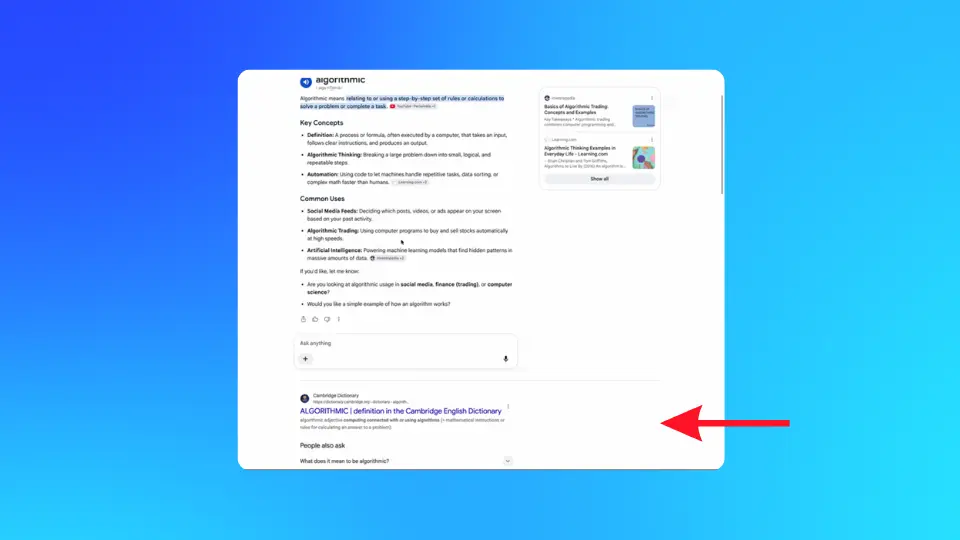
Google is testing an expanded version of AI Overviews that displays a more complete AI-generated answer without requiring users to select “Show more”. For some queries, the “Ask anything” box also loads automatically, creating an experience closer to AI Mode directly within the search results.
Google says these Overviews may expand dynamically when its systems determine that a fuller response would be helpful. However, the larger format occupies considerably more screen space and pushes traditional organic results further down the page.
Previously, users generally saw a shortened AI Overview and needed to select “Show more” to reveal the complete response. The new test removes that extra step for selected queries, making the AI-generated answer the most visually dominant element of the page from the moment it loads.
For marketers, this means the impact may vary considerably between queries. Detailed informational searches could experience a greater reduction in organic clicks than transactional searches where users still need to visit a website, compare providers or complete a purchase.
The gurus’ take
This test reinforces why ranking position alone is no longer enough to measure organic visibility. A page may rank highly but attract fewer clicks when users receive an extensive answer before reaching the conventional search results.
Australian brands should identify which important queries trigger expanded AI Overviews and whether their content is cited. Appearing within the generated response could become increasingly valuable as the distinction between standard Search and AI Mode continues to narrow.
A strategic generative AI SEO service can help brands assess their citation visibility and strengthen content for both traditional rankings and AI-generated results.
Your action plan
- Search priority informational and commercial queries to identify expanded AI Overviews.
- Record whether your brand, competitors or third-party publishers are being cited.
- Review high-ranking pages that are losing clicks despite maintaining their positions.
- Add concise answers, expert insights and credible supporting evidence to valuable content.
- Track AI citations alongside rankings, impressions, clicks and conversions.
Google AI Mode Introduces Inline Shopping Ads
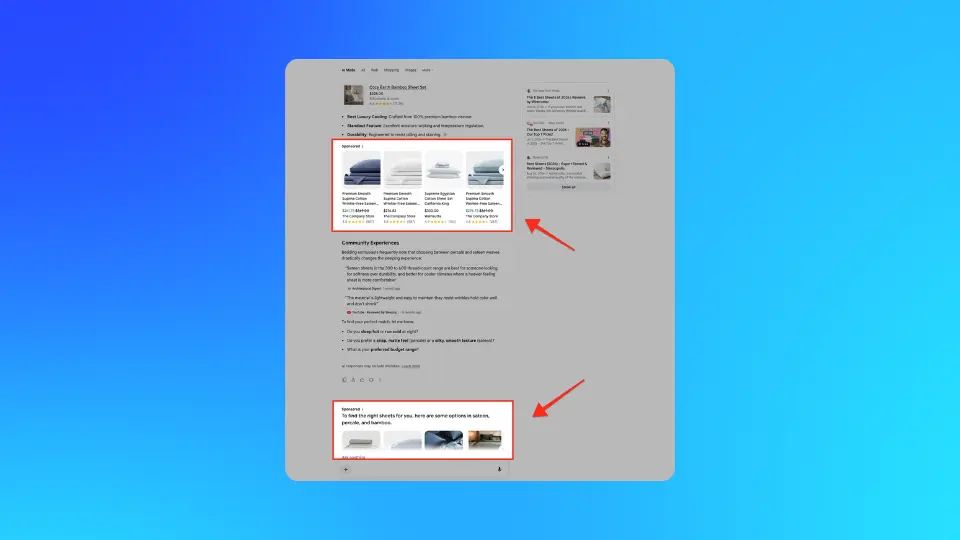
Google is displaying Shopping ads directly within AI Mode responses in new carousel and single-ad formats. These ads have also been spotted at the bottom of generated answers, giving retailers several potential placements within one conversational search experience.
The inline Shopping carousel is particularly notable because products can now appear alongside AI-generated recommendations rather than in a separate sponsored section. This further blurs the boundary between organic answers and paid search results.
The appearance of both carousel and single-product units gives Google greater flexibility in deciding how sponsored products fit within an AI-generated response. A carousel can support comparison and browsing, while a single ad may align more closely with a specific recommendation or follow-up question.
These placements could make product relevance more important than ever. Conversational searches often contain detailed preferences relating to price, features, intended use or compatibility. Product feeds should provide enough accurate information for Google to match an item with these more nuanced requests.
Retailers should also consider the experience after the click. If an AI response helps a shopper narrow their requirements before reaching a website, the landing page should immediately confirm the relevant product features, price, availability and delivery information. A disconnect between the AI recommendation, advertisement and product page could quickly undermine trust.
The gurus’ take
AI Mode is developing into a commercial discovery channel, not simply an informational search tool. For retailers, visibility within these responses may depend on both organic relevance and paid product placements.
The conversational format may also change how shoppers evaluate products. Rather than browsing a conventional results page, users could receive recommendations, supporting information and Shopping ads within the same response.
Australian retailers using Google Ads should prepare their product data for this environment. Accurate titles, detailed attributes, high-quality images and competitive offers will help Google understand when individual products are relevant to more specific, conversational queries.
Your action plan
- Review Merchant Center feeds for incomplete, outdated or inconsistent product information.
- Write product titles and descriptions that clearly communicate features, use cases and differences.
- Check that pricing, availability and promotional details remain accurate.
- Monitor AI Mode developments and new placement reporting within Google Ads.
- Compare performance across Shopping formats as more AI Mode advertising data becomes available.
Google Expands Merchant Center’s Popular Products Report
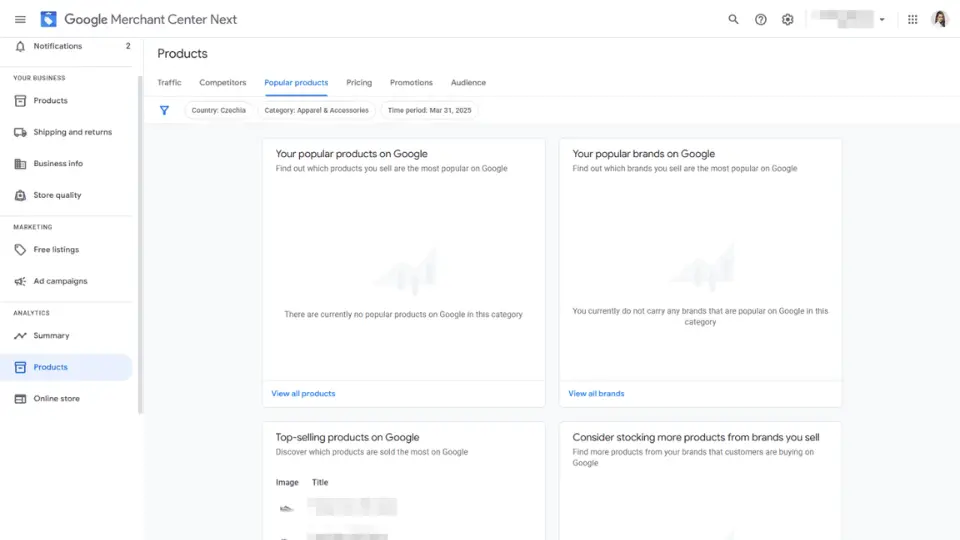
Google has enhanced the Popular Products report in Merchant Center to provide broader coverage and more comprehensive performance insights. Advertisers may notice changes to the products and brands appearing in the report, as well as their rankings across available regions.
Updated weekly, the report highlights popular products and brands on Google alongside the retailer’s current product availability. The changes also apply to data accessed through the Merchant API and BigQuery.
However, Google notes that newly included information can take up to two weeks to appear in the reported metrics. Retailers should therefore use the report to identify broader movements rather than treating it as a real-time inventory or forecasting tool.
The expanded coverage may also cause previously established rankings and performance benchmarks to change. A product appearing lower in the report does not necessarily indicate falling demand; it may reflect the addition of more products, brands or regional data to the comparison.
The report becomes more useful when combined with first-party business information. A trending product may attract significant interest but offer a low margin, experience supply constraints or fall outside the retailer’s core positioning. Conversely, the data may reveal demand for a category that deserves additional stock, stronger product content or a dedicated campaign.
The gurus’ take
The expanded report gives retailers a clearer view of what shoppers are interested in and how effectively their current assortment responds to that demand. These insights can support decisions across merchandising, inventory planning, promotions and seasonal campaigns.
However, popularity should not be considered in isolation. Retailers still need to assess profitability, stock availability and relevance to their audience before changing their product strategy.
Working with an experienced Google Shopping agency can help retailers translate these reports into practical feed, campaign and merchandising improvements.
Your action plan
- Review the report weekly to identify changes in popular products and brands.
- Compare trending products with your current inventory and availability.
- Investigate gaps where demand is strong but your assortment or visibility is limited.
- Use the data to inform seasonal campaigns, promotions and purchasing decisions.
- Compare Popular Products insights with sales, margin and Google Ads performance data.
Google Adds Messaging and Travel Recommendations to Demand Gen Ads
Google has introduced new Demand Gen capabilities designed to move users from discovery to action more quickly. A messaging feature being tested on YouTube allows customers to begin a conversation with a brand directly from an ad.
Travel advertisers can also display local activities, events and real-time offers alongside personalised hotel recommendations. Google is expanding access to Asset Studio tools that can create horizontal and vertical video assets using prompts, images and uploaded brand guidelines.
Direct messaging introduces a different type of conversion from the standard website visit or lead form. Customers could ask about availability, suitability or pricing while their interest is still fresh, giving brands an opportunity to address barriers before they abandon the journey.
However, adding a messaging option also creates operational expectations. Slow responses or inconsistent information can weaken the experience, so advertisers need clear ownership, response times and escalation processes before encouraging customers to begin conversations.
The gurus’ take
These updates make Demand Gen campaigns more interactive and commercially focused. Direct messaging could shorten the path from ad exposure to enquiry, particularly for businesses selling considered services or products that often generate questions before purchase.
Travel and hospitality brands can provide users with more reasons to book by presenting accommodation alongside timely destination experiences. However, live offers and recommendations must remain accurate to avoid creating a poor customer experience.
Professional Google Ads services can help businesses test these formats while maintaining consistent creative, reliable tracking and clear campaign objectives.
Your action plan
- Identify campaigns where customers commonly need assistance before converting.
- Prepare response processes before enabling direct messaging from ads.
- Test travel recommendations using accurate availability, pricing and local activity data.
- Provide clear brand guidelines when using AI-assisted asset creation.
- Compare engagement, lead quality and conversions against existing Demand Gen formats.
Australia Considers Algorithm Opt-Out Laws for Social Media

The Australian government is exploring measures that could give social media users greater control over algorithmic recommendations. Options under consideration include allowing people to opt out of personalised feeds or requiring them to actively opt in.
The proposal is intended to address concerns about harmful content being amplified by engagement-driven recommendation systems. If introduced, it could give users access to less personalised feeds based more heavily on chronology and accounts they have chosen to follow.
The practical effect would depend heavily on whether personalised feeds become optional by default or users simply receive an additional setting. An opt-in model could produce a much larger behavioural shift because users would need to actively choose algorithmic recommendations rather than having them applied automatically.
A chronological or follower-led feed could reward brands that have built genuine audience relationships. Posting frequency, timing and follower loyalty may become more influential, while content designed mainly to reach non-followers through recommendations could lose some visibility.
The gurus’ take
The proposal remains under consideration, so its final design and impact are not yet clear. However, it raises important questions for Australian brands whose social strategies rely on platforms recommending content beyond their existing follower base.
If a meaningful number of users move away from algorithmic feeds, organic discovery could decline while the value of direct followers and consistently engaging content increases. Paid campaign targeting, inventory and performance could also change if platforms need to adjust how personalised content is delivered.
Businesses should avoid making immediate strategic changes based on a proposal, but they should begin assessing how dependent their performance is on algorithmic amplification.
Your action plan
- Monitor government announcements rather than relying on early speculation.
- Compare reach from followers with reach generated through recommendations.
- Build direct audience connections through email, search and owned channels.
- Focus social content on genuine relevance rather than engagement bait.
- Review organic and paid performance if platforms begin testing non-algorithmic feeds.
What These Digital Marketing Updates Mean for Australian Brands
This week’s developments point to a more integrated but less predictable digital landscape. AI is reshaping both organic and paid search, while new reporting tools provide deeper insights into demand and campaign performance. Potential social media regulation could introduce another significant change to how brands reach audiences.
Businesses don’t need to adopt every new feature immediately. The priority is understanding which changes affect their customers, testing opportunities carefully and measuring commercial outcomes rather than surface-level visibility.
Online Marketing Gurus can help you connect SEO, Generative Engine Optimisation, Google Ads and social media within a strategy built around measurable growth. Speak with our experienced digital marketing agency to prepare your brand for the next stage of search and online discovery, and access a free strategy session valued at $4,000.

About the author
Read More Blogs
-
 10 minutes read
Are Your Search Campaigns Ready for the Google Ads Migration?

Last updated on:
-
10 minutes read
More AI In Search, More Ads In AI & More Choice For Social Users: This Week’s Updates
Last updated on:
-
Last updated on:

Stop Guessing What Your Marketing Should Do Next.
Your free $4,000 strategy session shows where your digital marketing is leaking performance across search, paid media, content and conversion. You leave knowing what to fix first and what a stronger strategy could produce.