

The Google Ads Setting Disappearing In September & What To Do About It

Last updated:
|
11 minutes readKey Takeaways
- Google Business Profile owner responses can now be reported, making review reply policies and staff guidelines more important for local SEO.
- AI-generated images are appearing in Google AI Overviews, raising the bar for brands that rely on original imagery for search visibility.
- Google Ads will remove manual campaign-level language targeting for Search in September 2026, giving automation greater control over multilingual matching.
- Merchant Center reporting is getting more detailed, so retailers identify product, feed and channel performance issues with greater clarity.
- Meta’s latest holiday guidance pushes earlier planning, stronger creative variety and broader use of Advantage+ throughout the Q4 shopping cycle.
Ad platforms are getting very good at one thing: finding new ways to make themselves harder to leave.
As Google, Meta and others add more automation, reporting and AI-led features, marketers are being handed more power with fewer manual levers. That trade-off is becoming a defining part of digital marketing in Australia. The opportunity is real, but so is the pressure to understand what the platforms are optimising for and whether it matches your own growth goals.
Here are the latest updates from OMG, the digital marketing agency keeping a close eye on what matters next.
Google adds ability to report owner responses to reviews
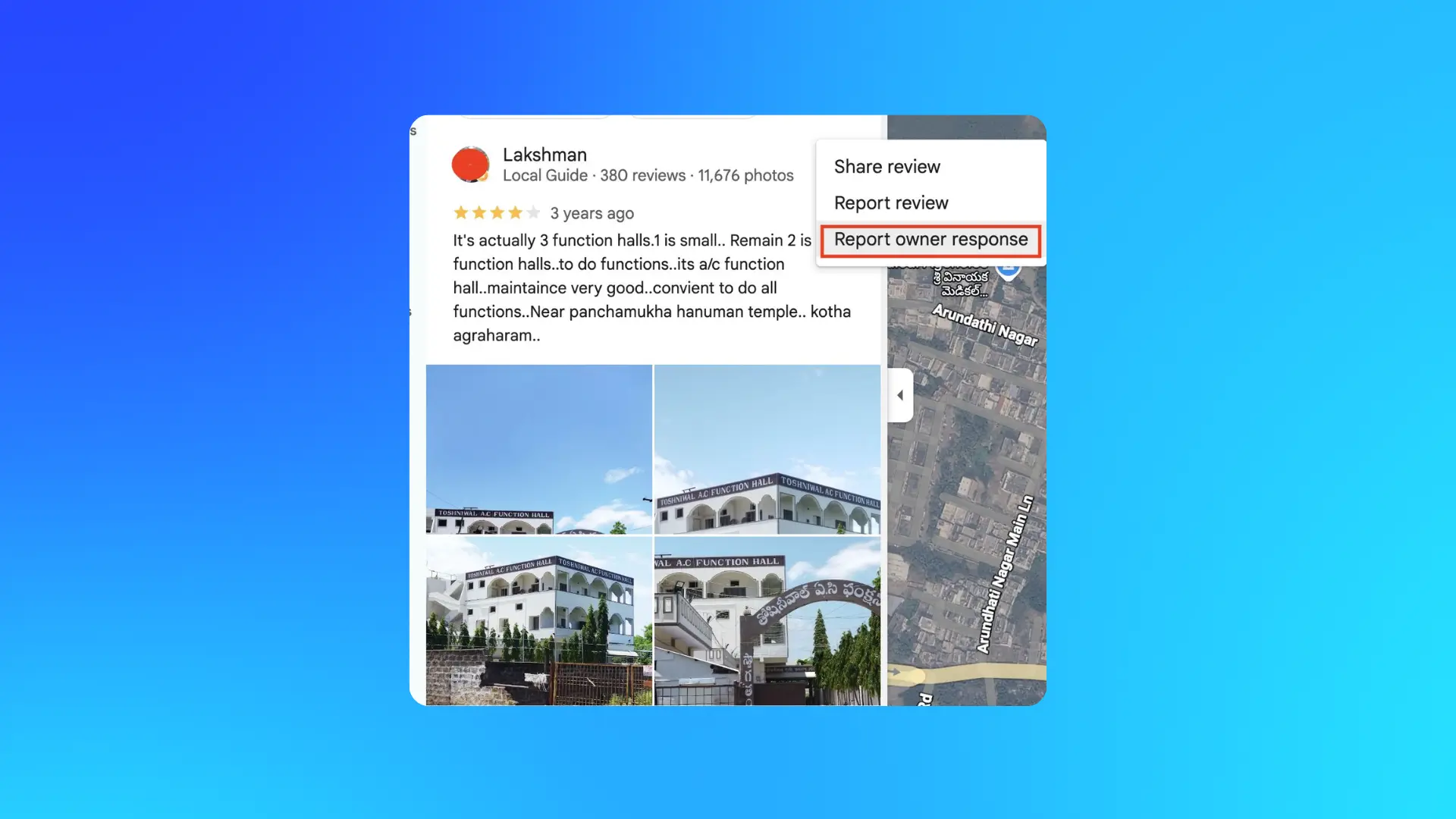
Google has introduced a new “Report owner response” option across Google Business Profiles and local results. Users can now flag a business’s reply to a review for issues including off-topic content, profanity, bullying or harassment, discrimination or hate speech, and personal information. Legal concerns can also be reported.
That means review moderation is no longer focused solely on what customers publish; business responses are firmly in scope too. For brands investing in local SEO That means review moderation is no longer focused solely on what customers publish; business responses are firmly in scope too. For brands investing in local SEO services, reputation management now needs to account for what your own team is putting into Google’s ecosystem.
The gurus’ take
A review response might feel like customer service, but once published on Google, it becomes public-facing brand content subject to platform policy. Google already prohibits content such as personal attacks, certain uses of profanity and the disclosure of personal information, and policy-breaking content can be removed or restricted.
Our advice is to treat review replies with the same care you would give a paid ad or landing page. Give staff boundaries, not scripts that turn every response into corporate wallpaper.
A useful framework is simple: address the issue, stay factual, avoid sharing private customer details and move sensitive disputes into a direct channel.
Another angle to look at is escalation. The person responding should know when not to respond immediately. An angry complaint can tempt an equally sharp reply, particularly when the business believes the review is unfair. That is exactly when a second pair of eyes becomes valuable.
There is also an SEO angle beyond avoiding removals, as review sections influence how potential customers experience your brand before they ever visit your site. A polished profile with defensive, argumentative owner responses still creates friction. Search visibility may win the click, but reputation helps win the customer. Good local search engine optimisation means managing both.
Your action plan
- Audit existing templates and remove wording that could stray into personal attacks, private information or irrelevant arguments.
- Give complex, legal or highly emotional reviews to a senior team member before replying.
- Never use a public response to prove your side with account, booking or contact information.
- Write for future customers too. Prospective customers are reading it.
- Know exactly who can publish responses from each Business Profile.
- Treat review management as an ongoing reputation task, not a set-and-forget inbox.
AI-generated images now appearing in Google AI Overviews (Test Paused)
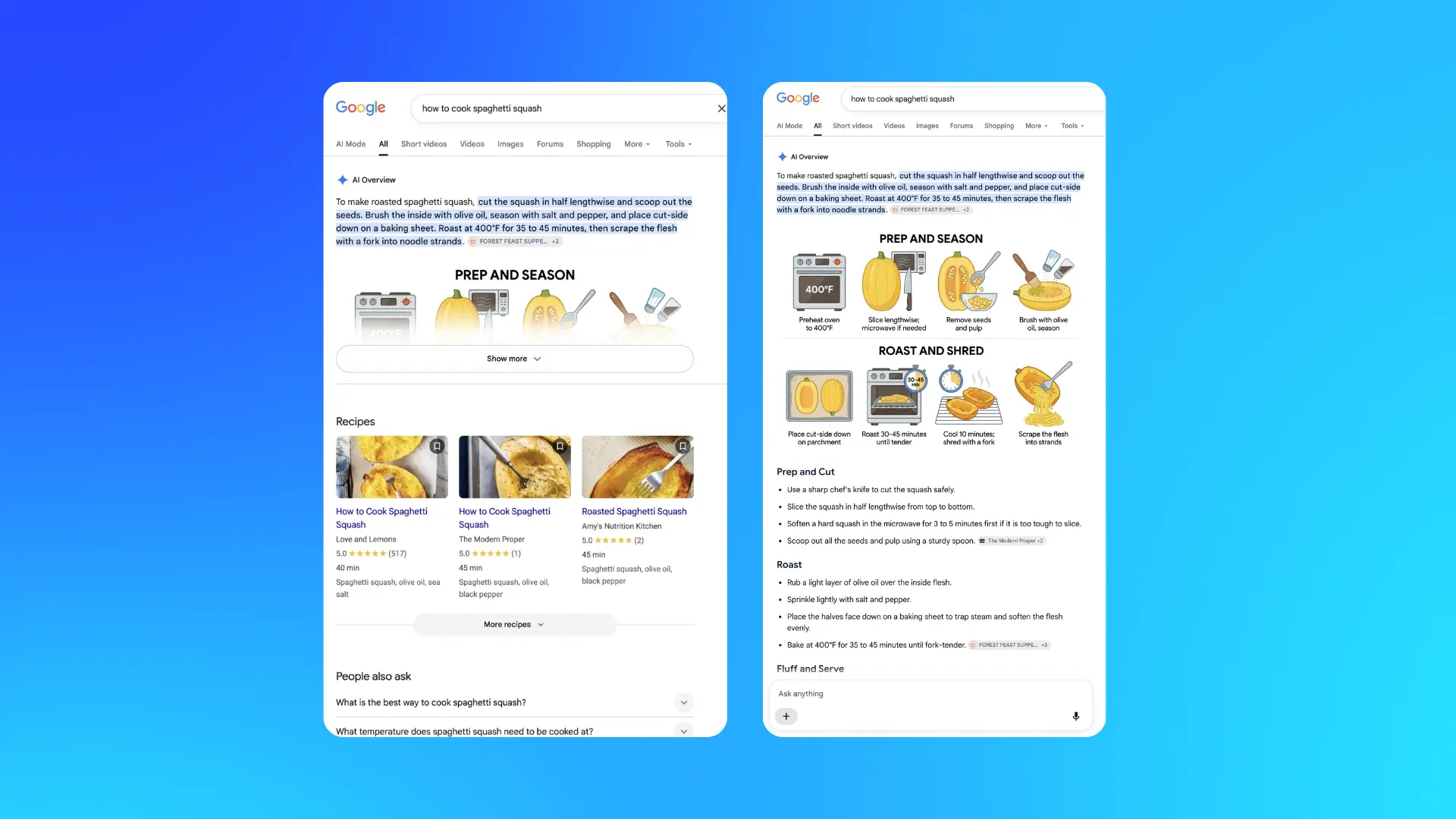
Google is no longer relying only on imagery sourced from publishers. AI-generated images are now appearing inside AI Overview responses, following Google’s July announcement that image generation would be built directly into the experience. Google says the feature uses its Nano Banana model to create visuals from text prompts.
For brands, that changes the competition for visual attention. A strong product photo or explanatory graphic may now sit alongside something Google has created itself. That gives any generative AI SEO service another visibility problem to solve.
The gurus’ take
The important shift here is not simply that Google can make pictures. It’s that Search is becoming increasingly self-contained. When Google can generate the explanation and the accompanying visual, there are fewer reasons for a searcher to leave the results page for basic information. That makes passive visibility a weaker strategy.
Brands need content that contributes something Google cannot cheaply reproduce, whether that’s proprietary data, original research, expert commentary, real product detail or genuinely useful firsthand imagery.
From years spent looking at how search features affect visibility, one lesson keeps holding up: do not optimise for the format Google showed yesterday. Optimise for why your content deserves to be referenced tomorrow. Original images still matter, but their value needs to go beyond looking polished. Label products clearly, provide strong surrounding context, use descriptive alt text and connect imagery to useful information on the page.
SEO is moving further into a multimodal environment, and generative engine optimisation adds another layer. The brands worth citing will be those giving Google richer, more distinctive source material, not simply publishing another competent stock-style visual.
Your action plan
- Audit high-value pages to identify where original imagery genuinely adds information rather than decoration.
- Create product, process and comparison visuals that contain details an AI-generated image may struggle to reproduce accurately.
- Give important images descriptive filenames, alt text and surrounding copy that explains exactly what they show.
- Build more proprietary visual assets from your own products, data, research and expertise.
- Track whether AI Overviews are appearing for commercially important queries and note how visual results are being presented.
- Treat AI SEO as an extension of strong search fundamentals rather than a replacement for them.
- Keep testing how your branded imagery appears across traditional search, AI Overviews and other generative search experiences.
Google removes campaign-level language targeting in September
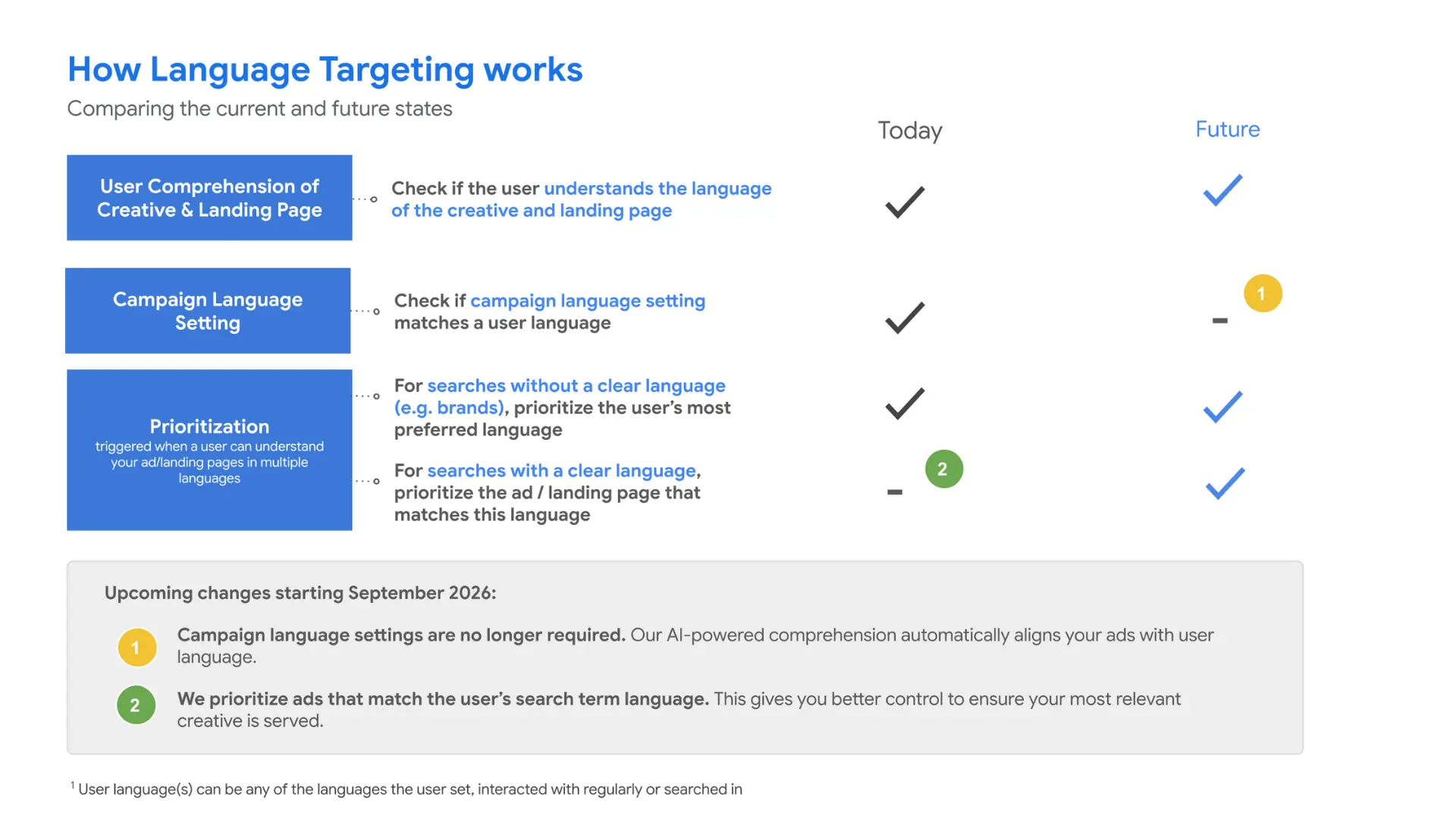
From September 2026, Google Ads will remove manual campaign-level language targeting for Search campaigns and the Search Network portion of Performance Max. Instead, Search ads will automatically match users based primarily on the language of the ads, alongside signals such as search terms, language settings and user preferences.
Google says advertisers don’t need to restructure their accounts, and existing single-language campaigns can keep running. Still, businesses using Google Ads services across multiple languages should understand what they’re giving up: another manual targeting control is moving into Google’s automated decision-making layer.
The gurus’ take
This is less a call to rebuild multilingual accounts and more a reason to inspect how clearly they communicate language. Google’s system will increasingly decide which eligible ad is most relevant at auction time, so your ad copy and landing pages need to make that choice easy. If English and Mandarin campaigns, for example, lead to loosely translated pages with inconsistent signals, automation has shakier material to work with. Clean structure still matters even when Google says restructuring is unnecessary.
The angle we would watch closely is measurement. When a manual control disappears, marketers can spend too much time debating the lost setting and not enough time checking what changed in performance. Before September, establish benchmarks for conversion rate, cost per acquisition, search terms and performance by language-focused campaign. Then watch for movement after the change.
Also remember that PMax is a mixed bag here: language settings will still apply to channels such as YouTube, Display, Discover and Gmail, while its Search inventory adopts the new approach. Automation is not permission to stop segmenting your thinking, even when Google starts doing more of the segmenting for you.
Your action plan
- Audit multilingual Search campaigns before September so you know exactly where manual language targeting is currently being used.
- Benchmark conversion rate, CPA and search-term performance now so post-change movement is easier to diagnose.
- Keep each language version of your ads and landing pages clear, consistent and genuinely localised.
- Review Performance Max separately because language settings will continue to apply outside its Search inventory.
- Check translated landing pages for weak messaging rather than assuming technically correct translation will convert.
- Monitor multilingual campaigns closely after rollout and investigate meaningful shifts instead of automatically blaming the algorithm.
Google Merchant Center rolls out performance reporting updates
Google is updating Merchant Center performance reporting from August 24, 2026, with broader product-level data and more consistent definitions across Merchant Center, Google Ads and YouTube. Product reporting will expand across ad channels and formats, including PMax, Video, App and Demand Gen campaigns.
YouTube affiliate traffic will also become its own reporting category rather than sitting under organic traffic, while YouTube organic metrics are being redefined. For retailers working with a Google Shopping agency, that means a clearer view of where product engagement is actually coming from.
The gurus’ take
The useful part here is not simply “more data”, but cleaner attribution. Merchant Center has gradually become much more than a feed-management tool, and these changes make it easier to look at product performance without piecing together quite as many disconnected reports. The upcoming Network dimension should sharpen that further by letting retailers compare performance across different Google networks within Merchant Center itself.
But there’s one trap worth flagging before someone declares victory or disaster in the next reporting meeting. Some metric changes will be accounting changes, not performance changes. Google says separating YouTube affiliate activity may produce a one-off decline in reported organic traffic, while expanded ad reporting could create a one-off lift in impressions and clicks.
Historical YouTube data will also be adjusted back to July 1 for the affected organic and affiliate definitions. So annotate the change before comparing periods. Then use the added detail to ask better commercial questions: which products attract attention but fail to convert, which channels are doing the heavy lifting, and where could feed quality or campaign structure be holding stronger products back?
Your action plan
- Annotate 24 August in your reporting so one-off metric shifts are not mistaken for genuine performance changes.
- Compare product-level results across Performance Max, Video, App and Demand Gen once the expanded reporting becomes available.
- Separate YouTube affiliate performance from standard organic activity when assessing free listing results.
- Review historical reporting from July 1st with the revised YouTube definitions in mind.
- Use product-level data to identify high-traffic products that are underperforming commercially.
- Investigate weak products across pricing, feed quality, landing pages and campaign structure before cutting spend.
- Add the upcoming Network dimension to your reporting workflow once Google makes it available.
Meta publishes holiday marketing guides for brands
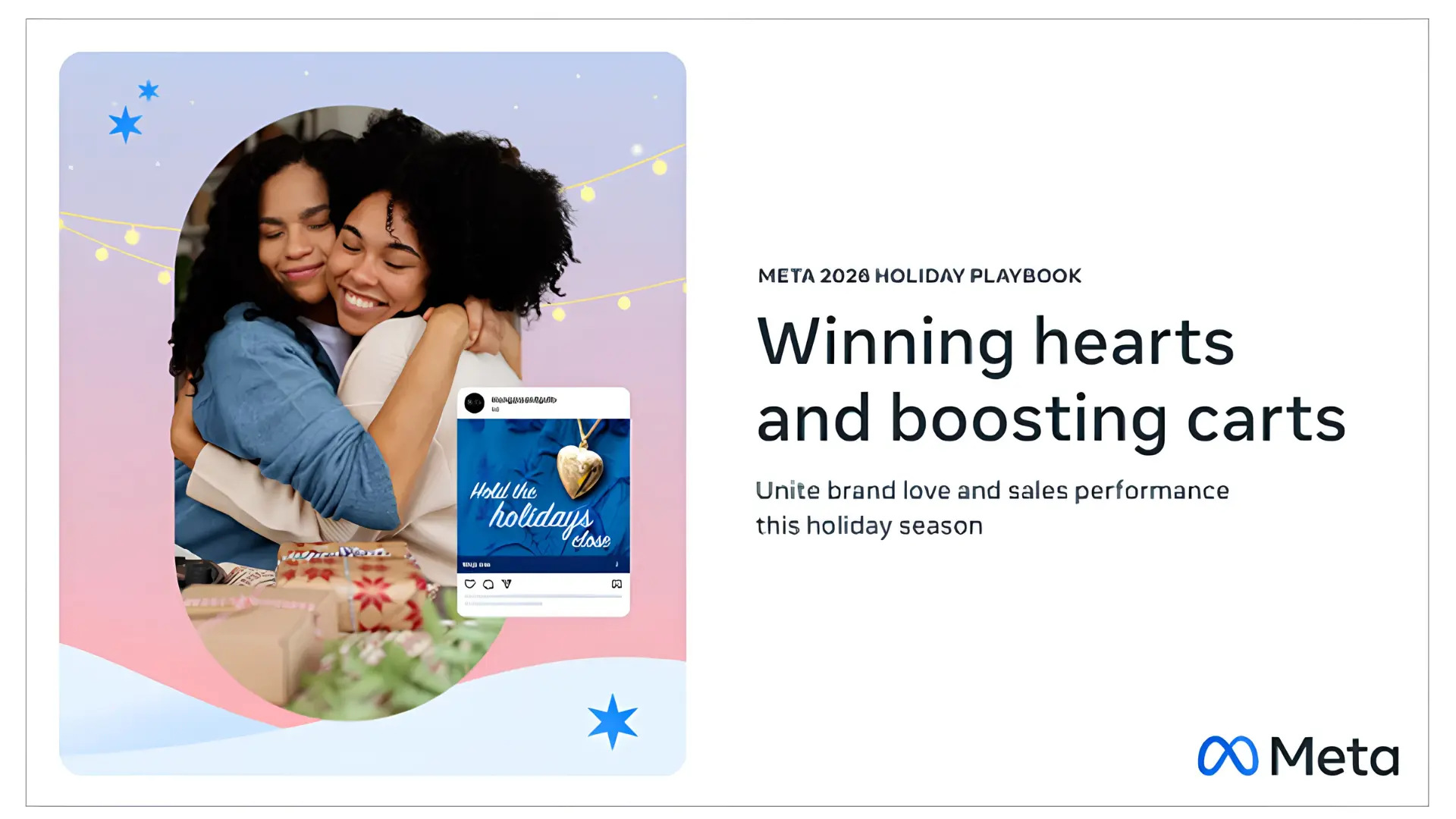
Meta has published a new series of holiday marketing guides to help brands plan Facebook and Instagram campaigns around changing festive shopping behaviour. The guidance divides the season into four phases: discovery from October to early November, Black Friday and Cyber Monday deals, December gifting, and the post-Christmas “fresh start” period.
Meta is also pushing advertisers towards Advantage+ campaigns and placements, which use AI to optimise audiences, placements and budgets across its ecosystem. Your team or your Meta Ads agency should start earlier and give the system more creative options to work with.
The gurus’ take
Meta wants advertisers to think beyond the frantic fortnight around Black Friday, and that part’s worth listening to. Starting earlier gives campaigns more time to collect signals before competition intensifies. But “start early” shouldn’t mean switching on the Christmas ads in October and hoping Advantage+ sorts everything out. Treat each shopping phase differently. Someone browsing gift ideas six weeks out needs different creative from someone hunting for a last-minute delivery deal on December 20.
Moreover, Meta says broader formats give Advantage+ more opportunities to match creative with different people and placements, while its automation can distribute ads across Facebook, Instagram, Reels, Stories, Messenger and Audience Network. That makes creative variety more valuable, not less. Give the system genuinely different hooks, products, formats and offers rather than twelve near-identical versions of the same ad.
Also protect some budget for learning before the peak arrives. Black Friday is an expensive time to discover that your brilliant concept only works in the meeting room. Automation can find opportunities quickly, but it still depends on the inputs you hand it.
Your action plan
- Map your Q4 campaigns across discovery, deal, gifting and post-Christmas periods instead of treating the season as one long promotion.
- Start testing creative before peak competition arrives so your strongest concepts already have useful performance data.
- Build distinct assets for Feed, Stories and Reels rather than stretching one creative across every placement.
- Give Advantage+ several meaningfully different messages, formats and products to test rather than minor cosmetic variations.
- Match offers and messaging to shopper intent at each stage of the holiday buying cycle.
- Review measurement early so sales driven by Meta are not judged solely on last-click attribution.
- Keep testing during peak periods instead of freezing campaigns as soon as performance looks respectable.
Stay ahead of the spend shift
Digital platforms will keep changing the rules, but strong strategy still separates useful updates from expensive distractions. With more than a decade in digital marketing, 40+ industry awards and a world-class team of SEO and paid media specialists, OMG helps you turn platform changes into smarter growth decisions.
Want sharper guidance on where to invest next? Contact our team for a free strategy session and put the latest insights to work today.

About the author
Read More Blogs
-
 10 minutes read
Are Your Search Campaigns Ready for the Google Ads Migration?

Last updated on:
-
10 minutes read
More AI In Search, More Ads In AI & More Choice For Social Users: This Week’s Updates
Last updated on:
-
Last updated on:


Stop Guessing What Your Marketing Should Do Next.
Your free $4,000 strategy session shows where your digital marketing is leaking performance across search, paid media, content and conversion. You leave knowing what to fix first and what a stronger strategy could produce.