

Web3: The Future of the Internet

Last updated:
11 July 2025
|
9 minutes readKey Takeaways
- Web3 is the next evolution of the internet, moving from centralised platforms to decentralised networks.
- It’s built on blockchain technology, which allows for secure, transparent, and peer-to-peer interactions.
- Emphasizes user ownership of data, assets, and digital identity through crypto wallets and smart contracts.
- Enables use cases like decentralized finance (DeFi), NFTs, DAOs, and metaverse platforms.
- Tools such as Ethereum, Polkadot, MetaMask, and IPFS support Web3 infrastructure and applications.
- Challenges include mainstream adoption, scalability issues, and navigating emerging regulations.
Introduction to Web3
Web3 represents the next evolutionary step in the internet’s development, marking a significant shift from the current Web2 structure. Most people today interact with Web2, engaging with centralised platforms like Facebook, Google, and Amazon. These companies control vast amounts of user data and shape much of the online experience. Additionally, they determine how content is distributed and monetised.
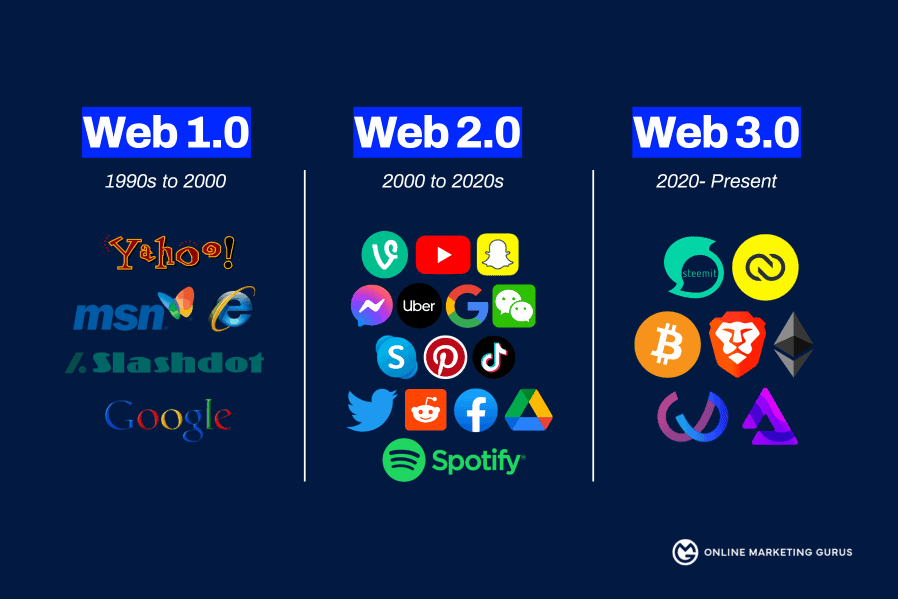
The promise of Web3 lies in its ability to create an open, transparent, and more user-centric internet. Built upon the principles of decentralization and blockchain technology, Web3 eliminates the need for intermediaries, offering users direct, peer-to-peer interactions and a more equitable digital environment. With the rise of cryptocurrencies, decentralised finance (DeFi), and the booming world of non-fungible tokens (NFTs), Web3 will revolutionise industries, redefine digital ownership, and reshape online interactions.
Before we dive in – you may also want to review:
A Step-By-Step Guide To Building A Strong Backlink Profile | How AI Affected Online Searches In 2024 & Predictions For 2025 | How To Optimise Website Speed for SEO
The Core Principles of Web3
Trustless Systems
One of the defining features of Web3 is decentralisation. In Web2, data and control are centralised within large companies or institutions. These entities act as gatekeepers, controlling service access and collecting vast amounts of personal data. On the other hand, Web3 aims to distribute control across a network of peers, allowing users to interact with each other directly, without the need for an intermediary. Blockchain facilitates this decentralisation by distributing data across a network instead of storing it on a central server.
Web3’s trustless systems enable transactions and interactions without reliance on a central authority. Through the use of blockchain, smart contracts, and cryptographic algorithms, Web3 ensures that participants can engage with one another without needing to trust a third party. This is a game-changer for industries like finance, where Web3 can eliminate the need for traditional banks and payment processors, reducing costs and increasing efficiency.
Ownership and Control
In Web3, users have true ownership and control over their digital assets. Whether it’s cryptocurrency, NFTs, or even personal data, Web3 enables users to manage their assets directly through digital wallets and decentralised applications (dApps). Unlike Web2, where platforms retain ownership over user-generated content. Web3’s model empowers users to monetise and manage their digital presence in ways that were previously impossible.
Token-based Economies
At the heart of Web3 is the use of tokens to facilitate interactions. These tokens range from cryptocurrencies like Bitcoin and Ethereum to more specialised assets like NFTs. Tokens serve as a means of exchange, rewards, and ownership, creating new economies where participants are incentivised to contribute and engage in meaningful ways. Token-based economies foster new business models, promote financial inclusion, and disrupt traditional industries.
Peer-to-peer Interactions
Web3 supports peer-to-peer interactions without relying on centralised intermediaries. This is particularly relevant in areas like finance, where decentralised finance (DeFi) platforms enable users to lend, borrow, and trade directly with one another. Similarly, decentralised social media platforms allow users to control their content, interactions, and data. Peer-to-peer interactions are not limited to financial transactions; they extend to all aspects of online life, offering a more transparent and democratic internet experience.
How Web3 Works: The Technology Behind It
Blockchain Technology
Blockchain powers Web3 as its foundational technology. A blockchain is a decentralised, distributed ledger that records transactions across multiple computers. This ensures that data is immutable, transparent, and secure. In a blockchain, every participant accesses the same data, and once information is recorded, it cannot be altered or deleted. Blockchain’s transparent and tamper-proof nature makes it ideal for creating trustless systems, as no single entity can manipulate the data.

Bitcoin is the most well-known blockchain, serving as the foundation of cryptocurrency. However, Ethereum is the leading platform for Web3 development, supporting decentralised applications (dApps) and smart contracts.
Decentralised Applications (dApps)
dApps are applications built on blockchain networks that operate without centralised control. Unlike traditional applications, which are hosted on centralised servers owned by companies, dApps run on a peer-to-peer network, allowing users to interact with each other directly. This decentralisation enhances user control over their data and reduces the risks associated with centralised data breaches or censorship. Popular dApps include decentralised exchanges (DEXs), NFT marketplaces, and gaming platforms.
Smart Contracts
Smart contracts execute automatically with agreement terms embedded in code. These contracts enforce aggreement terms automatically, removing the need for intermediaries. For example, in a Web3-enabled real estate transaction, a smart contract could automatically transfer ownership of a property once the buyer makes payment, eliminating the need for a notary or other third party. Smart contracts are secure, transparent, and efficient, making them a crucial part of the Web3 ecosystem.
Cryptocurrencies and Tokens
Cryptocurrencies like Bitcoin and Ethereum are integral to the Web3 ecosystem. Blockchain powers these digital currencies, enabling peer-to-peer transactions without intermediaries. Beyond cryptocurrencies, Web3 introduces a broader spectrum of tokens, including utility tokens, governance tokens, and non-fungible tokens (NFTs). Each type of token serves a different purpose, from facilitating transactions to granting voting rights on decentralised platforms.
Real-world Applications of Web3
1. Finance and DeFi (Decentralised Finance)
One of the most impactful applications of Web3 is in the field of finance, particularly through decentralised finance (DeFi). DeFi refers to a collection of financial services that operate without traditional financial intermediaries, such as banks or insurance companies. Smart chain and smart contracts power DeFi platforms, allowing users to lend, borrow, trade, and earn interest directly with others.
DeFi offers greater financial inclusion, as it provides access to financial services for people who are unbanked or underbanked. It also reduces the reliance on centralised institutions, lowering costs and increasing transparency.
2. NFTs and Digital Ownership
Non-fungible tokens (NFTs) have exploded in popularity in recent years, offering a way to represent digital ownership of unique assets. NFTs can be used to represent anything from digital art and music to virtual real estate and in-game items. Blockchain NFTs offer secure and verifiable proof of ownership, allowing creators to monetise their work directly and eliminating the need for intermediaries like galleries or auction houses.
Web3’s emphasis on ownership and control is especially evident in the world of NFTs, where creators retain control over their intellectual property and are rewarded for their contributions.
3. Decentralised Social Media Platforms
Social media platforms in Web2 are dominated by centralised companies like Facebook, Twitter, and Instagram, which control user data and monetise content. Web3 offers the possibility of decentralised social media platforms, where users retain control over their data and content. These platforms are not owned by a single entity, and users can participate in governance through token-based voting systems. By eliminating centralised control, decentralised social media platforms offer greater privacy, transparency, and freedom of expression.
4. Gaming and the Metaverse
Web3 is also transforming the world of gaming. Through decentralised platforms, players can own in-game assets, earn rewards, and even participate in governance. The concept of the metaverse— a virtual world where users interact, socialise, and participate in economic activities—is powered by Web3 technologies like blockchain and NFTs. In this new digital world, players can truly own their virtual possessions, creating new economic opportunities within the gaming ecosystem.
5. Supply Chain Management and Transparency
Web3’s transparency enhances supply chain management. Blockchain enables companies and ecommerce brands to track stock and products from production to delivery, ensuring that every step of the supply chain is verifiable and transparent. This level of visibility can reduce fraud, improve product quality, and enhance trust between businesses and consumers.
Challenges and Opportunities for Web3
Scalability and Network Congestion
A major challenge for Web3 is scalability. As more users and applications join the blockchain, network congestion can slow down transactions and increase fees. Solutions like Ethereum 2.0 and Layer 2 scaling solutions are being developed to address these issues, but scalability remains a work in progress.
Security Concerns and Privacy Issues
While blockchain is generally secure, Web3 applications are still susceptible to hacks and vulnerabilities. Smart contracts, for example, can contain bugs that malicious actors can exploit. Privacy remains a concern, as blockchain’s transparency allows personal data to be traced on the public ledger. Developers are exploring privacy solutions like zero-knowledge proofs and encryption to address these issues.
Regulatory Challenges
Web3 operates in a largely unregulated space, and governments around the world are grappling with how to regulate cryptocurrencies, DeFi platforms, and NFTs. Without clear regulatory frameworks, businesses and users face uncertainty in navigating the legal and financial aspects of Web3.
Environmental Impact of Blockchain
Critics highlight Bitcoin mining’s environmental impact, pointing to its high energy consumption. Ethereum’s shift proof-of-stake and newer blockchain protocols reduce energy consumption and provide sustainable ethical alternatives. Newer blockchain protocols, like Ethereum’s shift to proof-of-stake, aim to cut energy consumption and offer sustainable alternatives.
Opportunities for Innovation
Despite these challenges, Web3 presents countless opportunities for innovation. From finance and gaming to art and social media, Web3 is opening new frontiers for creators, entrepreneurs, and businesses. Its decentralised nature enables users to build trustless systems that are more transparent, secure, and equitable than ever before.
The Future of Web3
For businesses, the future of Web3 offers significant opportunities. Adopting blockchain and decentralized technologies can lead to greater efficiency, transparency, and customer trust. Companies that embrace these innovations early on will be well-positioned to thrive in the new digital economy.
Conclusion
Web3 represents a radical shift in how we interact with the internet. By decentralising control and enabling trustless, peer-to-peer interactions, Web3 has the potential to reshape industries, democratise access to financial services, and redefine digital ownership. As the technology continues to evolve, the future of Web3 looks incredibly promising, offering exciting opportunities for innovation, entrepreneurship, and societal transformation.
Web3 remains in its early stages, but its potential is immense. In the next decade, decentralised applications will see the widespread adoption, the metaverse will expand, and blockchain-powered economic systems will evolve. With growing government and institution adoption, the internet is set to become more open, accessible, and user-centric.
Need help? Reach out to OMG Australia’s Leading Digital Marketing Agency and The Best SEO Agency in Australia and our search optimisation experts will be more than happy to help.

About the author
Read More Blogs
-
 10 minutes read
Are Your Search Campaigns Ready for the Google Ads Migration?

Last updated on:
-
10 minutes read
More AI In Search, More Ads In AI & More Choice For Social Users: This Week’s Updates
Last updated on:
-
Last updated on:



Stop Guessing What Your Marketing Should Do Next.
Your free $4,000 strategy session shows where your digital marketing is leaking performance across search, paid media, content and conversion. You leave knowing what to fix first and what a stronger strategy could produce.