

Two Google Shopping AI Rollouts, a Pinterest Catalog Warning, and a Ranking Shift Around July 24

Last updated:
|
12 minutes readKey Takeaways
- Google search rankings showed noticeable movement around July 24, though no official update has been confirmed, so context matters before drawing conclusions from any traffic changes.
- Google Merchant Center has expanded its AI features that add ways to generate and improve product data at scale.
- Google Ads has widened access to AI Max for Shopping campaigns, bringing more advertisers into its AI-driven optimisation layer for Shopping spend.
- TikTok has released new guidance on using AI for creative production, aimed at helping brands scale content without losing platform-native voice.
- Pinterest is asking brands to review and update their product catalogues, as clean data increasingly determines visibility across the platform.
It’s been a busy week across search and paid media, with Google pushing AI deeper into Shopping, Pinterest sending a clear signal to retailers about catalogue hygiene, TikTok publishing new guidance on creative production and rankings shifting noticeably around July 24.
None of these updates is unrelated, however, and together point to a search and social landscape where AI is doing more of the heavy lifting behind the scenes. Whether managed in-house or through a digital marketing agency, the businesses that keep their data and content clean are the ones best placed to benefit.
Google Search Rankings Moved Around July 24
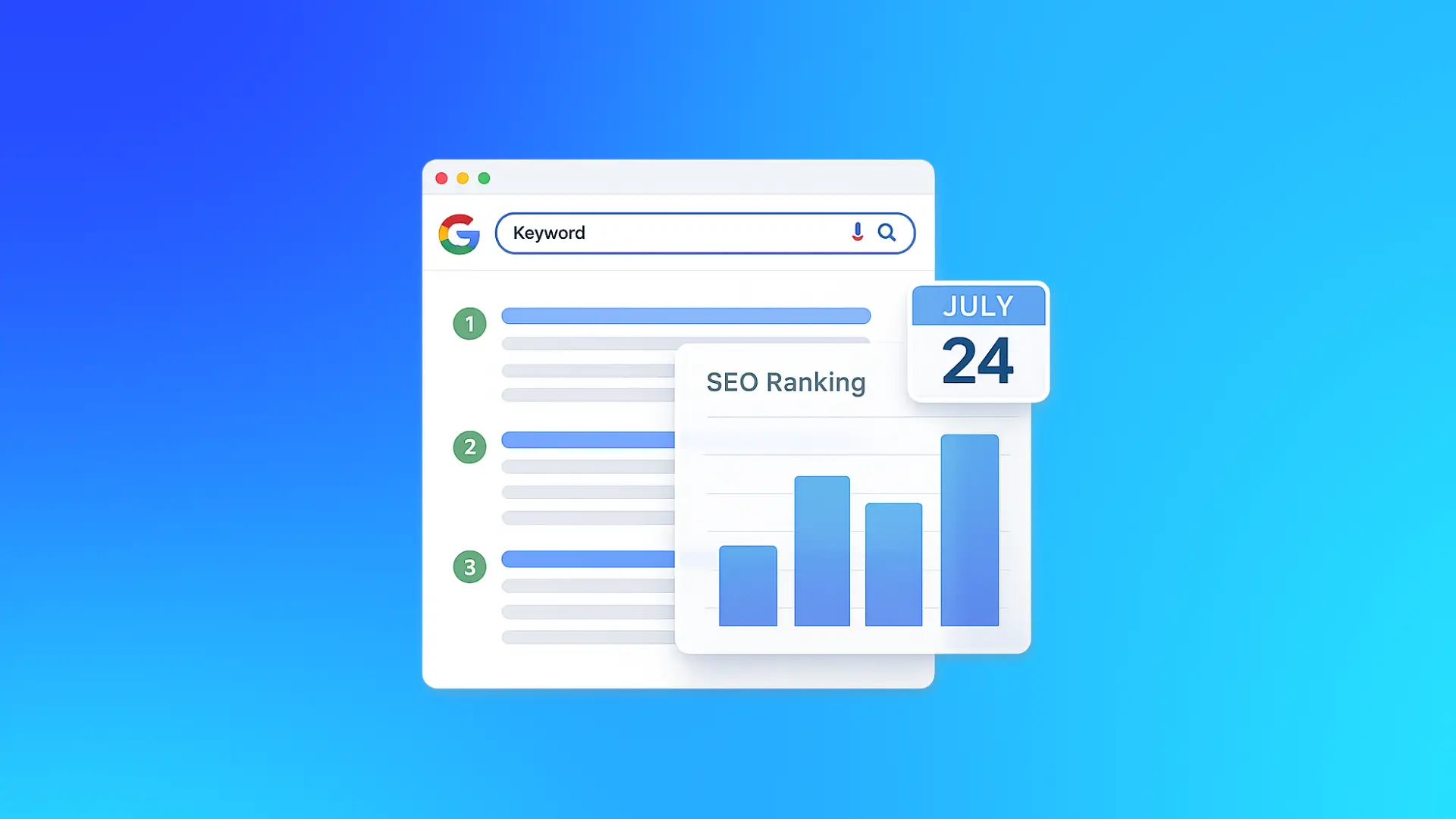
Search tracking tools flagged noticeable ranking movement around July 24, with volatility continuing through the weekend across a wide range of sites and industries. Google hasn’t confirmed an official algorithm update, which means the cause of the movement is still unclear. This kind of unconfirmed volatility isn’t unusual. Google runs frequent adjustments to its ranking systems, and not every shift is tied to a named, publicly acknowledged update.
The Gurus’ take
Unconfirmed volatility like this is a useful reminder that not every ranking movement has a clear internal cause. When rankings shift industry-wide, it’s often a sign that Google is testing or recalibrating parts of its algorithm rather than penalising specific sites. That said, assuming it’s just Google isn’t a strategy on its own. The businesses that handle these moments well are the ones that check their data properly rather than reacting to a single week of numbers.
If you work with an SEO services provider, this is a good week to ask them directly whether they’ve seen the same pattern across other client accounts. If the movement is broad and consistent across unrelated websites, that’s a strong signal it’s connected to this reported volatility rather than something specific to your site. If your movement looks different from the wider pattern, that’s worth a closer look at your own technical health, content changes or competitor activity.
Your action plan
- Cross-check ranking data against the reported July 24 volatility window: Pull your ranking and traffic reports for the affected dates and compare the pattern against publicly reported volatility to see whether your movement lines up with the broader trend.
- Separate confirmed causes from likely context: Review any changes your team made around this time, such as content updates or technical changes, so you can distinguish between self-inflicted movement and external volatility.
- Hold off on major reactive changes: Avoid making significant content or technical changes purely in response to this week’s movement until you have more data on whether it stabilises.
- Brief stakeholders with context, not alarm: If leadership or clients ask about ranking changes, explain the broader industry pattern so the conversation stays grounded in data rather than assumption.
- Keep monitoring over the following two weeks: Continue tracking rankings closely, since genuine algorithm updates often show their full impact over a longer rollout period rather than in a single weekend.
Google Merchant Center Adds More AI Features for Retailers
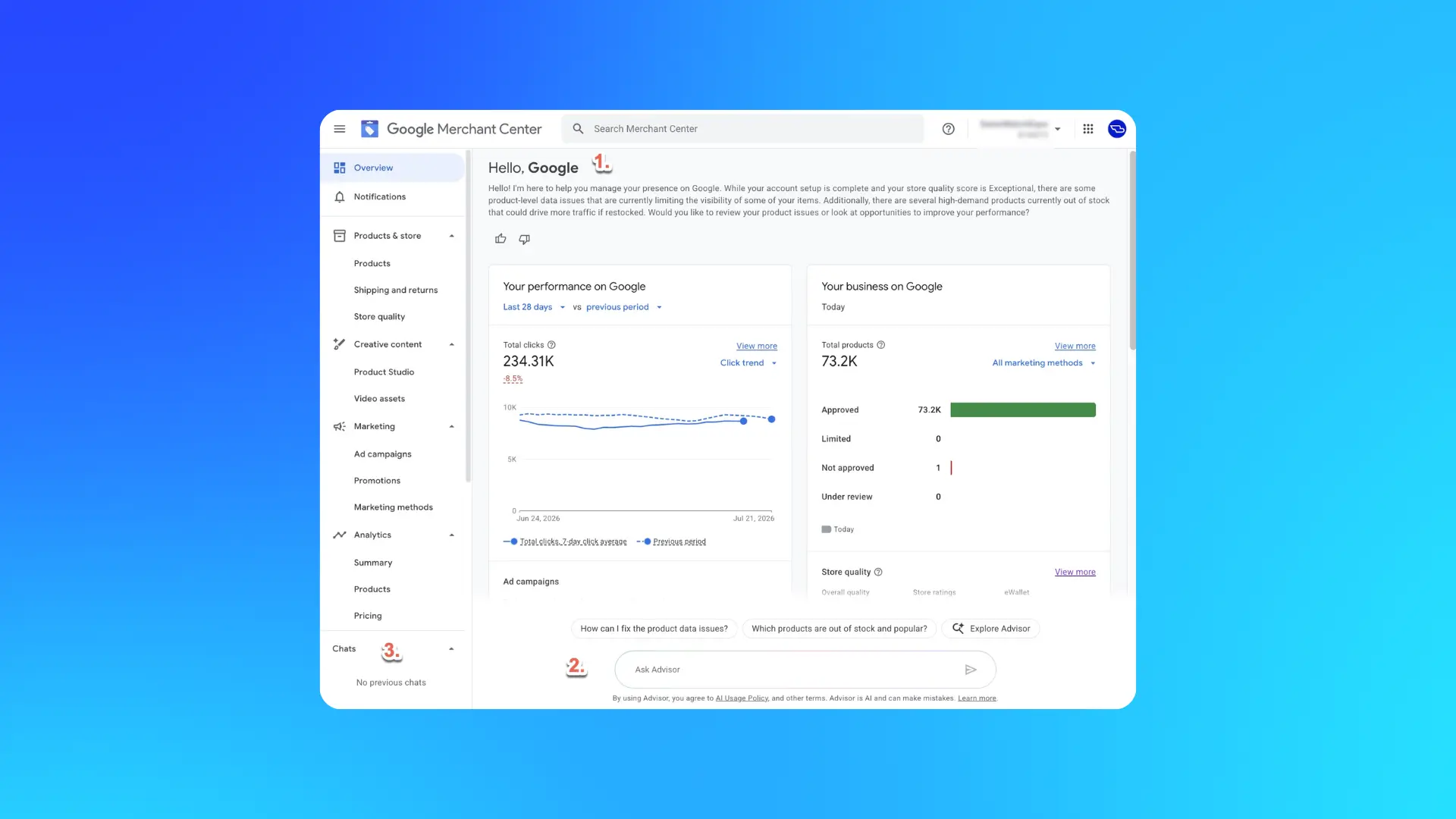
Google has expanded the AI capabilities available inside Merchant Center to give retailers more tools to generate, review and refine product data directly within the platform. These additions build on Google’s ongoing push to bring generative AI into the mechanics of Shopping, which makes it easier for brands to improve titles, descriptions and product attributes without manually rewriting large catalogues.
Product feed quality has always been one of the biggest levers on Shopping performance. Weak titles, missing attributes or thin descriptions tend to hold back visibility and click-through rate, even when bidding and budget are well managed. AI-assisted feed tools mean this work can now happen at a larger scale, without pulling a merchandiser or content specialist away from other priorities for weeks at a time.
The Gurus’ take
We see this as one of the more practically useful AI rollouts Google has made for retail this year. Feed quality is often the overlooked half of Shopping performance: teams spend a lot of energy on bidding strategy and creative, but a feed with vague titles or missing attributes can quietly cap how well even a well-optimised campaign performs.
The caution here is the same one we’d give with any AI-assisted content tool: review before you publish. AI-generated titles and descriptions can miss nuance, misrepresent variants or drift from your brand’s tone if left unchecked. Used well, this is a genuine efficiency gain. Used carelessly, it can introduce inconsistencies across a catalogue that are harder to catch once they’re live.
Your action plan
- Audit a sample of your current product feed: Review a representative sample of your titles, descriptions and attributes to identify where AI-assisted improvements would add the most value.
- Test the new Merchant Center AI features on a small batch first: Apply the new tools to a limited product set before rolling changes out across your full catalogue to assess quality and accuracy first.
- Set a human review step for AI-generated content: Build a manual check into your workflow so AI-suggested titles and descriptions are reviewed against brand guidelines before publishing.
- Track performance changes at the product level: Monitor click-through rate and conversion rate for products where AI-assisted feed changes have been applied, so you can measure real impact rather than assuming improvement.
- Prioritise your highest-revenue products first: Focus AI-assisted feed improvements on your best-selling or highest-margin products, where a lift in visibility or click-through will have the most commercial impact.
Google Ads Expands AI Max Access for Shopping Campaigns
Google Ads has widened access to AI Max for Shopping campaigns, bringing more advertisers into its AI-driven optimisation layer for Shopping spend. AI Max applies Google’s automation across matching, bidding and creative elements within Shopping campaigns, extending the kind of AI-led optimisation that’s already been rolling out across other campaign types.
This expanded access means more opportunities to test AI-driven performance without needing to migrate into a different campaign structure, since access is expanding progressively rather than switching on for every advertiser at once.
The Gurus’ take
AI Max continuing to expand into Shopping is consistent with where Google Ads has been heading for some time: fewer manual levers, more automated decision-making layered across matching, bidding and creative. Advertisers comfortable handing more control to Google’s systems can genuinely improve efficiency this way, particularly for accounts with strong historical conversion data feeding the automation.
More automation means less granular control, so testing on a portion of Shopping spend first makes more sense than switching an entire account over on day one. Australian advertisers running Shopping campaigns should check whether AI Max is now showing as available within their existing account. If you work with a Google Shopping agency, this is a good moment to have a conversation about whether AI Max fits your current account structure and reporting needs, or whether it makes more sense to wait and watch how performance settles across other advertisers first.
Your action plan
- Check AI Max availability in your account: Log into Google Ads and check whether AI Max is now available for your existing Shopping campaigns, since access is rolling out gradually rather than to every advertiser simultaneously.
- Run a controlled test before full adoption: Apply AI Max to a subset of Shopping campaigns first, so you can compare performance against your existing setup before making it standard across the account.
- Confirm your conversion tracking is accurate before testing: Review your conversion tracking setup to make sure Google’s automation is optimising against clean, accurate data rather than incomplete signals.
- Set clear benchmarks before you switch on AI Max: Document your current cost per conversion, return on ad spend and conversion volume for a clear baseline to compare against once AI Max is active.
- Review performance weekly during the test period: Monitor Shopping campaign performance closely in the first few weeks after enabling AI Max, since early data will inform whether wider rollout makes sense for your account.
TikTok Shares a New Report on Creative AI for Brands
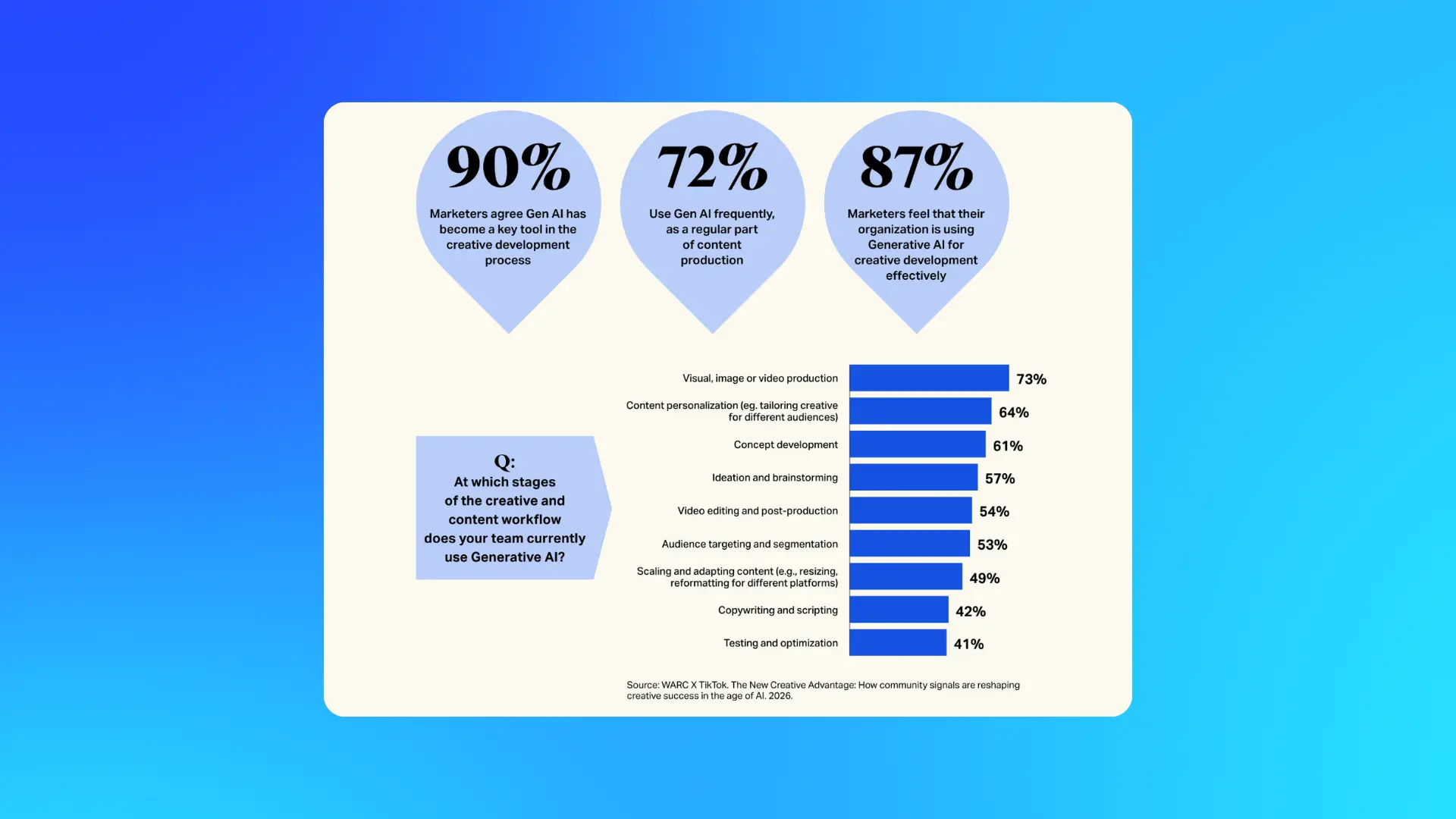
TikTok has published a new report exploring how brands can use AI to support creative production, covering areas including ideation, iteration and asset variety across both paid and organic content. The report positions AI as a tool for increasing creative output and testing volume, rather than as a replacement for platform-native content strategy.
TikTok has always been a creative-heavy platform, where testing volume and variety tends to be one of the strongest performance levers available to brands. This latest report gives brands a framework for bringing AI into production without losing the authentic on-platform tone that separates high-performing TikTok content from content that clearly wasn’t made for the platform.
The Gurus’ take
We think this report is a useful reminder that AI’s biggest value on TikTok isn’t replacing creative thinking but increasing the volume of variations a team can realistically test. TikTok performance still rewards content that feels native to the platform, so brands leaning on AI here need to keep a close eye on tone and pacing rather than treating every AI-assisted asset as ready to publish.
We’d encourage teams to focus on the iteration stage rather than ideation. AI is genuinely useful for quickly producing variants of a proven concept, adjusting hooks, pacing or captions to test small differences, but generating entirely new creative concepts from scratch tends to produce content that feels generic, which underperforms on a platform like TikTok. Teams using a TikTok Ads manager should treat AI as a way to expand what gets tested within existing campaigns.
Your action plan
- Read the report with your content team, not just your paid media team: Share TikTok’s new report with both organic and paid creative owners, as the framework applies across both content types.
- Identify one proven concept to test AI-assisted variants on: Choose a piece of content that has already performed well and use AI to help produce variations in hook, pacing or caption, rather than starting from a blank page.
- Set a native-voice review step: Build a check into your workflow where every AI-assisted asset is reviewed against your brand’s TikTok tone before it goes live, to avoid content that feels off-platform.
- Track testing volume with performance: Measure how many creative variants your team is able to test per month once AI is part of the workflow, since increased testing volume is the main benefit this report points to.
- Keep organic and paid learnings connected: Share insights from AI-assisted organic content tests with your paid media team, and vice versa, so both sides benefit from what’s working.
Pinterest Wants Brands to Update Their Product Catalogues
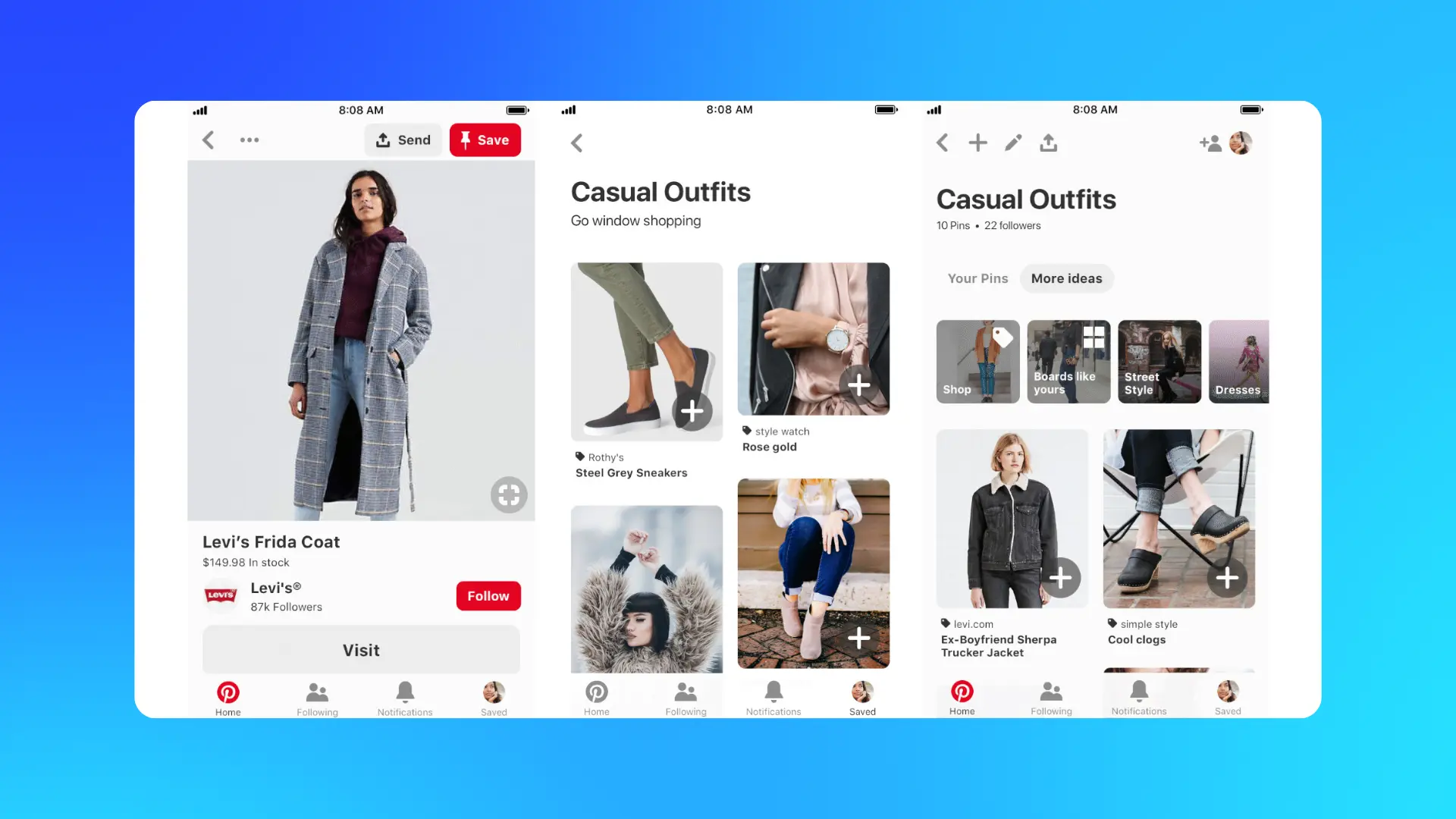
Pinterest is urging brands to review and update their product catalogues, flagging that clean, complete catalogue data plays a central role in how the platform surfaces products across both organic and paid placements. This isn’t a new feature or algorithm change, but a direct signal from the platform about the importance of catalogue hygiene to visibility.
Retailers running Pinterest as a discovery or paid channel should schedule a catalogue review this quarter. Missing attributes, outdated product images or price discrepancies between the catalogue and the live website can quietly reduce visibility, even when the underlying product and pricing strategy are sound.
The Gurus’ take
Catalogue data quality is consistently underweighted compared to campaign strategy across most platforms with a shopping component. It’s easy to focus energy on targeting, budgets and creative while the product feed sits untouched for months. On a visually driven platform like Pinterest, an outdated image or an inaccurate price can do more damage to performance than a suboptimal bid strategy.
Treat this less as a warning and more as a nudge to build catalogue review into a regular cadence, rather than a one-off task. Retailers running paid social across multiple platforms, including Pinterest, TikTok and Meta, often maintain separate catalogue feeds for each. Working with a Pinterest ads agency can help keep that review process consistent, rather than something that only happens after a platform sends a reminder.
Your action plan
- Schedule a full catalogue review this quarter: Set a specific date to audit your Pinterest product catalogue for missing attributes, outdated images and pricing accuracy, rather than leaving it as an open-ended task.
- Cross-check pricing against your live website: Compare catalogue prices against your current website pricing to identify and correct any discrepancies that could be affecting trust or performance.
- Refresh product imagery where needed: Identify products using outdated or low-quality images and prioritise updating these first, since Pinterest is a highly visual discovery platform.
- Fill in missing product attributes: Review your catalogue for incomplete fields, such as category, material or size information, and complete these to improve how products are matched to relevant searches.
- Set a recurring review cadence: Build catalogue checks into your regular reporting cycle, rather than treating this as a one-time fix, so data quality doesn’t quietly decline again over the next few months.
Strengthen Your Search and Social Strategy With OMG
This week’s updates make one thing clear: whether it’s Google refining Shopping through AI, Pinterest asking for cleaner catalogue data or TikTok pointing brands towards smarter creative testing, the platforms are rewarding businesses that keep their foundations in order. AI performs best layered on top of clean data, accurate tracking and a clear strategy, not used as a substitute for them.
Online Marketing Gurus is a digital marketing agency with over fourteen years of experience helping thousands of Australian businesses navigate exactly this kind of change across search engine optimisation, generative engine optimisation, Google Ads and paid social. If your team needs support reviewing product feeds, testing new AI tools inside Google Ads or building a stronger content and creative strategy across platforms, our specialists can help you turn this week’s updates into practical next steps.
Get in touch for a free strategy session and see how our approach to digital marketing in Australia can help your business stay ahead as search and social continue to change.

About the author
Read More Blogs
-


Last updated on:
-

Last updated on:
-
Last updated on:


Stop Guessing What Your Marketing Should Do Next.
Your free $4,000 strategy session shows where your digital marketing is leaking performance across search, paid media, content and conversion. You leave knowing what to fix first and what a stronger strategy could produce.