

What Is Marketing Attribution & How To Track It Properly

Last updated:
7 July 2025
|
9 minutes readKey Takeaways
- Marketing attribution assigns credit to channels and touchpoints throughout the customer journey to determine true ROI.
- Models range from single-touch (first/last) to multi-touch and data-driven approaches.
- Proper attribution helps optimise budget allocation and campaign effectiveness.
- Combining CRM, analytics, and cross-channel tracking improves accuracy.
- Custom models adapt based on business size, goals, and campaign mix.
Common Marketing Attribution Models (And What They Actually Mean)
If you’ve ever asked yourself, “Which part of my marketing is actually working?”—you’re not alone. That question haunts marketers across the board, from SEO services managers to in-house tech teams running performance campaigns. You might be getting clicks, form submissions or conversions, but how do you know which channel, campaign or action drove the final result? That, right there is where marketing attribution comes in.
At Online Marketing Gurus (OMG), we work with businesses in fast-paced, data-heavy sectors like tech and SaaS every day. We’ve seen firsthand how powerful proper attribution tracking can be when it’s done right — and how messy it gets when it’s not.
In this blog, we’re breaking down what marketing attribution actually is, the models used to track it and how to make sense of the data once it’s in front of you. Whether you’re deep in the SEO trenches or just trying to figure out where your leads are coming from, this one’s for you.
What is Marketing Attribution?
Marketing attribution is the process of figuring out which touchpoints in the customer journey that are responsible for converting a prospect into a customer. Basically, it’s about giving credit where credit is due.
Let’s say someone clicks a Google ad, visits your site, signs up for a webinar through an email link, then comes back two weeks later through organic search and makes a purchase. Which channel gets the credit? That’s the attribution question.
Without marketing attribution, you’re flying blind. You might end up throwing more money at a channel that only appears to be performing because it’s last in line. Attribution gives context. It connects the dots.
It’s not just a vanity metric exercise, either. When used properly, it can:
- Help you allocate your budget smarter.
- Show the true ROI measurement of each marketing effort.
- Improve cross-functional communication between SEO, paid media and sales.
Ultimately, it helps you make smarter marketing decisions that lead to real business outcomes.
Common Attribution Models (and what they actually mean)
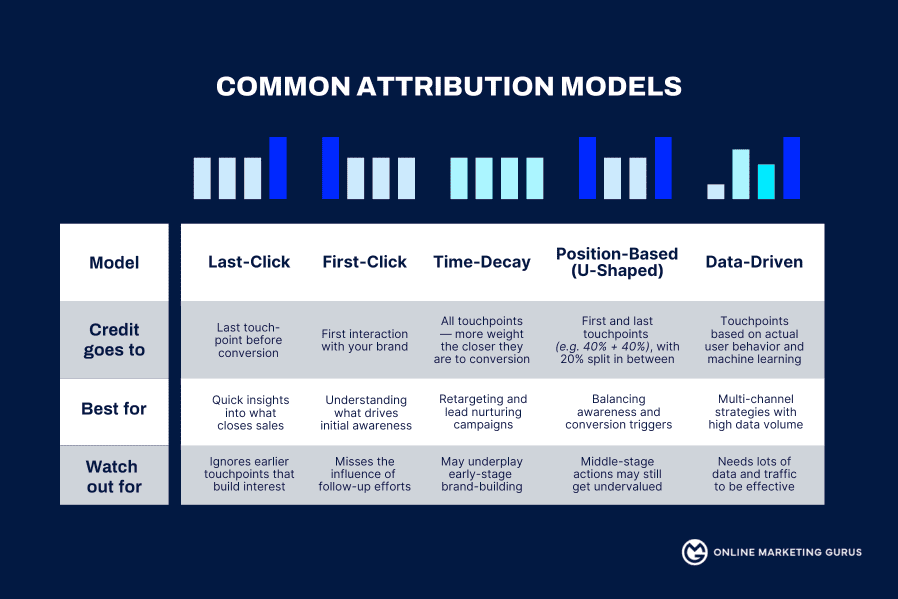
Choosing the right attribution model is like choosing the right lens — it changes what you see and how you interpret your data. Let’s break down the most common ones and what they mean for your marketing strategy.
1. Last-Click Attribution
This model gives 100% of the credit to the last touchpoint before a customer converts. For example, if someone discovers your brand through a Facebook ad, then later converts after receiving an email marketing campaign, the email campaign gets all the credit.
It’s a popular model due to its simplicity and ease of interpretation. But it comes with a huge trade-off: it overlooks the influence of all the previous interactions. That means you’re probably undervaluing the content or campaigns that actually built the interest in the first place.
Last-click attribution is useful when you need a rapid snapshot of what’s triggering conversions, especially if you’re focused on performance marketing. But if you’re trying to understand the bigger picture of how people found you, it’s too narrow to give you the whole story.
2. First-Click Attribution
Flip the last-click logic, and you’ve got first-click attribution. This model gives all the credit to the first interaction someone had with your brand. That might be a Google search result, a LinkedIn post or even a podcast mention.
This approach is great if your goal is to understand what’s driving initial awareness. It shows you the channels that pull people into your ecosystem. But again, it misses everything that happens afterward. It doesn’t tell you which steps actually got them across the line to convert.
For example, if your blog content is driving traffic, but your email campaigns are sealing the deal, you might mistakenly pull resources from your email program. First-click has value, but only when viewed alongside other models.
3. Time-Decay Attribution
Time-decay attribution introduces a sense of momentum into the model. The closer a touchpoint is to the conversion, the more credit it gets. So if a customer interacts with your brand five times, the last two or three interactions will be weighted more heavily than the first ones.
This model is especially useful in lead nurturing or retargeting-heavy strategies. It reflects how customers often gain confidence or make decisions gradually, not all at once. That final ad or email likely didn’t do all the work — but it mattered more because it pushed them to act.
That said, this model can still underplay the impact of brand-building campaigns that happened early in the process. Use it when your goal is to sharpen your view on what closes deals, without fully ignoring the rest of the journey.
4. Position-Based (U-shaped) Attribution
This one gives the most credit to the first and last touchpoints, with the remaining percentage split across the interactions in between. For example, 40% might go to the first interaction, 40% to the last and the remaining 20% shared among everything else.
It’s ideal when you want to highlight the importance of both discovery and conversion triggers. It tells you which campaigns bring people in and which ones turn that interest into action.
Position-based models work well in B2B and tech marketing, where nurturing is involved and conversions don’t happen overnight. However, they may still downplay the “middle” efforts — like webinars or case studies — that often do the heavy lifting in educating prospects.
5. Data-Driven Attribution
Finally, there’s the most advanced (and arguably the most helpful) model — data-driven attribution. Instead of following a preset logic, it uses actual data from your audience to understand what influenced conversions and how much.
Machine learning and algorithmic modelling take into account your unique customer journeys. It finds patterns across thousands of paths and assigns value based on real behaviour — not assumptions. This model adjusts as your campaigns, audience and strategy evolve.
The only catch? You need volume. Lots of data. That’s why it’s best suited for companies running multichannel campaigns with measurable traffic. But when it works, it works well — and gives you sharp insights to prioritise what truly matters.
Tools to Track Marketing Attribution
There’s no shortage of platforms promising attribution solutions. Here are some of the most widely used and reliable tools in the space today:
1. Google Analytics 4 (GA4)
GA4 comes with built-in attribution modelling that includes first-click, last-click and data-driven options. It also integrates easily with most ad platforms.
Pros and cons: GA4 is free and widely adopted, and its cross-channel reporting has improved significantly. Data-driven attribution is also accessible for eligible accounts. Just be aware that the learning curve is steep — it’s not always intuitive.
2. HubSpot Marketing Hub
If you’re already using HubSpot for CRM or email marketing, the attribution tools in the Marketing Hub make life easier. You can create attribution reports based on contacts and deal stages.
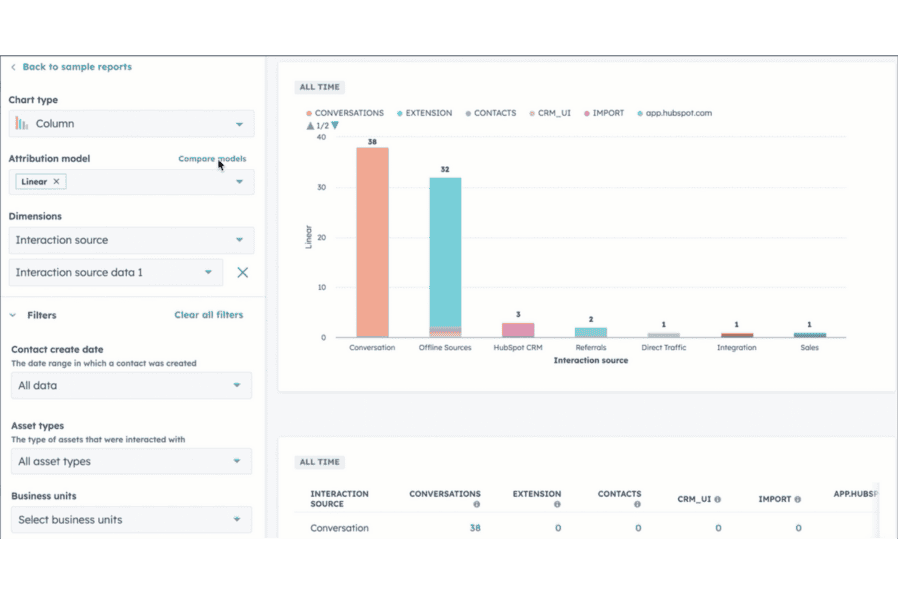
Pros and cons: It’s built into the broader marketing toolkit, offers clean visual reporting and works well for B2B and content-heavy campaigns. Pricing can be a hurdle if you’re a smaller team, though.
3. Triple Whale (for ECommerce)
For tech businesses in ecommerce, Triple Whale offers custom attribution reporting with real-time data from platforms like Meta, Google, TikTok and Shopify.
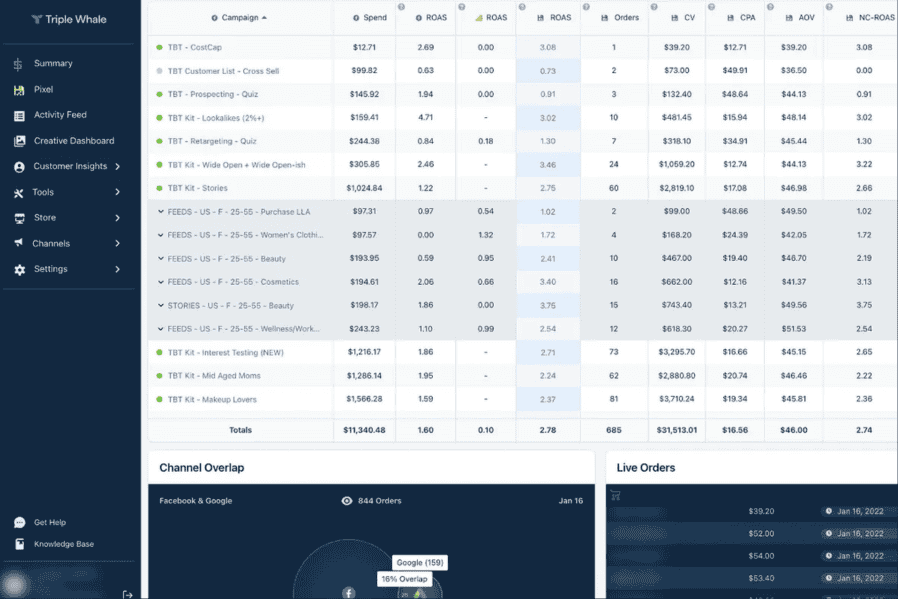
Pros and cons: Real-time data syncing gives you quick clarity on ad performance, and the mobile-first dashboard is convenient. Some features still feel like they’re in beta, but it’s growing fast.
How to Analyse Attribution Data (Without Getting Lost in It)
Data and conversion tracking are one thing — making sense of it is another. Attribution means nothing if you can’t pull insights and make decisions. Here’s how to get it right:
Step 1: Focus on one goal at a time
Are you trying to reduce customer acquisition cost? Improve ROAS? Don’t look at every metric all at once. Start with a single goal and use attribution data to support it.
Step 2: Compare models side by side
Use multiple models to look at the same campaign. If a blog post performs well under first-click but disappears under last-click, that’s telling you it’s driving awareness, not conversions. That’s still a win — just a different kind.
Step 3: Group channels, then drill down
Look at trends across paid, organic, email and social first. Once you find something promising, narrow in on specific campaigns. Attribution is a zoom-in, zoom-out game.
Step 4: Identify & support high-impact touchpoints
You’ll start to notice patterns. Maybe retargeting ads often lead to conversions after three days. Or blog content consistently performs well as a first-click. Use that to shape your spend and strategy.
Step 5: Don’t treat attribution as gospel
It’s a guide, not the whole picture. Offline conversions, device switching and cookie limitations still exist. Use attribution as one input in your decision-making, not the final say.
Decode your Marketing Data with OMG
Marketing attribution is more than just a nice-to-have — it’s a must-have. It removes the guesswork and replaces it with insight you can act on. But like any tool, it only works if you know how to use it.
That’s where we come in.
At Online Marketing Gurus, our top rated expert digital marking team help tech-driven businesses get crystal clear on what channels are driving results — and what’s just noise. From attribution model selection to setting up the right tools and interpreting customer journey analytics, we’ve got you covered.
Want to stop guessing and start tracking what actually drives results? Get in touch with us today and let’s talk about your marketing attribution game plan.

About the author
Read More Blogs
-


Last updated on:
-
Last updated on:
-
 11 minutes read
Google’s Fourth Spam Update of the Year Landed, and Search Console Got Multimodal Filters
Last updated on:


Stop Guessing What Your Marketing Should Do Next.
Your free $4,000 strategy session shows where your digital marketing is leaking performance across search, paid media, content and conversion. You leave knowing what to fix first and what a stronger strategy could produce.