

AI Goes Full Funnel: This Week’s Marketing Updates From Google, Meta & ChatGPT

Last updated:
11 November 2025
|
14 minutes readKey Takeaways
- Instead of tracking isolated keywords, marketers can now analyse grouped queries by intent — helping shape smarter, content-led SEO strategies that align with how Google interprets search topics.
- AI-driven commerce expands: PayPal’s ChatGPT integration and Google’s new audience-based promotions show how conversational AI and smarter targeting are redefining eCommerce engagement.
- Campaigns get more growth-focused: Google’s Demand Gen update and Merchant Center for Agencies give advertisers clearer tools for scaling and acquiring new customers efficiently.
- Meta doubles down on lead quality: New AI-powered lead generation tools and budget optimisation insights make it easier to control costs and improve ROI.
- Content meets performance: YouTube’s AI upscaling and Pinterest’s Assistant reinforce how visual platforms are blending discovery, entertainment and conversion.
- AI for small business creativity: Google’s Pomelli tool levels the field for SMBs, offering fast, brand-aligned marketing content generation.
Another week brings a new wave of updates across Google, Meta, YouTube and PayPal, all pointing to one clear direction: Marketing platforms are becoming smarter, more connected and more audience-aware.
From Google’s growth-focused Demand Gen campaigns to YouTube’s AI upscaling tools and Meta’s enhanced lead systems, automation is driving both efficiency and performance. These shifts highlight how AI is reshaping campaign planning, content creation and customer acquisition at every stage of the funnel.
Google’s “Query Groups” Feature Lets You See Topics, Not Just Keywords
Google has introduced a new feature within Search Console Insights called Query Groups, which uses AI to cluster similar search queries into thematic groups. Instead of viewing hundreds of individual query strings, you’ll see aggregated clusters representing user intent, such as “local SEO”, “product reviews”, or “how-to guides”.
For SEO and content teams, this shift moves performance tracking from granular keywords to topic-level insights. You can now identify which content themes are driving clicks or losing traction with less manual data wrangling. This helps shape content strategy around audience intent and boost your topical authority.
The Gurus’ take:
This update confirms that Google is steering the ecosystem toward topic-based rather than keyword-by-keyword measurement. Integrating Query Groups into your workflow means you can surface actionable clusters, fix content gaps, and align strategy more tightly with intent, which is the core of the best SEO strategies.
Your action plan:
- Group your existing queries by topic to spot content gaps.
- Use these clusters to guide new SEO content creation.
- Monitor performance changes to identify high-value themes.
Google launches Pomelli AI to power SMB marketing content
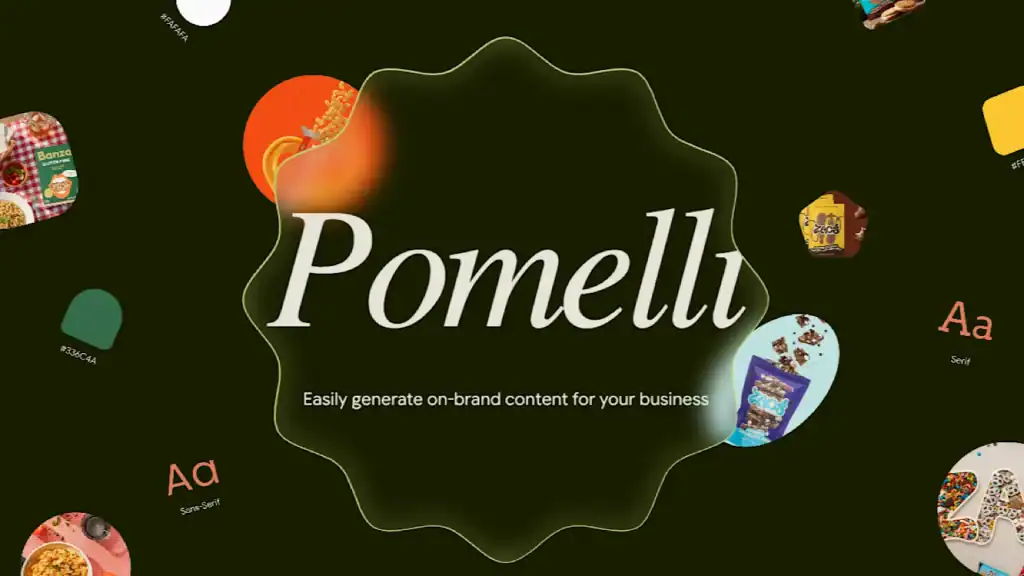
Google Labs has introduced Pomelli, a new AI experiment created in collaboration with Google DeepMind.
Designed for small and medium-sized businesses, Pomelli helps teams generate on-brand marketing content such as social posts, ads and email campaigns in minutes. It aims to remove creative roadblocks for businesses that lack large marketing teams or design resources.
Pomelli works by analysing a company’s website to build a “Business DNA” profile that captures tone, colours, fonts and imagery. Using this profile, it generates campaign ideas and branded creative assets tailored to the business’s identity. Users can edit copy or visuals directly within the tool, then download finished content ready for use across channels.
Currently in public beta in Australia, New Zealand, the United States and Canada, Pomelli is available in English and open for feedback as Google refines its capabilities.
The Gurus’ take
Pomelli has the potential to transform how small businesses produce consistent, on-brand materials at scale. Combining AI efficiency with brand-specific insights makes SEO copywriting faster and more authentic. For marketers, it’s an opportunity to spend less time drafting and more time refining strategy and storytelling.
Your action plan
- Try Pomelli to see how AI can speed up campaign creation.
- Review how your brand identity translates into AI-generated content.
- Use outputs to inspire social media and ad strategies.
- Explore how automated tools like Pomelli can support future marketing content workflows.
New Pinterest Assistant brings AI-powered shopping to the platform
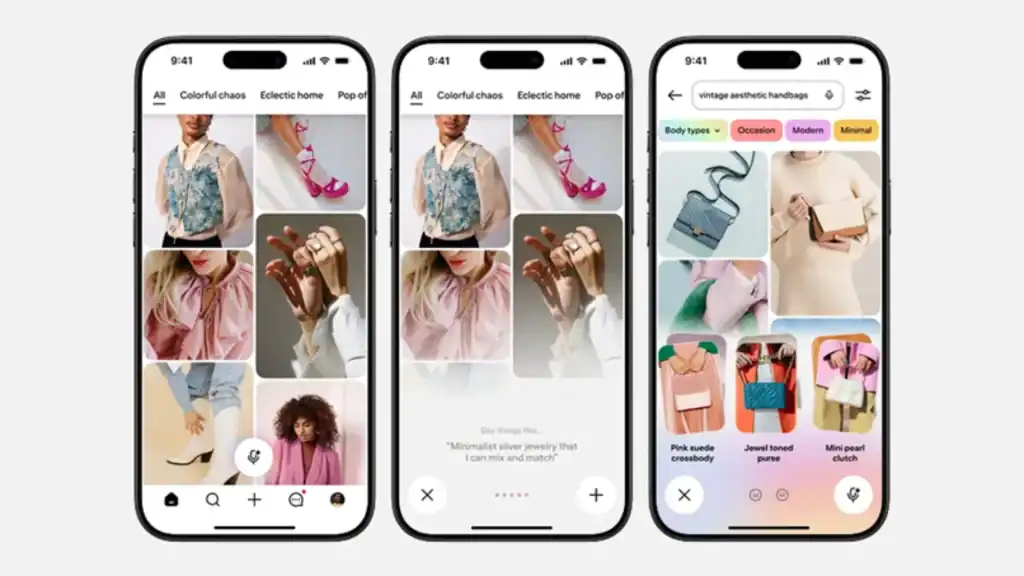
Pinterest has unveiled Pinterest Assistant, a new AI-powered tool designed to turn browsing into guided shopping.
Acting as a personal stylist and shopping companion, the Assistant uses artificial intelligence to provide personalised recommendations, product suggestions and idea generation directly within Pinterest search. It learns from each user’s saved pins, boards and style preferences to deliver more relevant results and help users find what they didn’t know they were looking for, improving social media advertising.
Powered by a multimodal AI model, Pinterest Assistant combines images, voice and text to deliver more accurate and engaging results. It uses Pinterest’s “Taste-graph”, which draws from billions of user interactions, to predict preferences and recommend matching products or styles. Users can speak or type queries like “show me autumn outfit ideas” or “find cushions that match this sofa”, and receive tailored visual responses complete with shopping links.
Currently in beta for U.S. users aged 18 and older, the Assistant represents Pinterest’s evolution from a discovery platform into an AI-driven shopping destination. Advertisers and retailers can expect new opportunities to integrate personalised product placements and improve ad relevance as the feature expands globally.
The Gurus’ take
Pinterest Assistant bridges inspiration and action, giving users immediate paths from discovery to purchase. For brands, it strengthens Pinterest’s position as a social commerce platform that merges creativity and conversion. This evolution highlights how social media advertising is becoming more intelligent, with AI playing a larger role in shaping user intent and shopping behaviour.
Your action plan
- Test AI-driven ad placements and product catalogue integrations within Pinterest campaigns.
- Optimise imagery and keywords to align with visual search and AI recommendations.
- Tailor creative assets for audience segments most likely to engage with personalised shopping tools.
- Explore opportunities in AI-led social media advertising to connect inspiration and purchase more effectively.
Meta’s new AI tools supercharge lead generation for advertisers
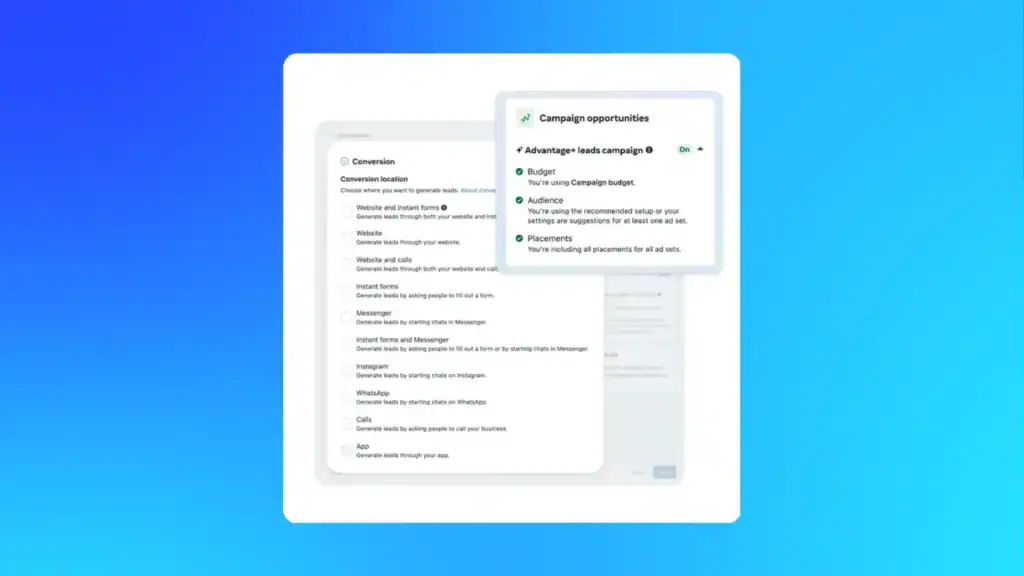
Meta has rolled out new AI-powered tools designed to enhance lead generation across Facebook and Instagram, particularly during the post-holiday “Q5” period when competition is lower and budgets are reset.
Advantage+ lead campaigns are now available globally, using Meta’s AI to automate audience targeting, placements and budget allocation. This results in lower costs per lead and higher conversion rates, helping advertisers find qualified prospects at scale. Campaigns can now generate leads through both website forms and instant forms, reducing lead costs by up to 24%.
CRM integration has also been simplified through Zapier and Salesforce. Businesses can send up to 100,000 lead events for free via Zapier, while Salesforce users can connect directly to Meta’s Conversions API. These integrations make it easier to sync customer data and optimise ads based on real conversions.
Additionally, Meta has introduced verification tools to improve lead quality, including SMS and work email checks for instant forms. Automated Messenger agents are being tested to nurture leads in real time, along with templates from partners like Manychat and Botcake for post-submission engagement.
The Gurus’ take
Meta’s new AI features upgrade lead generation from manual management to intelligent automation. With enhanced targeting, built-in verification and stronger CRM connectivity, marketers can capture more qualified leads while spending less time on technical setup. Q5 presents a prime opportunity to leverage these updates for efficient, cost-effective campaign results.
Your action plan
- Test Advantage+ lead campaigns to reach high-intent audiences.
- Integrate your CRM through Zapier or Salesforce to streamline data flow.
- Enable phone or email verification to improve lead quality.
- Use automated Messenger agents to nurture and convert leads faster.
- Plan campaigns during Q5 to maximise reach with lower competition.
Meta adds Budget Optimisation View for smarter ad planning
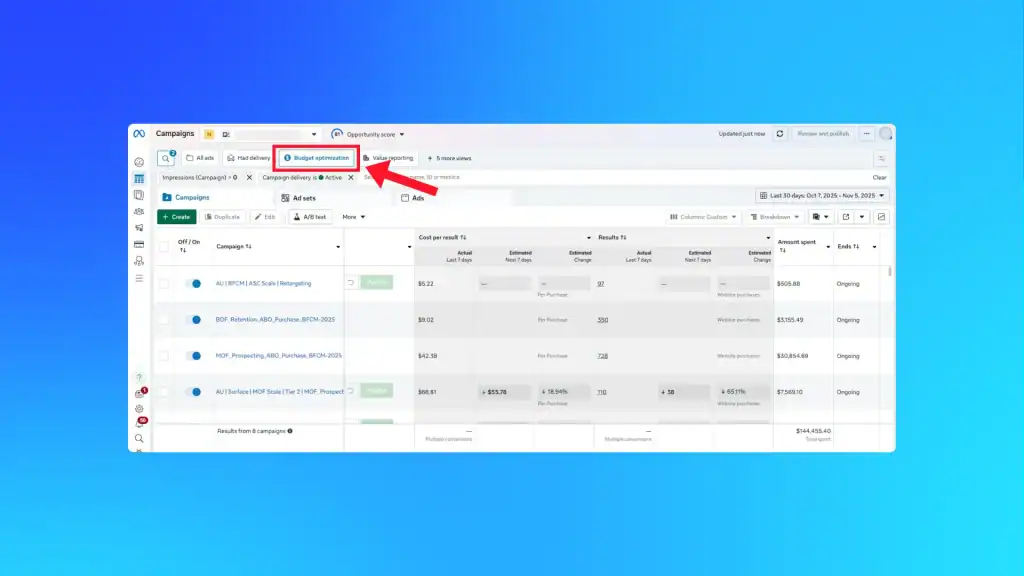
Meta has launched a new Budget Optimisation View to help advertisers see how changing their ad budgets could affect performance. The feature introduces a simple visual breakdown showing both actual and estimated results, allowing marketers to make data-backed spending decisions with greater confidence.
Within Ads Manager, the new view adds “Actual” and “Estimated” columns that display key metrics such as Cost per Result and Results over a 7-day period. It also provides a recommended budget range, helping advertisers plan how much to scale their campaigns for optimal returns.
The Gurus’ take
This release strengthens Meta’s position as a leader in performance-driven digital marketing. The new Budget Optimisation View gives advertisers more control over spend efficiency and campaign scaling decisions. By pairing real results with estimated projections, Meta helps marketers plan smarter and defend their ad budgets with clear, data-based insights.
Your action plan
- Review Budget Optimisation View in Ads Manager to assess projected results.
- Use Meta’s recommended budget range as a guide when scaling campaigns.
- Incorporate performance forecasts into broader digital marketing planning.
Google debuts Merchant Center for Agencies with new management tools
Google has launched Merchant Center for Agencies, a new platform designed specifically for marketing teams and digital agencies managing multiple eCommerce clients.
The platform builds on the foundation of the previous Multi-Client Account (MCA) system but introduces new features designed for agency use.
Agencies can now view high-level data across all accounts, including summaries of performance, issues and diagnostics. The dashboard also highlights starred accounts and those showing major changes in metrics such as clicks or product disapprovals, helping teams respond quickly to potential issues.
According to Google, the new experience improves efficiency by saving up to two hours per week through simplified navigation and account management. It also provides better leadership oversight by allowing managers to assign tasks, monitor status updates and detect problems before they lead to account suspensions.
New users can request access by submitting the contact form, while existing agency accounts can access the updated interface through merchants.google.com. The tool is available exclusively for verified agency partners managing Merchant Center accounts on behalf of clients.
The Gurus’ take
Merchant Center for Agencies is a major step forward for eCommerce management at scale. It gives agencies the clarity and control needed to oversee multiple brands efficiently, offering both convenience and proactive account protection. For digital teams, it represents a smarter way to manage client performance within Google’s retail ecosystem.
Your action plan
- Request access to the Merchant Center for Agencies if you manage multiple client feeds.
- Use the central dashboard to identify underperforming or flagged accounts quickly.
- Leverage the high-level analytics view to prioritise optimisation efforts.
- Assign account ownership and monitor updates to maintain consistent client visibility.
YouTube rolls out AI upscaling and TV optimisation tools
YouTube has introduced a suite of updates designed to improve how videos look and perform on connected TVs. The update includes AI-powered video upscaling, higher-quality thumbnails, improved channel previews and new shopping integrations that help creators and advertisers capture audiences watching from the living room.
The new AI upscaling feature automatically enhances lower-resolution videos, upgrading them from SD to HD, with support for 4K on the way. This ensures older or lower-quality uploads maintain clarity on large screens. Creators can choose to keep their original versions, while viewers can toggle between native and enhanced resolutions. Thumbnail file size limits have also expanded from 2MB to 50MB, enabling crisp 4K thumbnails that help attract attention on high-resolution displays.
YouTube has also refined how users discover and engage with channels on TV. The new “Shows” design lets creators organise videos into series-style playlists, while immersive homepage previews encourage viewers to explore more content. Contextual search now prioritises videos from the same creator’s channel, improving visibility and keeping audiences within a brand’s ecosystem.
Shopping features are expanding as well. Tagged videos can now display QR codes that link directly to product pages, improving the functionality of YouTube ads, and YouTube is testing timed product highlights that appear at key moments during playback.
The Gurus’ take
YouTube’s investment in TV optimisation reflects the platform’s shift towards long-form, high-quality viewing and interactive commerce. For advertisers, this means more ways to engage audiences through premium placements, sharper visuals and seamless purchase pathways, which is a major win for YouTube ads targeting the growing connected TV audience.
Your action plan
- Enhance existing videos to benefit from AI upscaling for sharper playback.
- Design 4K thumbnails to stand out on TV screens.
- Leverage QR codes and timed shopping links to drive conversions.
- Refine targeting and creative strategies for YouTube ads focused on CTV engagement.
PayPal partners with ChatGPT for instant AI checkout
PayPal has announced a major partnership with OpenAI to power instant payments within ChatGPT, marking a new era for conversational commerce. Through the integration of PayPal’s payments technology and OpenAI’s Instant Checkout system, users will soon be able to browse, order and pay for products directly inside ChatGPT without switching apps.
The collaboration is built on the Agentic Commerce Protocol (ACP), an open-source framework that enables merchants to list products and process transactions across AI apps. Using their PayPal wallets, customers can securely confirm shipping and payment details in a few taps or clicks while enjoying buyer protection and dispute resolution. Merchants won’t need additional integrations, as PayPal will manage routing and payments behind the scenes.
Starting in 2026, products from merchants using PayPal’s suite will automatically appear within ChatGPT across key retail categories, including fashion, beauty, electronics and home improvement. PayPal is also developing an agentic commerce suite to help businesses feature their catalogues inside AI platforms, accept payments and gain insights into shopper behaviour.
The Gurus’ take
This partnership connects two massive ecosystems: ChatGPT’s user base and PayPal’s global payments network, effectively turning AI chat into a fully functional shopping channel. For brands, it signals a turning point in how users discover and purchase products through conversation, which means they need to learn how to optimise for ChatGPT.
Your action plan
- Start preparing product data and content for AI Search visibility.
- Explore opportunities to integrate PayPal’s merchant tools for AI-driven commerce.
- Monitor OpenAI’s Instant Checkout rollout to align campaigns with early adoption.
- Develop conversational content strategies that guide users from discovery to purchase.
Google adds audience-based promo targeting in Merchant Center
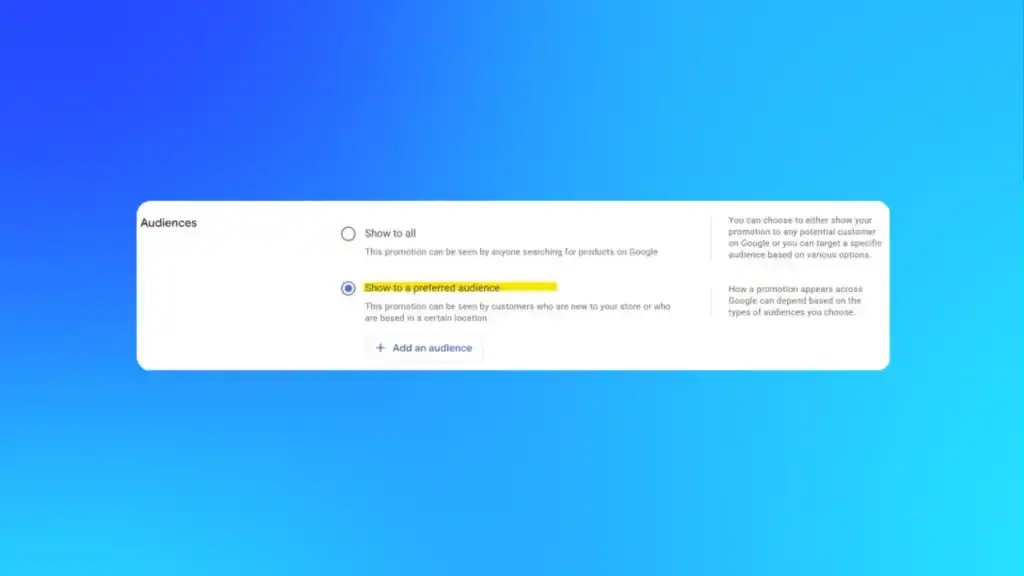
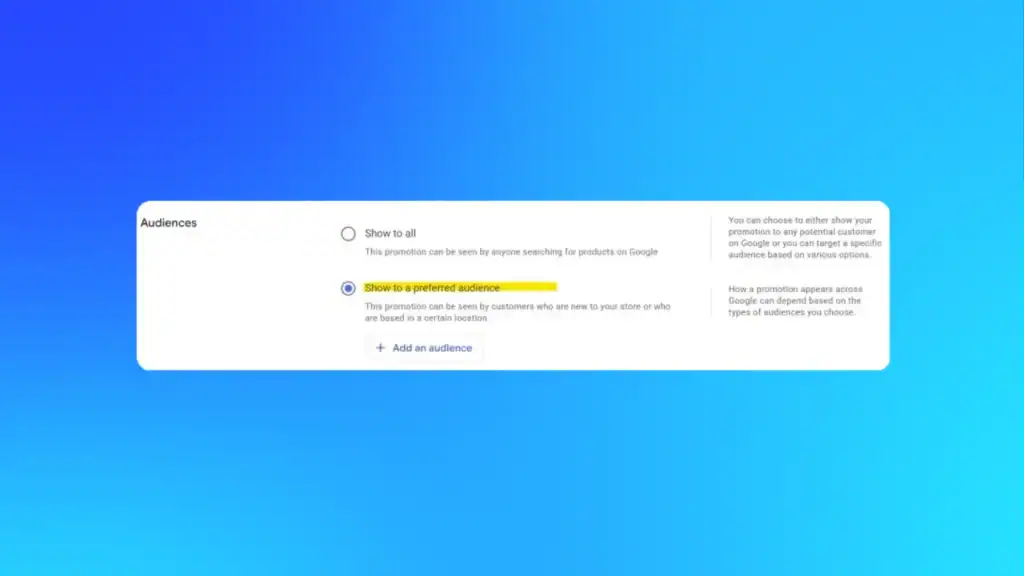
Google has updated Merchant Center to allow advertisers to target promotions by audience type, giving brands greater control over who sees their offers. The new feature enables audience-specific discounts in shopping listings on Google Search, helping businesses deliver more relevant deals that boost conversions and protect profit margins.
With this update, merchants can now define audiences such as “new customers” or target users based on specific locations when setting up a promotion. For example, retailers can run a “20% off your first order” deal for new shoppers or create region-specific discounts to test new markets without affecting existing customers elsewhere.
The change builds on Google’s broader goal of improving customisation and relevance across its commerce ecosystem. By connecting audience insights with promotional targeting, advertisers can run more effective PPC campaigns that maximise ROI during key retail periods like Black Friday or holiday sales.
The Gurus’ take
Audience-based promo targeting is a smart step forward for data-driven retail marketing. It helps advertisers tailor offers that attract new customers while maintaining healthy margins from repeat buyers. For eCommerce brands, it’s another reason to revisit pay-per-click strategy and ensure promotions are aligned with audience goals and lifecycle stages.
Your action plan
- Test audience-specific promotions in Merchant Center to gauge performance.
- Create tailored offers for new shoppers to drive first-time conversions.
- Integrate these promotions into broader pay-per-click campaigns for better ROI.
- Monitor results and adjust targeting before major shopping seasons.
Google Demand Gen adds new acquisition modes for growth
Google has enhanced Demand Gen campaigns with new customer acquisition (NCA) goals, allowing advertisers to focus specifically on attracting new audiences. These updates help marketers move beyond performance optimisation to true growth-driven targeting within Google Ads.
The new feature includes two modes: New Customer Only Mode, which bids exclusively on new customers, and New Customer Value Mode, which prioritises bids for new customers while still engaging existing ones. The first option is ideal for brands with defined new customer budgets, while the second suits campaigns focused on purchase conversions and scalable growth.
These modes give marketers greater control over how they allocate ad spend, ensuring efforts are directed towards expanding their customer base rather than retargeting the same audience.
The Gurus’ take
This update makes Demand Gen a more strategic tool for brands focused on growth. By distinguishing between acquisition and retention, advertisers can better allocate resources towards finding new customers while still leveraging existing data for efficiency. It’s a major step in evolving Google Ads into a smarter, full-funnel platform.
Your action plan
- Test both NCA modes to determine which best fits your growth goals.
- Use New Customer Only Mode for fixed acquisition budgets.
- Apply New Customer Value Mode when optimising for purchase conversions.
- Track assisted conversions to gauge long-term performance.
- Partner with a Google Ads expert to refine targeting and bidding strategy.
From smarter tools to stronger results
At Online Marketing Gurus, we help brands stay ahead of every update and turn change into measurable growth. With more than a decade of experience and over 40 industry awards, our team combines strategy and data to deliver results across every channel.
Whether it’s refining your ad performance, scaling paid campaigns or preparing for the next wave of AI-driven marketing, we’ll help your brand move faster and smarter. Contact OMG today for a free strategy session and find out how smarter digital marketing starts with the right team behind you.

About the author
Read More Blogs
-


Last updated on:
-

Last updated on:
-
Last updated on:

Stop Guessing What Your Marketing Should Do Next.
Your free $4,000 strategy session shows where your digital marketing is leaking performance across search, paid media, content and conversion. You leave knowing what to fix first and what a stronger strategy could produce.