

How To Rank in ChatGPT: The AI Search Optimisation Playbook


Last updated:
19 November 2025
|
11 minutes readKey Takeaways
- Improving your AI visibility means being cited and trusted by AI models – so great SEO is a non-negotiable .
- Success doesn’t just depend on ranking for keywords. It’s about optimising for conversations and targeting Answer Engine Optimisation (AEO).
- AEO ensures your content is structured for AI summaries, featured snippets, and voice-based search.
- SEO is more important than ever. Strong E-E-A-T, robust entity optimisation, a solid technical foundation, and consistent brand authority all determine how AI interprets your site .
- Technical SEO still matters. Crawlability, schema markup, and content clarity directly influence how AI engines discover and rank your content.
- The brands winning in ChatGPT and AI Search are those combining great, traditional SEO with AI visibility strategies that position them as trusted, authoritative sources in generative search.
The shift from traditional search engines to AI search has rewritten the rulebook. Tools like ChatGPT, Gemini, and Perplexity are now acting as answer engines – generating summaries instead of showing links. The challenge? Ensuring your brand is cited, visible, and trusted inside these AI-generated responses.
Search has officially changed.
It’s no longer just about climbing Google’s blue links — it’s about earning visibility inside AI search engines like ChatGPT, Gemini, and Perplexity. These tools don’t deliver a list of results; they generate answers. If your brand isn’t referenced, cited, or recognised as a credible source within those AI-generated responses, you’ve effectively disappeared from the conversation.
This guide breaks down things we’ve tested and learned in order to help marketers need to know about how ChatGPT “ranks” content, how Answer Engine Optimisation (AEO) fits in, and how to future-proof your brand for the next evolution of search.
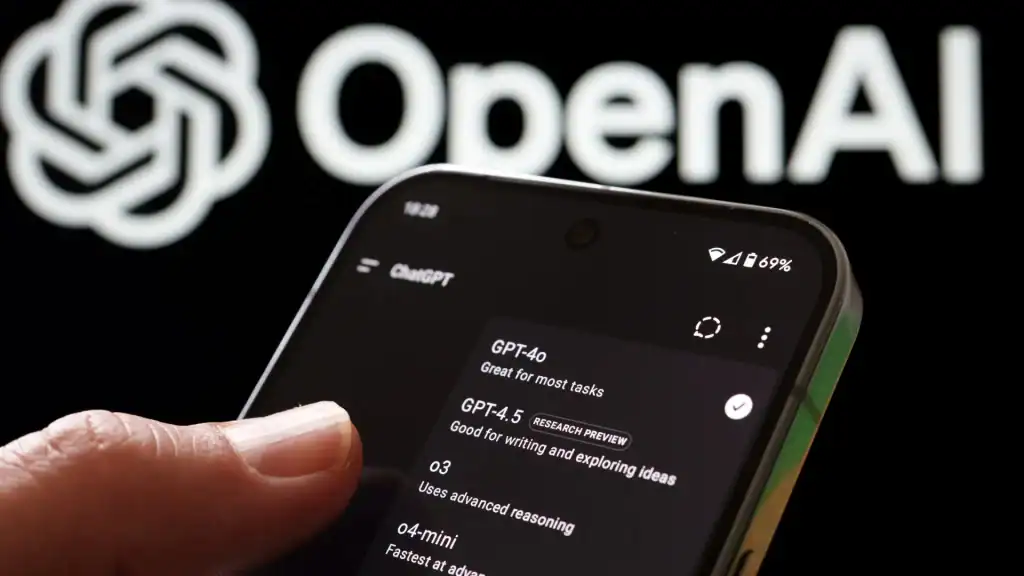
Why Ranking in ChatGPT and AI Platforms Matters Now
ChatGPT isn’t a search engine in the traditional sense. It’s an AI-powered answer engine, trained on vast amounts of data, capable of generating detailed summaries in response to user prompts.
ChatGPT and similar tools are rapidly evolved the first step of the customer journey. Instead of “Googling,” users are simply asking AI. That shift has huge implications:
- AI models choose which sources to trust and cite.
- They summarise rather than list search results.
- They pull from multiple data points, including web content, brand mentions, and structured data.
Ranking in ChatGPT means being visible, cited, and trusted in the AI ecosystem. It’s the new frontier of organic discovery – and it demands a strategy that blends SEO, content, and AI intelligence.
How ChatGPT Sources and Ranks Information
To “rank” in ChatGPT, you first need to understand how it finds information.
ChatGPT relies on several layers of data retrieval:
- Large Language Model (LLM) training data:
Historical data used to train the model, including open web content, books, and repositories. - Real-time browsing capabilities:
ChatGPT and AI Platforms now browse the web to deliver fresh, factual answers. This means SEO fundamentals (crawlability, schema markup, content clarity) directly influence AI visibility. - External plugins and citations:
When ChatGPT references or links to a source, it’s pulling from high-authority domains and contextually relevant content.
Essentially, ChatGPT ranks trust, not just text. It prioritises factual accuracy, strong entity relationships, and consistent brand authority signals.
If your site is optimised for structured data, credibility, and entity consistency, you’re far more likely to appear in AI-generated responses.
The New Ranking Factors for AI Visibility
Traditional SEO signals like backlinks and keywords still matter – but AI search engines have expanded the ranking framework to include credibility, consistency, and clarity.
Here are the core ranking factors shaping AI visibility today:
1. E-E-A-T Content Is King
AI tools rely on trust, which makes EEAT (Experience, Expertise, Authoritativeness, Trustworthiness) principles more important than ever. Clear author bios, brand expertise, and factual accuracy help LLMs associate your domain with credibility.
2. Entity Recognition
Generative AI models understand entities (people, brands, products) rather than just keywords. Consistent naming conventions, structured data, and clear topical relationships strengthen your “entity graph.”
3. Structured Data / Schema Markup
Schema markup helps AI identify what your page is about. Implementing types like Article, FAQPage, and Product clarifies your site’s purpose for crawlers and answer engines.
4. Brand Authority
ChatGPT references sources with proven accuracy and reliability. This is where domain authority, backlinks, and reputation management intersect with GEO. Rank in ChatGPT requires building a strong brand authority through off-page signals and improving local visibility.
5. AI Audit Readiness
An AI audit evaluates how your site is interpreted by LLMs – identifying missing entity connections, citation gaps, and unstructured data that limit AI visibility.
Introducing GEO
That’s where Generative Engine Optimisation (GEO) comes in. Generative AI Optimisation is the evolution of SEO for AI-driven discovery.
Instead of optimising purely for Google’s crawler, GEO aligns your brand for AI-driven answer engines like ChatGPT, Gemini, and Perplexity. It ensures your content is discoverable, interpretable, and referenced within generative AI outputs.
A standard GEO framework includes:
- AI Audit – benchmarking your brand’s visibility across LLMs and answer engines
- Entity Optimisation – mapping brand mentions and contextual relevance
- LLM.txt Integration – clarifying how large language models should interpret your site
- AI Reporting – tracking AI citations, mentions, and brand visibility metrics
With GEO, the goal isn’t just ranking — it’s representation. You want ChatGPT to speak your brand’s language when answering questions in your category.
From Keywords to Context: The Rise of Entity SEO
Generative AI doesn’t “see” keywords the way Google once did. It processes context – understanding how entities connect to one another across the web.
For example:
If your brand is known for sustainable fashion, AI models map your entity to related topics (eco-friendly materials, ethical manufacturing, circular economy). The stronger those contextual signals, the more likely ChatGPT is to mention your brand in relevant responses.
How to strengthen your entity footprint:
- Use structured data to define your brand, products, and services
- Align with reputable external sources (Wikipedia, Wikidata, news sites)
- Build internal links that reinforce topical relevance
- Maintain consistent naming conventions across channels
Entity SEO is the bridge between traditional optimisation and AI visibility. It ensures that when ChatGPT is asked about your niche, it knows exactly who you are.
Technical SEO Steers Generative Visibility
Even in the age of AI search, technical SEO remains the foundation of discoverability.
If your site isn’t crawlable, structured, and fast – ChatGPT can’t access it, let alone cite it.
Prioritise:
- Crawlability: Ensure your robots.txt and site architecture allow for full discovery.
- Schema Markup: Implement Article, FAQPage, HowTo, and Product where relevant.
- HTTPS & Core Web Vitals: Site speed and security impact credibility signals.
- Mobile-first design: AI tools still rely on Google’s mobile indexing for freshness cues.
A strong technical SEO foundation supports both Google visibility and generative accuracy.
If you’re unsure how your technical setup measures up, partner with an experienced SEO agency that understands both traditional and AI-first optimisation.
Tracking and Measuring AI Visibility
Unlike Google rankings, AI visibility doesn’t come with a standard dashboard (yet).
Ensure you look at how your brand reflects on AI platforms by doing AI reporting and understand:
- Brand mentions across AI platforms (ChatGPT, Gemini, Perplexity)
- Citation frequency within AI-generated answers
- Visibility performance across LLM updates
These insights feed directly into your GEO strategy – creating a feedback loop between your brand and generative platforms.
Future-Proofing Your Brand for AI Search
AI search is evolving fast. By 2026, over half of all online queries are expected to start within AI-driven ecosystems.
That means brands that rely solely on Google rankings risk losing discoverability.
The future belongs to those who embrace Answer Engine Optimisation (AEO) and Generative Engine Optimisation (GEO) as core pillars of digital marketing.
The new SEO stack includes:
- AI audits for content visibility and entity health
- GEO implementation for generative coverage
- Schema and entity mapping for structured discoverability
- Continuous brand monitoring across AI ecosystems
The Gurus’ Take: How To Rank in ChatGPT and AI Search
We’ve been fielding questions about how to rank in ChatGPT to improve your AI visibility for months – and the truth is, it’s not just about SEO anymore.
Our Generative Engine Optimisation framework helps brands:
- Build measurable AI visibility
- Improve entity recognition and authority
- Deploy LLM.txt to guide AI interpretation
- Integrate AEO and schema strategies for conversational relevance
In short: you need to ensure you own your presence across AI by improving brand authority. Ensure AI knows who you are, what you stand for, and when to include you in the answer.
Over the last couple of months, we’ve been helping brands navigate the shift from traditional SEO to AI-driven visibility. Contact us about our Generative Engine Optimisation (GEO) framework with AI audits and reporting, which has been designed to help brands to improve AI search optimisation and build measurable AI visibility across LLMs and answer engines.
FAQs: Ranking in ChatGPT and AI Search
1. What does it mean to “rank” in ChatGPT?
Ranking in ChatGPT means your content, brand, or domain is recognised and referenced within AI-generated responses. Instead of a search results page, ChatGPT provides an answer – and the goal is to have your brand cited as a trusted source in that answer.
2. Can ChatGPT display my brand in its answers?
Yes, but only if the model recognises your brand as credible, relevant, and well-structured online. ChatGPT references high-authority domains, uses structured data to understand brand context, and favours clear, factual content. GEO helps ensure your brand meets all three criteria.
3. How is Generative Engine Optimisation (GEO) different from SEO?
SEO optimises for search engine crawlers. GEO optimises for AI engines like ChatGPT, Gemini, and Perplexity — ensuring your brand is visible in generative answers, not just search rankings. GEO focuses on entity mapping, AI audits, structured data, and brand citations across AI ecosystems.
4. What’s an AI audit and why do I need one?
An AI audit assesses how your site and content are interpreted by large language models (LLMs). It identifies missing schema, inconsistent entities, or low-trust signals that may prevent AI systems from referencing your brand. It’s the first step toward measurable AI visibility.
5. How do I measure AI visibility?
AI visibility measures how often your brand appears or is cited in generative search outputs. Tools track brand mentions across ChatGPT, Gemini, and other LLMs, giving you insight into how your content performs beyond traditional SEO metrics.
6. Does ChatGPT use Google rankings to choose content?
Not directly. ChatGPT may reference well-ranked content because it reflects authority and relevance, but it doesn’t “pull” from Google. Instead, it uses Bing browsing and internal training data to find trustworthy information. That’s why entity strength and structured data are critical.
7. Can I pay to appear in ChatGPT results?
Not yet, ChatGPT doesn’t currently offer paid placements or sponsored visibility. However OpenAI plans to monetise its platform by integrating sponsored content, potentially starting in 2026. While OpenAI’s ad platform is still in development, it’s expected to feature formats like sponsored links, product recommendations, or sponsored sessions, generating billions in revenue. The only way to appear is through strong E-E-A-T signals, high-quality content, and optimised entity relationships. Investing in GEO helps ensure your brand earns inclusion organically.
8. What is Answer Engine Optimisation (AEO)?
Answer Engine Optimisation (AEO) focuses on structuring your content so AI systems and voice assistants can easily extract and deliver your answers. It’s about formatting information in clear Q&A style, using schema markup, and aligning with natural language queries.
9. How does schema markup help AI understand my content?
Schema markup acts as a translator between your site and AI models. It provides structured information — such as product details, FAQs, or author bios — that helps AI engines identify and summarise your content accurately. It’s a key part of both SEO and GEO.
10. What’s the role of LLM.txt in GEO?
LLM.txt is a new protocol that guides large language models on how to interpret and cite your content. Similar to robots.txt, it specifies permissions and preferences for AI data retrieval. Implementing it helps ensure accurate representation of your site within generative systems.
11. How often should I update my AI optimisation strategy?
At least quarterly. AI models evolve rapidly – updates to ChatGPT, Gemini, or Perplexity can change how your content is processed. Regular AI audits ensure your schema, content structure, and entity relationships stay aligned with current AI retrieval logic.
12. Can AI search engines harm my brand reputation?
Potentially, if inaccurate or outdated content about your brand exists online. LLMs summarise what’s available, so misinformation can spread. Conducting brand sentiment checks and keeping structured, up-to-date data on your owned channels helps protect brand integrity.
13. How does OMG track brand mentions in AI platforms?
Through our AI reporting, we monitors brand mentions, citation frequency, and entity performance across ChatGPT, Gemini, and other AI tools. This data helps refine your GEO strategy and ensures your brand maintains strong visibility within generative ecosystems.
14. Will AI search replace Google completely?
Not entirely. Google will remain a major player, but AI search is rapidly taking the top of the funnel – where users ask questions, not just search keywords. Successful brands will optimise for both, blending traditional SEO with GEO for complete visibility.
15. How do I start implementing GEO for my business?
Start with an AI audit to understand how your site performs in generative systems. From there, develop a GEO roadmap focusing on entity optimisation, structured data, and content clarity. Partnering with a specialised SEO experts experienced in AI search is the fastest way to see measurable results.

About the author
Read More Blogs
-


Last updated on:
-
10 minutes read
Are Your Search Campaigns Ready for the Google Ads Migration?
Last updated on:
-
10 minutes read
More AI In Search, More Ads In AI & More Choice For Social Users: This Week’s Updates
Last updated on:




Stop Guessing What Your Marketing Should Do Next.
Your free $4,000 strategy session shows where your digital marketing is leaking performance across search, paid media, content and conversion. You leave knowing what to fix first and what a stronger strategy could produce.