







 1300 433 071


- Home
-

- Blog
-
- AI Marketing Blogs
-
- ChatGPT’s New Shopping Research Tool Guide: How To Optimise Early
ChatGPT’s New Shopping Research Tool Guide: How To Optimise Early
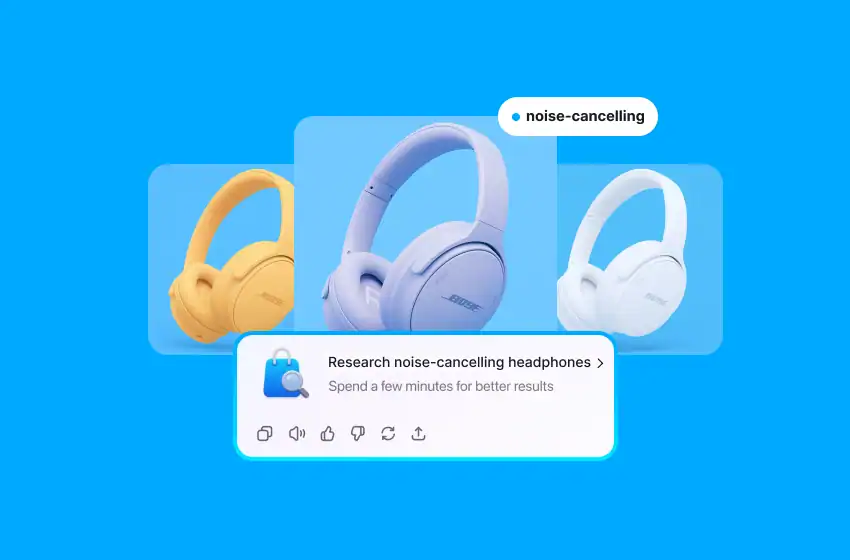
OpenAI has introduced a major upgrade to ChatGPT’s search capability: Shopping Research Tool. When users ask ChatGPT something like “Christmas presents for toddlers under 100 AUD”, it now presents product recommendations with pricing, pros and cons, images, reviews and direct links.
Key Takeaways
-
OpenAI has launched ChatGPT Shopping Research, a new feature that lets users compare products, see reviews and explore curated recommendations via conversational search.
-
OpenAI also says results are organic, not sponsored. With no ads or sponsored placements shaping the recommendations, brands that optimise early can secure organic visibility before competition intensifies.
-
Full functionality is currently rolling out in the US first, with Australia expected to follow soon.
-
Although launched globally (including the US) for all ChatGPT users (Free/Plus/Pro) in categories such as fashion, electronics, home goods, the AU-specific rollout remains slower; we anticipate full AU availability soon.
-
For Christmas shopping, this shift matters: consumers will increasingly ask AI to find, compare and shortlist gifts before going to search engines.
-
To prepare, e-Commerce brands must strengthen three pillars: structured data, on-page product & category content, and trust signals – the core inputs ChatGPT uses to understand and rank product relevance.
-
Generative Engine Optimisation (GEO) is increasing in importance. Brands who adapt now will gain disproportionate visibility when the Australian rollout lands.
Shopping Research Tool from ChatGPT
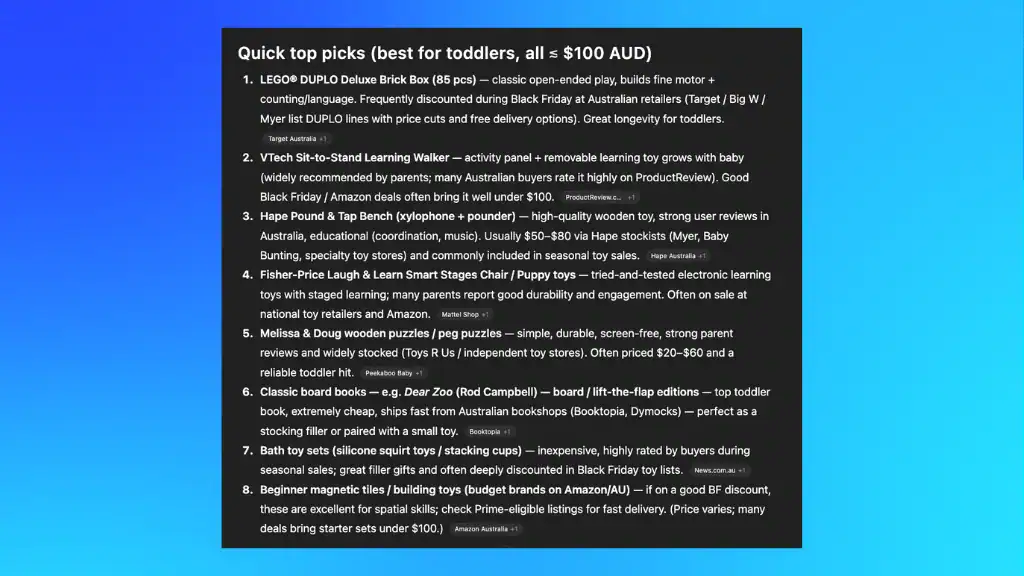
This marks a clear shift from traditional search behaviour. Instead of browsing search engines online, filtering through SEO-optimised category pages and reading dozens of reviews, consumers can now get a consolidated shortlist instantly, all this via natural conversation.
Crucially, this feature is organic listings. OpenAI states that results are generated independently and not influenced by payments or ads. That gives brands a rare early window before paid formats inevitably arrive next year.
Today, the full Shopping Research tool is live in the US only. Australian users have access to lighter “shopping assistant” features, but not the full product-comparison interface yet. The writing is on the wall: Australia is next.
Introducing Conversational e-Commerce
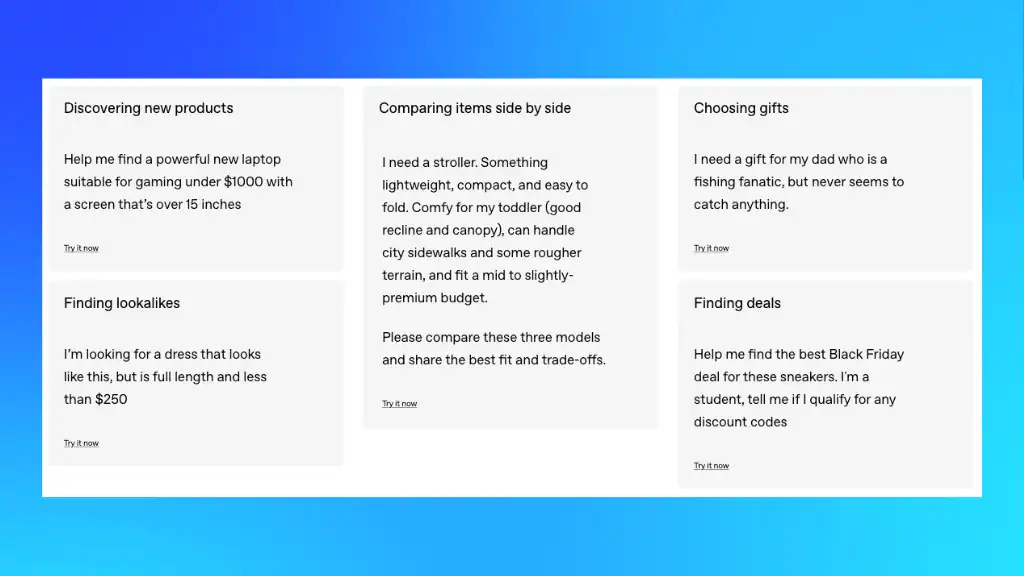
ChatGPT Shopping Research Tool is OpenAI’s first significant move into conversational commerce. Instead of typing keyword-driven queries into search engines, consumers can now ask natural questions such as:
- “What’s a good Christmas gift for a 12-year-old who loves Taylor Swift?”
- “Which cordless vacuum is best for apartments?”
- “ChatGPT shopping assistant: pick me a skincare routine under $150.”
ChatGPT then:
- Understands the intent
- Aggregates product data
- Summarises reviews
- Highlights pros and cons
- Presents direct links
As it’s powered by natural-language understanding, the model interprets context far more flexibly than a traditional search engine.
This positions ChatGPT as the upper funnel of product discovery, not just an AI productivity tool.
How To Use The Shopping Research Tool
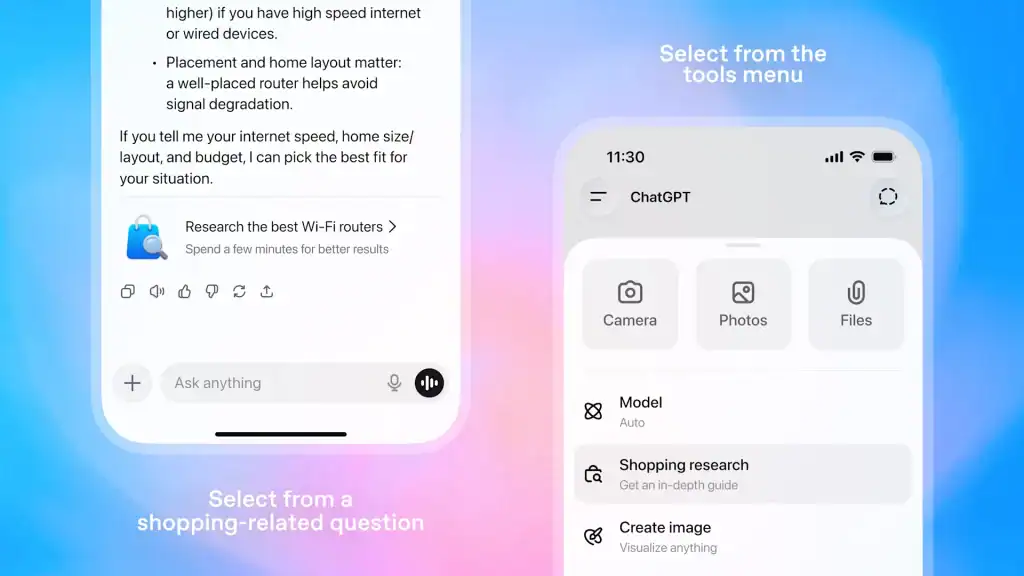
- When you ask a shopping-style question, ChatGPT automatically recommends starting Shopping Research. Tap to begin, or choose it manually from the (+) menu.
- When the session opens, describe what you’re looking for in as much detail as possible. The more specific you are—budget, who it’s for, preferred features, brands—the better ChatGPT can refine the recommendations.
- Next, guide the research by interacting with the product suggestions. Mark items as “Not interested” or “More like this” to help ChatGPT refine the recommendations in real time.
What This Means for Retailers
1. Discovery now happens before Google
ChatGPT becomes the first stop in the shopping journey. Consumers will enter the funnel earlier, through conversational search, and brands need visibility in that stage.
2. Structured data becomes non-negotiable
ChatGPT relies on clean, machine-readable product schema to interpret what your products are, how they compare and whether they’re relevant. If your structured data is thin or inconsistent, you limit your visibility before the user even reaches search engines. Prioritise:
- Complete product schema (JSON-LD)
- Accurate price, brand, availability and offers
- Review schema
- Rich attribute fields (colour, size, material, model)
This is the foundation layer. If ChatGPT can’t parse it, it can’t recommend you. Brands with messy or incomplete data risk disappearing from AI-driven results.
3. On-page content clarity becomes a relevance signal
Generative models depend on high-quality on-page copy to understand who a product is for and why it matters. Overly branded content or keyword stuffing doesn’t help, clarity does. It’s recommended to strengthen:
- Benefit-led product descriptions
- Concise category copy
- Clear, user-focused metadata
- Internal linking that reinforces product context
- Conversational phrasing that matches how people ask ChatGPT questions
This shapes how ChatGPT interprets your product in real-world shopping conversations.
4. Review signals influence the recommendations
ChatGPT relies heavily on aggregated review signals to determine whether a product is credible, relevant and worth recommending. It doesn’t just read the product page – it cross-checks sentiment, specificity and freshness across multiple sources. In our analysis, we’ve seen ChatGPT draw from UGC-heavy platforms like Reddit and Trustpilot to validate whether it’s making the right call. That means informal user discussions, real-world experiences, and candid product feedback now matter as much as formal reviews.
For e-commerce brands, this raises the bar. You need an active review funnel that continually generates fresh, specific and trustworthy user feedback across your owned channels and wider communities.
Improvements should focus on:
- Review volume and consistency
- Review freshness (recency signals reliability)
- Specific customer comments (“ideal for small apartments”, “perfect Christmas gift”)
- Product Q&A sections that resolve common concerns
This is your social proof layer and it’s fast becoming one of the most influential factors in conversational commerce. When ChatGPT triangulates reviews from your site, third-party retailers and UGC platforms, the brands with genuine, high-quality user sentiment will consistently surface first.
5. A new battleground for Christmas shopping
As consumers research gifts, ChatGPT will act as a personalised shopping assistant. The brands that appear in those early recommendations will win attention before ads and organic results come into play.
6. Organic advantage (for now)
With no ads influencing product placements, early entry is the only advantage. This window will not stay open for long.
7. Australian brands have a head start
Since full access is still US-only, Australian retailers can prepare before the competition catches up.
To summarise, this update reshapes how people find products, not just where. Retailers must treat this as a meaningful shift, not a novelty.
How Australian Retailers Should Respond (Tip: Optimise Early)
This is where the real value is. Here’s how to prepare before the Australian rollout.
1. Clean up your structured data
Ensure every product has:
- Accurate price
- Brand
- Availability
- Review count and rating
- Clear features and benefits
- Product schema (JSON-LD)
If ChatGPT can’t “read” your catalogue, it can’t recommend you.
2. Rewrite product content for clarity
ChatGPT prefers concise, straight-to-the-point language. Optimise your copy to highlight:
- Who the product is for
- What problem it solves
- Key benefits
- Pros and cons (transparency matters)
Think like a buyer, not a search engine.
3. Build review density and sentiment
Reviews are heavily weighted in ChatGPT recommendations.
Actions:
- Increase post-purchase review collection
- Improve product Q&A
- Surface review summaries on page
- Encourage customers to mention specifics (durability, value, sizing)
4. Create conversational content that mirrors chat queries
Publish conversational content (i.e. blogs) that addresses the buyer persona and link to the relevant products. Examples can include:
- “Best gifts under $100 for Christmas”
- “What to buy for new parents”
- “Best gaming headsets for 2025”
- “Which skincare products work for sensitive skin?”
This aligns with what users will ask ChatGPT directly.
5. Add FAQ blocks written in natural language
Use the wording people actually type into ChatGPT:
- “Is this good for small apartments?”
- “Is this safe for kids under 10?”
- “Does this work for pets?”
These become relevance signals for AI systems.
6. Test ChatGPT’s shopping prompts yourself
Act as your customer:
- Ask ChatGPT for recommendations
- See which brands appear
- Identify gaps
- Reverse-engineer what the winners have in common
7. Strengthen your organic marketing foundations
ChatGPT visibility correlates with strong organic signals. Reinforce:
- Technical health
- Product page depth
- Category structure
- Internal linking
Your organic marketing foundations matter more than ever.
8. Prepare your paid strategy early
While this rollout is organic today, start aligning your Google Ads and Google Shopping feeds now to expect:
- Paid placements
- Affiliate models
- Sponsored recommendations
Why Early Optimisation Matters
The AU rollout is coming. Early optimisation gives brands:
- Stronger product relevance before competitors wake up
- A foundation that persists once ads arrive
- A clear advantage for the Christmas shopping season
- Better performance across both ChatGPT and Google
This is a rare chance to get ahead before the channel matures.
The Gurus’ Take
At Online Marketing Gurus, we’ve been seeing the shift towards AI-led commerce and the advantage here is organic, so it levels the playing field. Brands that treat ChatGPT as a shopping assistant, not just a chatbot, will dominate the next phase of e-commerce. This is the moment to optimise, not observe.
The brands that show up first in AI-driven shopping results will set the benchmark when the Australian rollout hits. And once paid placements enter the ecosystem, the early organic edge narrows.
If you want to prepare your e-commerce strategy for the new AI-shopping landscape, speak to the Australian digital marketing agency leading this shift. If you’re interested in exploring how to rank in ChapGPT, contact us.

About the Author
Andrew Raso
Share