







 1300 433 071



If digital marketing were a poker game, SEO would be the player who shows up in a sharp suit, knows every card in the deck and occasionally changes the rules just to keep things interesting.
For years, you’ve learned the game, mastered the odds and built a solid stack of chips. But 2026 is shuffling the deck with a new kind of energy, fuelled by generative AI and a search audience that expects answers yesterday.
For savvy marketing teams, staying ahead of the SEO curve is the only way to protect your growth and leave the competition wondering what hit them.
We’re going to unpack the top SEO techniques in 2026. Let’s deal you in.

Be honest, you scrolled down here for this TL;DR table
| Top SEO techniques in 2026 | What to do |
| 1. Semantic search & user intent | Stop chasing keywords and start obsessing over the user’s real problem. Become the entity they’re searching for. |
| 2. Technical & on-page SEO checklist | A great technical foundation isn’t a “nice-to-have” anymore. It’s the price of admission to the top of the SERPs. Make this a priority in your on-page SEO checklist. |
| 3. Content depth & UX | Don’t just add to the noise. Create the single most helpful, comprehensive and user-friendly answer to a query. |
| 4. Elite link building | Earn links by being the source everyone wants to cite. One link from a true authority beats 100 links from nobodies. |
| 5. Generative engine optimisation (GEO) | Structure your content to be the citable, expert source that new AI-powered search engines rely on and quote. |
| 6. Measurement & true ROI | If you can’t connect your SEO efforts directly to pipeline and revenue, you’re just tracking vanity metrics. |
Advanced SEO tactic #1: Master semantic search & user intent
For the longest time, the dominant item on the on-page SEO checklist was “keywords, keywords, keywords.” We targeted them, tracked them and stuffed them into every nook and cranny of our websites. While keywords definitely still matter, clinging to them as your primary strategy is like bringing a flip phone to a board meeting. It technically works, but you’re not playing in the same league as everyone else.
Google no longer just matches words, but understands context, concepts and conversations. Its goal is to solve a user’s problem, not just point to a page with matching text. This is the heart of semantic search.
Go deeper by moving past the basic intent model
You already know the basics:
- Informational (“what is SEO”)
- Transactional (“buy SEO course”)
- Navigational (“Online Marketing Gurus”).
That’s entry-level stuff. To dominate in 2026, you need to dissect the nuance of that intent. Think of these as “micro-intents.”
Consider a query like “best business accounting software.” The old way was to just target that keyword. The 2026 Guru approach is to realise that a dozen different customers could be typing that in, all wanting slightly different things:
- The “compare” intent: The user wants a side-by-side comparison. They’re looking for tables, pros and cons and clear winners for specific use cases.
- The “troubleshoot” intent: The user has software already, but is unhappy. They’re searching for alternatives that solve a specific pain point (e.g., “best accounting software for poor integrations”).
- The “validate” intent: The user has a specific software in mind (e.g., Xero) and is looking for reviews and case studies to confirm their choice is the right one.
- The “budget” intent: The user is price-sensitive and is looking for free trials, pricing tiers or the “best value” options.
When you map your content to these micro-intents, you stop trying to be a one-size-fits-all answer and start becoming the perfect answer for multiple, high-value segments of your audience.
From keywords to entities
So, how does Google connect these dots? Through entities.
An entity is simply a well-defined thing or concept: a person, a place, a brand, a product, a topic. “Online Marketing Gurus” is an entity. “SEO” is an entity. “Sydney” is an entity.
Google’s goal is to understand how these entities relate to one another. Your goal is to become the definitive entity for your niche. You don’t just want to rank for “advanced SEO tactics”; you want Google to understand that your brand is an entity fundamentally linked to the concept of “advanced SEO tactics.”
You achieve this by building a web of interconnected, authoritative content. You create a pillar page for your main topic, then surround it with articles that answer every conceivable sub-topic and related question. When you do this, you’re teaching Google’s Knowledge Graph that when someone has a question about your field, your brand is the answer. It’s the ultimate power play for topical authority.
Advanced SEO tactic #2: Your technical and on-page SEO checklist
Having a deep understanding of user intent is your strategic map. But if your vehicle is a clunker, you won’t get very far. Your website’s technical health is the engine that powers your SEO strategy. In 2026, a technically flawless site isn’t just nice to have – it’s the price of admission.
Here’s your on-page SEO checklist to make sure your engine is purring.
1. Core Web Vitals are now just the beginning
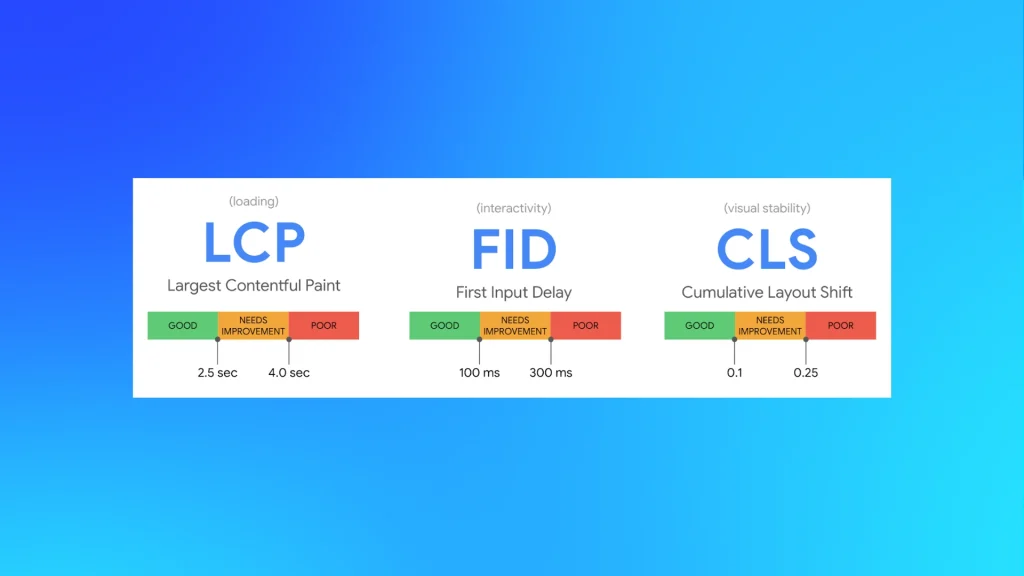
By now, having good Core Web Vitals (CWV) should be as standard as having a homepage. But Google has already raised the bar. The old First Input Delay (FID) metric is officially retired, replaced by the much more demanding Interaction to Next Paint (INP).
INP measures the entire time from a user’s click or tap to the moment the screen visually updates. It’s a holistic measure of responsiveness. Why the change? Because users loathe lag. A site that feels sluggish or unresponsive is a site that loses conversions. Getting your INP score down directly signals to Google that your user experience is top-notch.
2. Schema markup is how you speak Google’s language
If you’re not using schema, you’re essentially forcing Google to guess what your content is about. Schema Markup is structured data you add to your site’s code to give search engines explicit context. Think of it as the secret handshake that gets you into Google’s VIP lounge, complete with fancy Rich Snippets in the search results.
In 2026, basic Article and FAQ schemas are table stakes. It’s time to level up.
- Are you embedding videos? Use VideoObject schema.
- Publishing tutorials? Use HowTo.
- Selling products? Combine the Product schema with the Review schema.
The more precisely you can define your content, the more confident Google will show it off.
3. Advanced localisation builds your kingdom
For any business with a physical footprint, “near me” is one of the most powerful phrases in search. But 2026 localisation goes beyond just having your address in the footer. It’s about building a powerful local entity.
This means creating hyper-relevant service pages for each location (/seo-services-sydney/, /seo-services-melbourne/), gathering location-specific reviews and testimonials and ensuring your Google Business Profile is a rich, active information hub.
The goal is to make it undeniable to Google that when someone in a specific geographic area needs what you offer, you are the most relevant result.
A final thought on the technical side
The old debate of on-page vs. off-page SEO is settled. They are two sides of the same coin. A perfectly optimised page gives your link-building efforts maximum impact, and world-class technicals ensure that every visitor you earn has an experience that makes them want to stay.
Advanced SEO tactic #3: Content that builds authority and trust

Your content is how you engage your audience, demonstrate your expertise and ultimately, convert prospects into customers. But the web is drowning in mediocre “5 tips for this” and “10 reasons for that” articles. To win, your content can’t just be good; it needs to be the definitive resource.
1. Choose content depth over sheer word count
Let’s bust a myth: longer content does not automatically rank higher. A 3,000-word article that waffles on is far less valuable than a concise 1,000-word piece that perfectly solves a user’s specific problem.
Content depth means covering a topic so comprehensively that the user has no follow-up questions. It anticipates their next objection and provides the answer before they even think about searching for it.
So before you write, ask yourself: What are all the questions, challenges and considerations connected to this topic? Cover them all, and you’ll own the conversation.
2. From LSI to topical coverage
If an “SEO expert” starts talking about stuffing “LSI keywords” into your copy, politely show them the calendar. That’s an outdated concept based on a misunderstanding of how search works. The modern approach is about building topical coverage.
Instead of hunting for synonyms, think about the related concepts and entities that surround your main topic. If you’re writing about “content marketing,” you should naturally be discussing things like “editorial calendars,” “brand voice,” “lead generation,” and “analytics.” This shows Google you have a deep, holistic understanding of the subject and cements your topical authority.
3. Recognise that user experience is your content strategy
You could write the most brilliant, insightful article in the world, but if it’s presented as a dense wall of text on a page that loads like a tortoise wading through treacle, no one will read it.
Great UX is the delivery mechanism for your great content. This means:
- A clear information architecture: Use short paragraphs, compelling subheadings and bullet points to make your content scannable.
- A smart internal linking strategy: Guide your readers on a journey through your site, from one relevant piece of content to the next.
- The power of mixed media: Break up your text and increase engagement with relevant videos, custom infographics and high-quality images.
Advanced SEO tactic #4: Earn links that Google respects
For too long, “link-building” has had a shady reputation, evoking images of spammy directories and dodgy comment sections. That era is dead. In 2026, link-building is less about “building” and more about “earning”. Focus on creating a brand and content so valuable that other authoritative sites want to reference you. It’s time to stop asking for scraps and start hosting the banquet everyone wants an invitation to.
A single, editorially given link from a top-tier industry publication is worth more than a thousand low-quality links. It’s a decisive, third-party vote of confidence that tells Google your content is the real deal. Here’s how you earn them:
1. Become the source with Digital PR
Instead of just writing a blog post, create something genuinely newsworthy. Conduct an industry survey and publish the unique data. Analyse a public dataset to uncover a surprising trend. Create a stunning infographic that simplifies a complex process. This gives journalists, bloggers and industry leaders a concrete reason to talk about you and, more importantly, link to you as the original source.
2. Claim your credit with unlinked brand mentions
Somewhere out there, people might already be talking about your brand, products or leaders without linking to your site. These are the lowest-hanging fruit in authority building. Use tools to find these mentions, then send a polite, friendly outreach email to the author or editor. More often than not, they’re happy to add the link.
3. Build the definitive resource
Why would someone link to your “5 tips” article when a dozen others are just like it? The goal is to create the best-in-class resource on a topic: a comprehensive guide, a free tool or a detailed case study so good that it becomes the go-to citation for anyone else writing about that subject.
Advanced SEO tactic #5: Measuring what matters
As a marketing leader, you know that the coolest strategies in the world mean nothing if you can’t prove they work. Vanity metrics like “We’re number 1 for [some obscure keyword nobody searches for]” don’t impress the C-suite, and they certainly don’t pay the bills.
In 2026, a Guru-level SEO program is measured by its direct contribution to the bottom line.
1. Choose your arsenal for the job at hand
There are hundreds of SEO tools, but more data isn’t always better. You need the correct data. Organise your toolkit by its purpose: use all-in-one platforms (like SEMRush or Ahrefs) for seeing the whole battlefield, technical crawlers (like Screaming Frog) for a deep-dive under the hood and specialised tools for tracking rank, analysing backlinks or optimising content.
2. Use automation to free up your brain
Let the machines handle the grunt work. Automate your rank tracking, site health audits and weekly reporting. This doesn’t replace human expertise — it unleashes it. Because think about it: when your team isn’t bogged down in spreadsheets, they can spend their time on high-level strategy, creative problem-solving and finding the next big growth opportunity.
3. Report on the metrics that matter
It’s time to connect your SEO efforts directly to business goals. Build dashboards that show:
- Pipeline value from organic search: How much potential revenue did your SEO efforts generate this quarter?
- Lead quality: Are the leads coming from organic converting at a higher rate than other channels?
- Growth in non-branded keywords: This shows you’re capturing new audiences, not just people who already know you.
- Organic’s contribution to Customer Lifetime Value (CLV): Are customers who found you through search more valuable over the long term?
When you can answer these questions, SEO stops being a cost centre and becomes what it truly is: one of the most powerful and sustainable revenue drivers in your entire marketing mix.
Bonus advanced SEO tactic: Future-proof your content with generative engine optimisation (GEO)
For years, the goal was to get the #1 spot on a list of blue links. That game is changing right before our eyes. With the rise of AI Overviews (AIO) and other AI-powered answer engines, the new “position zero” is being featured directly within a summary.
However, it’s important to note that GEO isn’t replacing SEO. It’s a critical new layer built on top of it. It’s the art and science of ensuring your brand’s expertise is selected, synthesised and cited by the machines building the answers of tomorrow. Here’s how you can start capitalising on this:
1. Become unmistakably citable
AI engines are being built with a key directive: cite your sources. This is your golden ticket. To be cited, you must be a clear, authoritative and trustworthy source. This means doubling down on your E-E-A-T (Experience, Expertise, Authoritativeness and Trustworthiness) signals.
Publish original research, showcase author expertise with detailed bios and ensure your “About Us” page clearly states who you are and why you’re an expert. You want your content to be the expert witness the AI calls to the stand.
2. Structure your content for machine synthesis
AI models are voracious readers, but they don’t have time for waffle. They crave well-structured, easily digestible information. Make it incredibly easy for a machine to parse your content by using:
- Clear, logical heading structures (H1, H2, H3).
- Bulleted and numbered lists to break down key points.
- Data tables to present comparisons and statistics.
- FAQ schema to explicitly state and answer common questions.
The goal is to make your key points so well-organised that it’s easier for the AI to quote you directly (and link back) than it is to paraphrase a less clear competitor.
3. Lean into your unique experience
In a world where anyone can use AI to generate generic content, your unique, first-hand experience is your ultimate competitive edge. AI can’t replicate a genuine case study, a personal story of failure and success or a nuanced opinion forged from a decade of work.
This content demonstrates true Experience (the first ‘E’ in E-E-A-T) and is precisely what AI models will look for to add real value and perspective to their answers.
Don’t just tell the reader what to do. Show them you’ve been there and done it.
Let your competitors keep their 2025 playbook
The top SEO techniques in 2026 aren’t more complicated just for the sake of it; they’re more sophisticated because the landscape is more human-centric. Success is no longer about tricking an algorithm.
It’s about a holistic, integrated approach: deeply understanding your customer’s intent, providing a flawless technical experience, establishing genuine authority and measuring your impact on real business growth.
Executing this at an elite level requires expertise, time and a relentless focus on what’s next. While these tactics are complex, they represent a clear and proven blueprint for sustainable dominance in the search results.
Let’s build your blueprint. (You bring the vision, we’ll bring the brains.)
Feeling energised? A little overwhelmed? Don’t worry, our Gurus live and breathe this stuff every day. If you’re ready to ensure your team is on the right track and make 2026 your most dominant year yet, let’s talk.
Claim your FREE, in-depth SEO strategy session. We’ll analyse your current performance and provide a no-obligation action plan to help you win.

About the Author
Andrew Raso
Share