








 1300 433 071


- Home
-

- Blog
-
- Marketing Blogs
-
- How to Increase Sales During The Holidays

How to Increase Sales During The Holidays

The Ultimate 20-Step Playbook + Bonus Tips on Wielding AI This Season
Key Takeaways
-
The holiday season is a critical time for businesses, often generating the highest revenue of the year due to increased consumer spending and gift shopping.
-
Early planning allows brands to optimise campaigns based on past holiday performance.
-
Creating urgency with countdowns and shipping cut-offs encourages faster purchases.
-
Hybrid shopping is the norm, so your strategy needs to connect online discovery with offline sales through omnichannel journeys, pop-up experiences and click-and-collect.
-
Younger shoppers like Gen Z and Gen Alpha now heavily influence holiday spend, rewarding brands that lead with authenticity, values and social-first experiences.
-
AI is a force multiplier for Christmas marketing across search, PPC, social, and e-commerce, helping brands target smarter, personalise at scale and adapt in real time during peak season.
Critical Stats to Guide Your Holiday Season Digital Marketing Strategy in Australia
Australia’s holiday shoppers are stepping into the season with tighter budgets, higher expectations and a clear tilt toward digital-first browsing. Fresh research from Deloitte and Afterpay maps out how Aussies plan to search, shop and spend during the festive period.
- 84% of retailers expect sales growth this holiday season, signalling rising confidence across the sector.
- 57% of Australians plan to make at least 20% of their holiday purchases online, reflecting a continued shift to digital shopping.
- 43% of shoppers will start buying earlier, front-loading demand into early late November and early December.
- 44% plan to spend less than last year, showing value remains the dominant purchase driver.
- Good news for experience-driven brands: 30% increase in spending on experiences marks the biggest year-on-year jump in non-gift categories.
- 45% of Aussies will wait for discounts on big-ticket items, indicating a highly price-sensitive market.
- 61% will shop both in-store and online, reinforcing the need for seamless omnichannel journeys.
- 40% of consumers now trust generative AI more than they did a year ago, accelerating AI-driven search and shopping behaviour.
- 33% of consumers expect to spend more than last year, led by younger demographics, especially Gen Z at 59%.
Creating Offline Sales From Online Seasonal Marketing
The line between online discovery and in-store purchasing has never been tighter. As shoppers bounce between screens and storefronts, Christmas has become the moment where smart digital campaigns directly influence real-world sales. With consumer journeys now starting online earlier than ever, retailers that connect their Christmas search marketing to tangible in-store experiences stand to gain the most.
For the retail world, Christmas, and the holidays in general, represents an opportunity for generating more sales and revenue. The breadth of the festive season (which now runs for a couple of months as far as consumers are concerned) is a bonanza for savvy sellers. These days, the emphasis tends to go toward the e-commerce world: convenient shipping, no crowds and the ability to keep operating even when external factors make physical retail tricky.
But physical retail isn’t dead. In fact, hybrid shopping (switching between online browsing and in-store purchasing) is now mainstream among Australian consumers. A 2025 study by Shopfully found that 81% of Australians research products online before buying in-store, underlining that digital touchpoints are shaping in-store traffic.
So if you combine the demand for in-store experience with the widespread use of online Christmas search, your marketing unlocks a powerful opportunity. In the following sections, we’ll show how to make hybrid holiday selling work: leveraging your digital marketing to build awareness, then using smart in-store tactics to close the sale.
Why Offline Selling Is Still Worth Pursuing
There’s a strong cyclical element to the marketing world. Here’s how it works: one method rules supreme for some time, then an exciting new contender comes along to grab the spotlight, and people start to move from the former to the latter. After all, the former is crowded and dated. The new method performs so well that people lose interest in the old one.
After a while, though, the new method becomes so standardised that it no longer feels fresh. To make things worse, that position of dominance means that it’s the default option. That’s when some marketers start to look back at the old method and reconsider its value. They know it works because it used to be the biggest and best option. They also know that relatively few people are doing it, which means it once again has the power to stand out. What’s new gets old soon enough, and what’s old becomes new again.
That’s exactly the moment offline retail is having right now. While digital continues to grow, brands are rediscovering the impact of real-world retail experiences. Being physically present puts you directly in front of customers, allows for human connection and lets people see, hold, taste or try products. These sensory cues that drive conversion far more effectively than a screen ever will.
How to Run a Pop-up Shop
If you operate online, it’s unlikely (from a statistical standpoint) that you have a physical store, so you might wonder how you’d sell offline. The answer is by setting up a pop-up shop, which sounds more polished than it is. In reality, it’s just a temporary setup from which you can sell your products, meaning you don’t even need a stall. If you wanted to just stand around with a portable POS system, that would still count as a pop-up shop.
Due to the rapid advancement of mobile data infrastructure and smartphones (and tablets), you no longer need a conventional system to process payments. You just need internet access and the right system to take advantage of it. Some CMS providers have developed solutions to make offline sales that sync seamlessly with online stock (Shopify POS can even provide customised mobile hardware, allowing you to handle transactions on one tablet), so you don’t have to worry about keeping your offline and online orders in line.
Contactless payment will be key, even after people feel sufficiently safe and emboldened to start shopping offline again, so forget about cash and keep your distance. Location and timing are both important. You want to find a place (or places) that will have enough people who might be interested in what you have to offer, but not so many people that they’ll get concerned about safety or start to endanger one another.
Tips For Pushing Offline Sales With Online Marketing
Now that we’ve covered why offline sales matter, and how you can handle the practicalities, let’s get to some key tips for using digital marketing to drive those pop-up shop sales in a post-pandemic retail marketplace:
- Get active on social media: Social media and trends are going to be a huge component of your activity, so you’ll need to start talking about your offline appearances as early as you can (while remaining in season, of course). Concentrate on the location by searching for people talking about it, then reach out to those people to explain what you’re going to offer and why they should be interested. Additionally, reassure them about the protective measures you’re using: people won’t want to buy from you if they suspect that you don’t disinfect your products before selling them.
- Promote compelling sales and deals: Because buying online is so easy (and buying in-person will still be somewhat scary when we no longer need to stay at home most of the time), there needs to be a strong reason for someone to make a concerted effort to visit your pop-up shop. The best option is to promote some compelling deals. You could sell an offline-exclusive special edition with limited stock, for instance, or give a major discount (this could be dangerous, but if you’re selling various things, and you discount 1, it should be fine; plus it’s the norm for seasonal retail).
- Offer incentives for UGC: UGC, or user-generated content, is fantastic for organically driving interest in your pop-up shop. If someone posts a selfie at your shop and expresses positive sentiments (being careful to note your safety measures), it can push their followers to visit as well. You’ll need incentives, though. You could offer an extra discount for everyone who posts such a photo, or enter everyone posting about your shop into a prize draw of some kind.
- Get more eCommerce Sales With PPC ad Impressions. Ecommerce PPC advertising is consistently effective, extremely configurable and rapidly deployable, so it’s perfect for this type of thing. The key is to focus on impressions instead of clicks (here are some tips for doing this in Facebook Ads). Target people who live in or near the area (or areas) you’ll be appearing in (particularly since many shoppers will be reluctant to travel too far from their homes to shop), and get your message across as clearly as you can. If it helps for one shop, try increasing the budget for the next one to see how that works.
While the bulk of your seasonal retail attention will inevitably go towards ecommerce and online sales, you stand to benefit significantly from working offline retail into the mix if you’re ready to wait until traditional retail starts to reopen and choose the perfect time to attempt it. Consider setting up a mobile POS system and taking to some notable locations to sell in person, and use the above tips to bring relevant shoppers in through your online digital marketing.
How Gen Z and Gen Alpha are Reshaping Holiday Shopping and Christmas Search Marketing in 2025
Gen Z and Gen Alpha are quickly becoming two of the most influential spending groups in the global retail landscape, and this holiday season, they’ll play a bigger role than ever. Their collective purchasing power is rising fast, and they heavily shape household buying decisions. Retailers looking to future-proof growth must understand what drives these younger generations.
The need to be true
From experience, what sets these cohorts apart is their expectation for authenticity. They gravitate toward brands with clear values, transparent practices and a genuine voice. Sustainability, social responsibility, inclusivity and personalisation are baseline expectations, not added bonuses.
They can spot generic marketing from a mile away and reward brands that speak directly to their identity, beliefs or niche communities. For these shoppers, connection matters just as much as convenience, and emotionally intelligent messaging is what turns interest into intent.
They’re digital-first (but this is hardly news)
When it comes to shopping habits, Gen Z and Gen Alpha are unapologetically digital-first. Their product discovery engines are TikTok, Instagram, YouTube and creator recommendations. Reviews, short-form video, micro-influencers and community-driven content guide their consideration phase more than traditional advertising ever will.
They’re also value-conscious without being cheap: they want affordability, but not at the cost of style, ethics or brand personality. Flexible payments, smaller bundles and lower-barrier gifting options resonate strongly during the holiday rush.
To win their attention this season, brands need social-first campaigns built around speed, creativity and relevance. Think short videos, live shopping sessions, trending audio, real customers featured in the spotlight and gift guides shaped by communities rather than categories. Add in ethical messaging, sustainability cues and budget-friendly bundles to hit their sweet spot.
The Nitty-Gritty: 20 Holiday Marketing Tips to Conquer the Festive Season
So how do you make the most of this period and stand out in a sea of discount tags? We’ve rounded up our 20 tried-and-tested tips to increase holiday sales.
1. Dig into the numbers
Every strong holiday sales and marketing campaign starts with the numbers.
When you review the data from the previous holiday season, you’ll gain a solid understanding of what worked and what didn’t — all based on tangible, real-life evidence. You’ll figure out which ads drove the most traffic, which channels delivered the highest ROI, which products were most popular amongst your customers, which landing pages had the highest conversion rates, and so on. All of this information is invaluable when informing your holiday campaigns this year.
Before you start launching ads and developing seasonal landing pages, conduct a thorough audit of your previous campaigns:
- Look at your website trends in Google Analytics and Search Console. Check to see which pages had the highest traffic volumes, levels of engagement, conversion rates and ROI. At the same time, take a look at your website and demographics and customer behaviour flow to learn more about your target audience and user journey during this time.
- Check heatmaps and scroll maps. These are powerful tools to help you understand user behaviour across your site. Hop in and take a look at your holiday campaign landing pages from last year to see which elements users are drawn to, and where they drop off.
- Analyse the previous holiday season and address any issues. Before you jump into this year’s plan, it’s a good idea to consult your wider team to see what works and what didn’t from their perspective. Your customer service or sales teams might have insights into common product enquiries or questions, which can help guide your future campaigns. Meanwhile, your fulfilment team could shed valuable light on creating a seamless shipping and returns process this time around.
2. Prepare for holiday sales early
Good news: by reading this, you’ve already taken the first step on this one.
Successful holiday season campaigns don’t create themselves. It takes a ton of planning to ensure that everything goes smoothly and that you generate enough interest over the one month period. Unlike other promotional ideas throughout the year that might be one-offs, the holiday shopping season is a marathon of back-to-back promotions — and you have to keep it interesting and stay on your game the entire time if you want to keep traffic flowing and online sales ticking.
The earlier you can get a head start on your holiday sales and marketing strategy, the better. In other words, start NOW if you want to get a leg up over other brands.
When you’re starting your preparations, consider things like:
- Product inventory, including current stock levels and new items that may be required (such as gift wrapping or gift boxes)
- Promotional materials for online and offline campaigns
- Sales and offers that you’ll be running during this period
- The marketing and advertising budget you have to work with, and how you’ll divvy it out
- Customer service training and preparation
- Order fulfilment and returns
- Consumer sentiment, as your audience’s wants and needs may have shifted after this year’s lockdowns
3. Choose the right marketing channels
Want to boost holiday sales? Choosing the right channels makes all the difference. You’ll be able to invest your marketing budget where you get the most bang for your buck, while also ensuring you’re reaching the right people with the right message.
Some of the most popular platforms and tactics to consider include:
- Organic social media platforms like Facebook, Instagram, Twitter, Pinterest and TikTok
- Paid social media advertising through Facebook Ads
- eCommerce SEO to improve your presence in organic search engine results
- Pay-per-click advertising (PPC) on Google, Bing, YouTube, or the Google Display Network
- PR and influencer marketing
- Email marketing campaigns to prospects and members of your loyalty program
- Offline marketing via flyers, billboards, direct mail, radio, or TV ads
Start out by going back over your data.
- Which channels drove the most traffic?
- Where did you see the highest ROI?
- Were there differences in terms of the creative or the messages that resonated on each platform?
These will help determine your budget splits to boost holiday sales as much as possible.
Tip: Your competitors are evolving, and you need to as well. Don’t just stick to the same methods as the year before. The holiday period is a great opportunity to test out new advertising tactics to see how they work for your business.
4. Run offers for first-time buyers
It’s WAY more challenging and expensive to convert new customers than it is to convert existing ones — but if there’s any time to do it, it’s the holiday season.
Online shoppers usually go out of their way to explore all of the deals on offer during Christmas and Boxing Day, including brands they’ve never shopped with before. The same goes for Christmas: buyers are open to exploring gift ideas for their friends and family over the festive season.
Hook in new buyers with freebies, discounts, free shipping, or even a special gift-with-purchase with your business. Cosmetic Capital nailed this on their website with an exclusive offer for new sign-ups:
The timer adds an extra sense of FOMO — giving most customers even more reason to claim the offer. Best of all, Cosmetic Capital also used this as a lead generation opportunity and racked up a total of 18,000+ new subscribers, an increase of 300%.
If you’re looking for a killer first-time offer, this example is a great one to learn from. Plus, you’ll also be able to grow your email marketing list for your future holiday season campaigns.
5. Create cut-off date shipping banners
The first thing all your customers want after buying an item is to receive it ASAP. Unlike other periods throughout the year, the holiday rush is incredibly time-sensitive, with lots of people needing to receive their products before Christmas Eve.
Create a sense of urgency and FOMO with shipping banners that say “Buy before [DATE] to receive item by [DATE]”. These little reminders will give visitors the push they need to convert, as well as provide existing customers with a reason to shop again.
US-based Larq executed this perfectly in their holiday campaign with a banner on email newsletters. This quick table has a clear cut-off date for buyers to place orders with the business if they want to get it on Christmas Day. They’ve also split it into engraved/non-engraved products and standard-express shipping to provide customers with more options and capture any last-minute sales.

6. Check inventory and optimise for out of stock
Regardless of how many more customers are flowing to your website, the reality is that you can’t sell what you don’t have. The challenge of any killer Cyber Weekend or holiday campaign is that you risk becoming a victim of your own success and running low on stock.
In an ideal world, you’d check your current inventory, forecast demand and carry enough stock to get you through the entire festive rush. But with supply chains tightening, demand surging unpredictably and shoppers expecting fast fulfilment, stock gaps can still happen, even with solid planning. That’s why it pays to be prepared by optimising your eCommerce website out of stock messaging to redirect traffic to other products instead
- Push out of stock items to the bottom of your search and category pages so they’re not visible to searchers.
- Clearly display information about stock levels on your website to prevent any confusion.
- Clarify stock on your website for different product sizes using words like “Out of stock”, “Low stock” or “X remaining”.
- Provide in-stock product recommendations that are similar to the out of stock item.
- Offer gift certificates so recipients can shop their preferred item at a future date
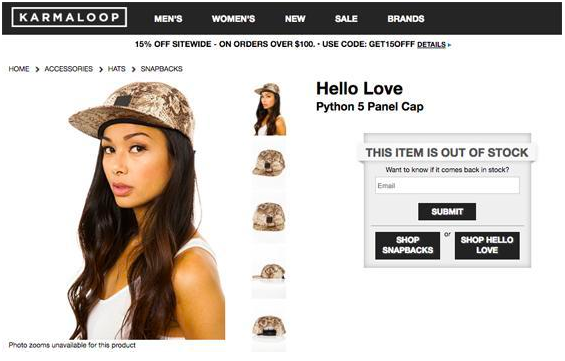
Another tip? Use this opportunity to grab the user’s email and add them to your loyalty program, particularly if you’re planning a big restock soon.
You’ll be able to add them to your database for future holiday promotions and get to know your audience, just like Karmaloop has done:
7. Create (or polish up) cart abandonment campaigns
Christmas, Boxing Day or New Year’s Day, visitors will be browsing through a ton of different products during the holiday sales period. And with that high volume of browsing, many businesses also see a huge uptick in cart abandonment.
According to the Baymard Institute, 69.57% of all online shopping carts are abandoned. That means for every 100 visitors you have on your business website, 70 of them will browse, add items to their cart, then leave without making a purchase. This number increases to a whopping 86% on mobile devices:
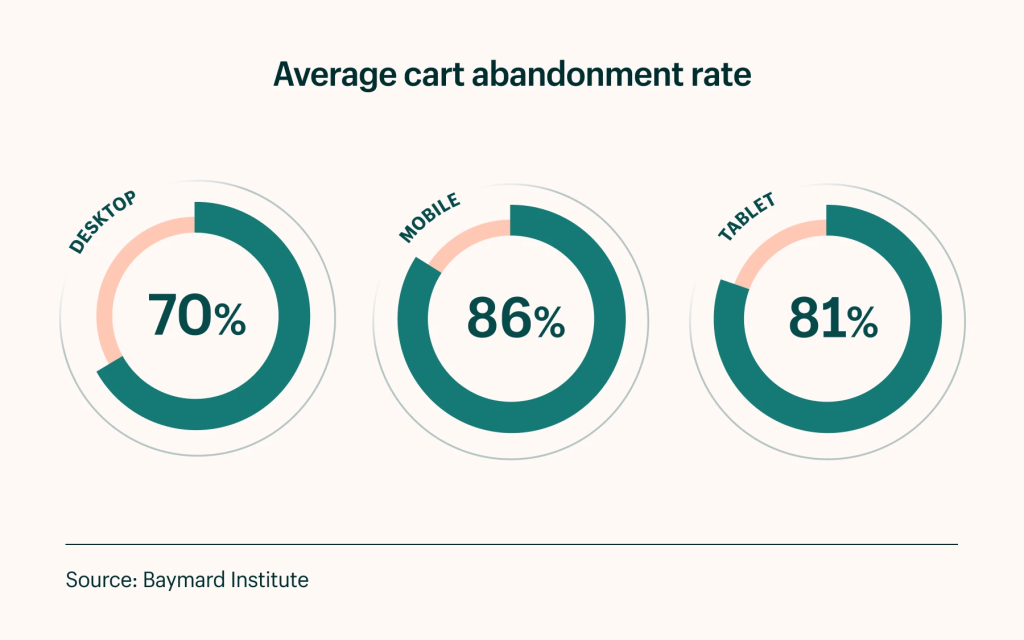
As a digital marketer, if you can win sales from even 10% or 20% of those customers, that’s a HUGE win for your bottom line.
Before you start running cart abandonment campaigns, it pays to know the most common reasons why shoppers abandon their cart:
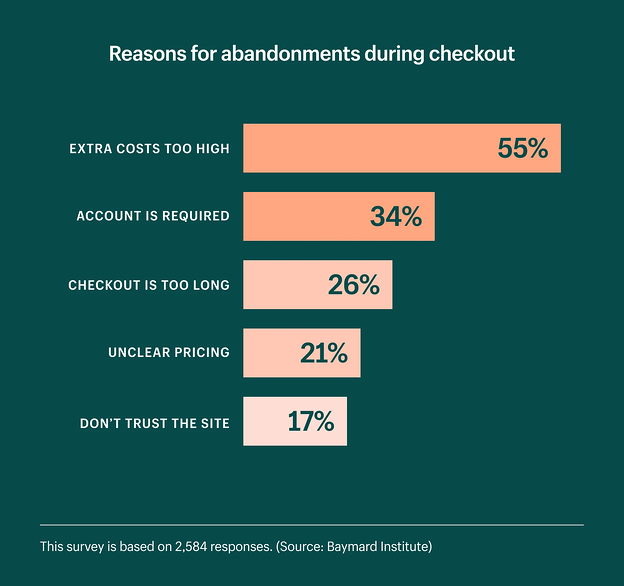
If you want to convince users to complete their orders, try these techniques in your abandoned cart campaigns:
- Send cart abandonment emails to customers reminding them to complete their purchase.
- Add “Are you still interested?” reminders on your website to encourage customers to check out.
- Offer a special deal, such as free shipping or free returns.
- Create countdown timers and stock notifications to generate urgency.
- Retarget visitors on other platforms with holiday PPC campaigns.
Here’s a great cart abandonment email from Harry’s that features a countdown timer and a sales cut-off date:
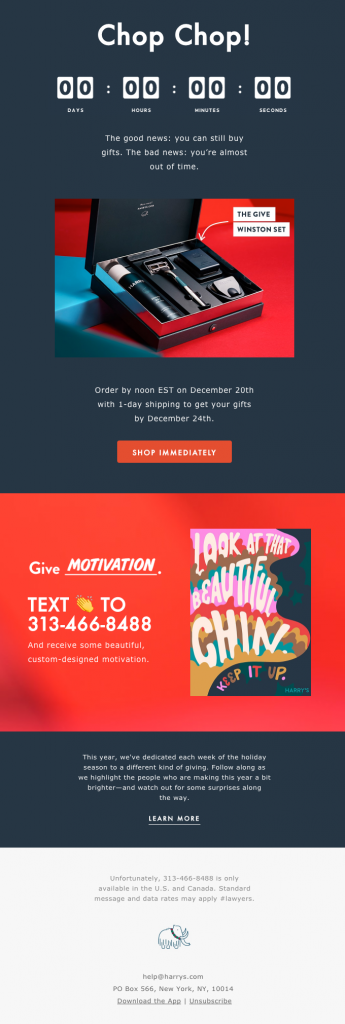
By providing potential shoppers with a deadline to purchase, Harry’s is creating a powerful sense of FOMO for the holiday season.
8. Prepare your customer service experience
Cyber Weekend and Christmas bring in floods of customers — but with this influx in online purchases, you’ll also find yourself dealing with an increase in issues. From shipping enquiries to stock levels and product descriptions, these questions can quickly inundate even the most experienced of customer service teams.
If you want to have happy customers, you need to ensure they have a fantastic customer experience with your brand. This means having enough manpower, quick response times, well-trained staff, and a clear process for solving issues. Don’t forget to cover all touchpoints for your e-Commerce business either, including live chat, phone lines, social media enquiries, and email support.
On top of that, a chatbot is a great way to save valuable time and headaches for those frequently asked questions. There are plenty of free and affordable options out there, including Botsify for Shopify and Chatfuel for your social media audience Facebook.
9. Segment your target audience
Looking to maximise conversions and increase holiday sales? Segmentation is the way to go. Segmenting your audience allows you to deliver targeted content that’s relevant to their needs and wants — and in turn, increasing their chance of shopping with your brand.
Make sure your message is reaching the right people by following these steps:
- Define your segmentation criteria. This could be based on factors like age, location, gender, previous interests, purchase history, loyal customers vs. first-time buyers, or something else entirely.
- Pick the right channels for each audience. Younger customers might spend more time on TikTok and Instagram, while professionals may be browsing through their emails and Google Ads. Use existing data on your social media followers to see where customers spend their time, then target them with dedicated campaigns on that platform.
- Create tailored marketing strategies for various shopper types. This might be developing unique content (i.e. “X gifts every dad wants this Christmas”) or launching special offers for each segment.
- Apply segmentation across your existing marketing channels using Google Ads and Facebook Advertising’s powerful targeting tools. Keep an eye on these throughout your campaign and adjust the creative and landing pages for cost-per-click (CPC), cost-per-acquisition (CPA), and return on ad spend (ROAS).
10. Use retargeting for existing customers
While the holidays are huge opportunities to acquire more customers, you shouldn’t neglect sales from your existing audience.
According to Invespcro, it’s far cheaper to target loyal customers than to acquire new ones — anywhere between 5 and 25 cheaper, in fact.
Retarget your existing audience or loyalty program members with personalised product recommendations based on their shopping history to gain maximum cut-through and keep customer loyalty strong this holiday season.
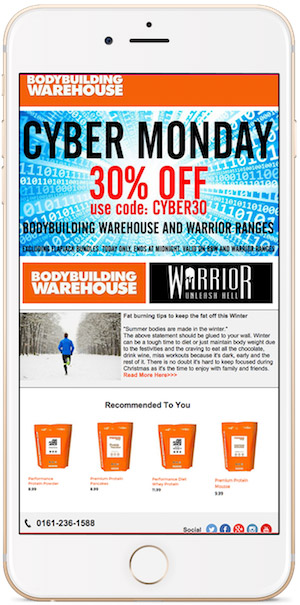
Bodybuilding Warehouse did exactly that on their Cyber Monday sales campaign with a “Recommended for you” section:
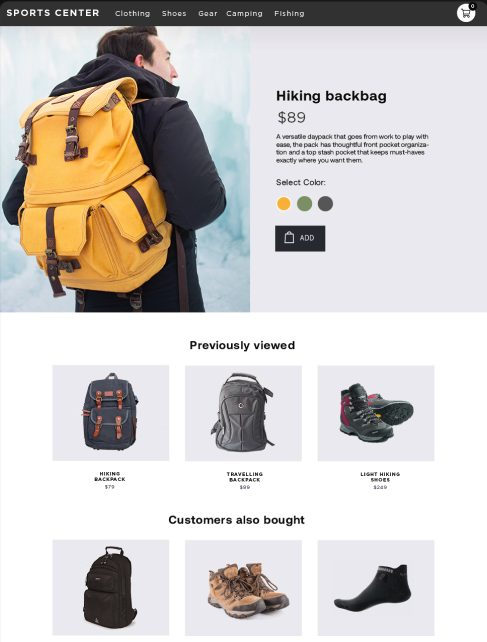
Tip: Retarget loyal customers on your website to increase conversion rates for products you KNOW they are interested in, just like Sports Center did:
11. Introduce top product suggestions
With a sea of sales, holiday shoppers can quickly get overwhelmed when browsing through the discounts on offer. Make it easy for them to sift through the noise and find the best items on your online store with top product suggestions.
Industry West did this on their homepage with a dedicated “trending now” section. These recommendations play into the crowd mentality by inspiring buyers with shopping ideas based on popular items from other customers:

12. Create bundles to increase average order value
Bundles are the perfect way to increase holiday sales and increase the perceived value of items, while also offsetting some of the discounts you’ll be offering during this time. Take a look at your best-selling products, then group them with similar items that may be purchased together.
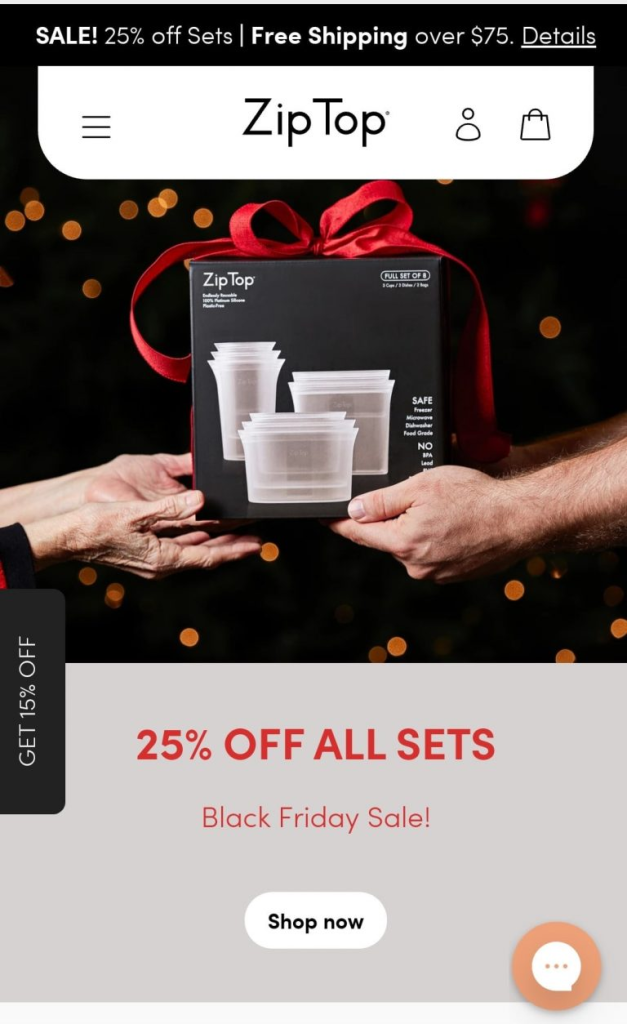
ZipTop is a great eCommerce case study showing how to do this well. The company offered an exclusive 25% discount on product sets — increasing their average order value from online sales along the way:
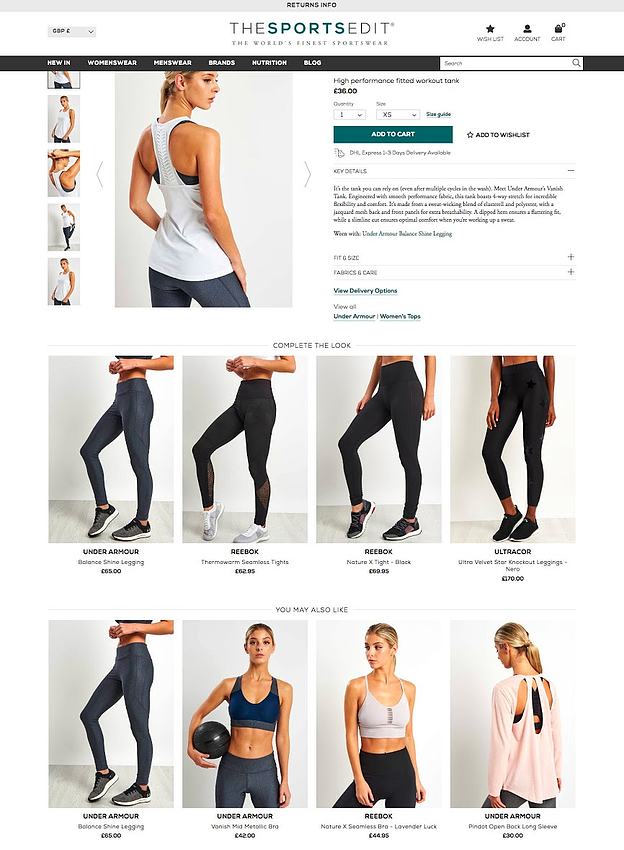
Another way to bundle items to achieve more sales? With product recommendations. For example, activewear brand The Sports Edit features a “Complete this look” section cross-selling matching product recommendations and similar items:
13. Promote upcoming sales (with VIP access)
If your holiday season sales launch and nobody knows about it, does it even exist at all? Probably not. That’s why it’s key to build brand awareness and hype for your holiday campaign with ads teasing your upcoming sales.
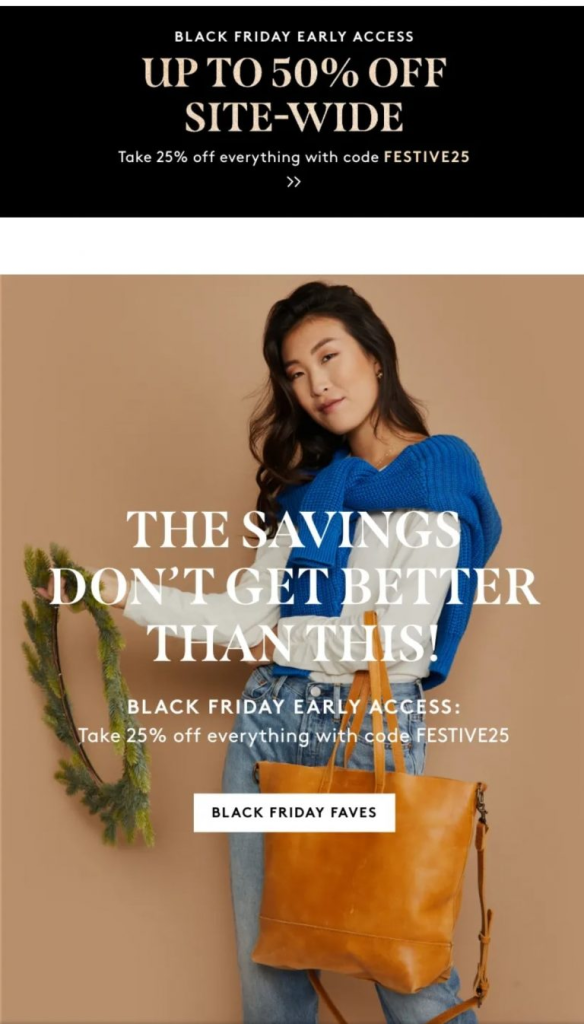
Launch ads about your upcoming sales a few weeks out from each holiday marketing campaign, with a call-to-action for people to sign up for VIP access. You’ll capture more leads AND generate buzz, just like Able did in 2020:
14. Add a countdown to your offers
Countdowns can make all the difference when it comes to getting potential customers to convert. Timers add urgency to your campaigns and inspire browsers to take action, particularly if you’ve got a hot deal on the table.
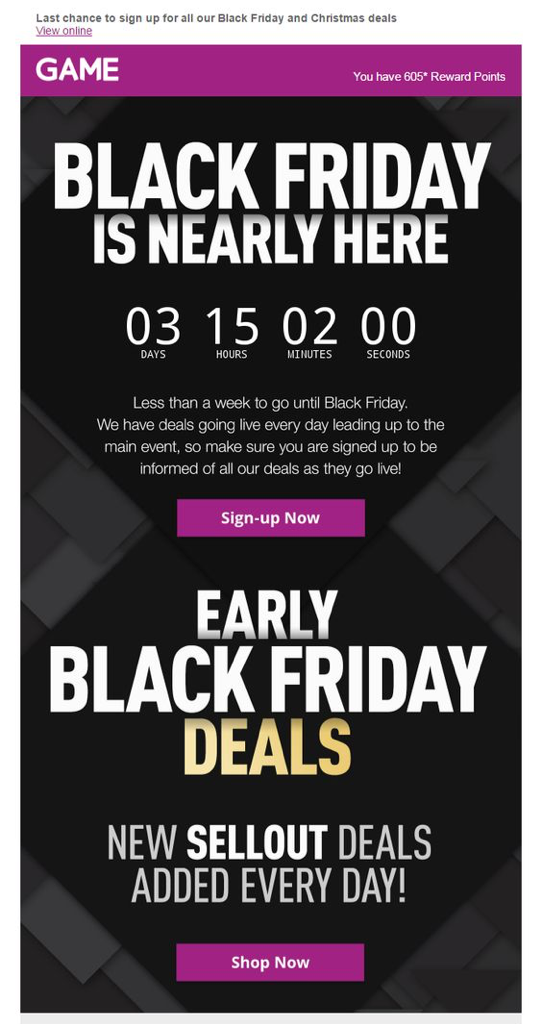
When it comes to countdowns, think outside the traditional ‘offer ends soon’ timer. You can get creative and use them to count down to the launch of your campaign like GAME:
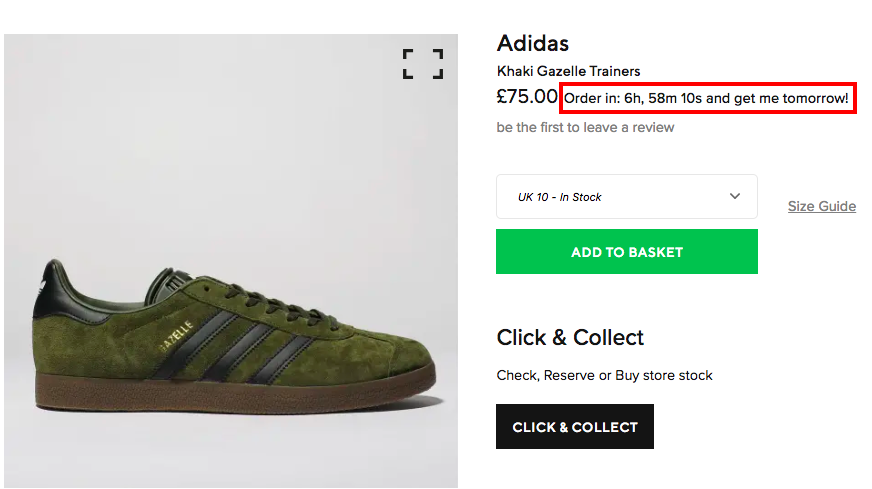
Or add them to a product page to remind shoppers of delivery cut-offs, like Adidas did:
15. Add a festive look to your holiday season campaign
Nothing says holiday vibes like a festive landing page and seasonal creative. Develop dedicated landing pages to direct customers to, such as a Black Friday and Cyber Monday deals page or holiday gift guides, similar to Marks and Spencer:

Don’t forget about your social media strategy either. Bring a touch of festivity to your social media posts with dedicated imagery for the holiday season.
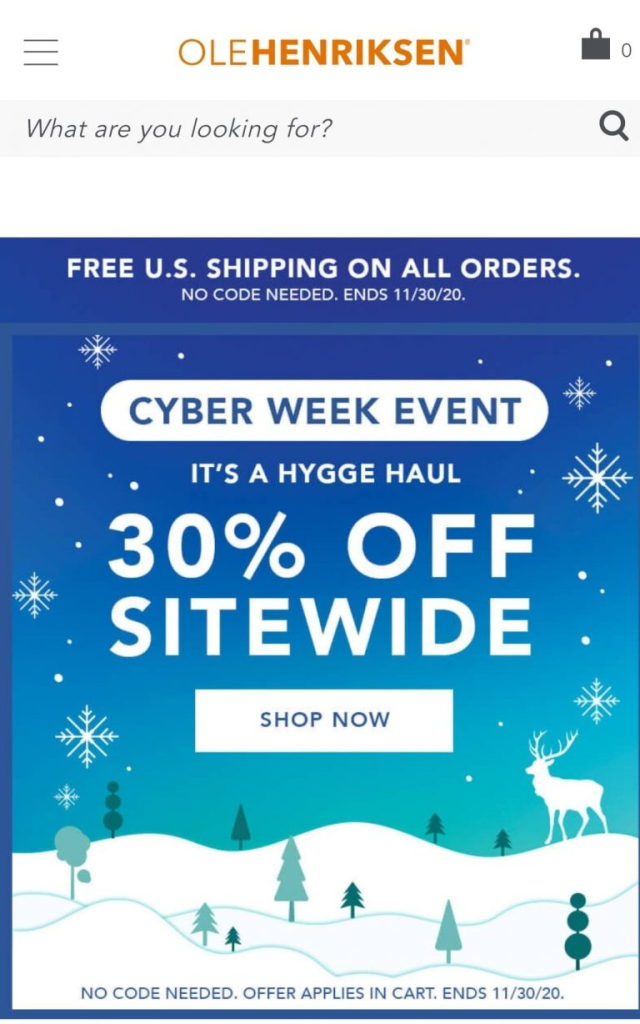
Pro tip: if you don’t have any Christmas-themed images, you can always get a bit creative with festive colours or illustrations. US-based skincare brand Ole Henriksen did just that for their Cyber Week holiday sale with winter illustrations and colours:
16. Optimise for mobile shoppers
Mobile friendliness is indisputably the backbone of modern e-commerce. If your store site isn’t optimised for mobile, you’re basically locking out more than half your potential buyers. Slow loading pages, awkward layouts, clunky checkouts or non-responsive design can kill conversions, especially when shoppers are browsing on the go or waiting in line for the next deal drop.
So before you launch your Christmas and Boxing Day campaigns, make sure it works seamlessly on the small screen. That means:
- Running a mobile friendliness test through Lighthouse to ensure your website is responsive and primed for mobile users
- Optimising your campaign images to be readable on mobile devices
- Keeping mobile page load times fast
- Simplifying the checkout process to make it easy to shop on the go
And if this feels overwhelming, partnering with a strong technical SEO agency can help you fine-tune every mobile element for peak-season performance.
17. Offer free shipping and easy return
Here’s the only statistic you need to know on shipping: according to Silverback, 90% of shoppers say that free shipping is their top incentive to shop more with a brand.
Use free shipping as a reason to draw customers in and increase sales by either:
- Setting up free shipping for orders above a certain amount
- Bundling the shipping cost into the price of your products
- Promoting free shipping for a limited time only
Don’t overlook the returns process either. Whether it’s a change of mind or a gift for a loved one that didn’t work out, returns skyrocket for eCommerce businesses during this time. Make it easy for customers to return products during this time to give them maximum peace of mind on their purchase.
Luxury jewellery brand Cartier did this by offering an extended holiday return period for Christmas 2020:

By adding this as a banner to the top of their page, the brand ensures that shoppers know that they’re protected with Cartier’s generous returns policy.
18. Create holiday content and gift guides
Your customers are looking for great gifts over the holiday period. If you can answer this need with tailored gift ideas, you’ll boost your eCommerce SEO, bring more traffic to your website AND increase your conversion rates.
So how do you find ideas for gift guides? Run a Google Search and check out the autocomplete suggestions for holiday shopping ideas:
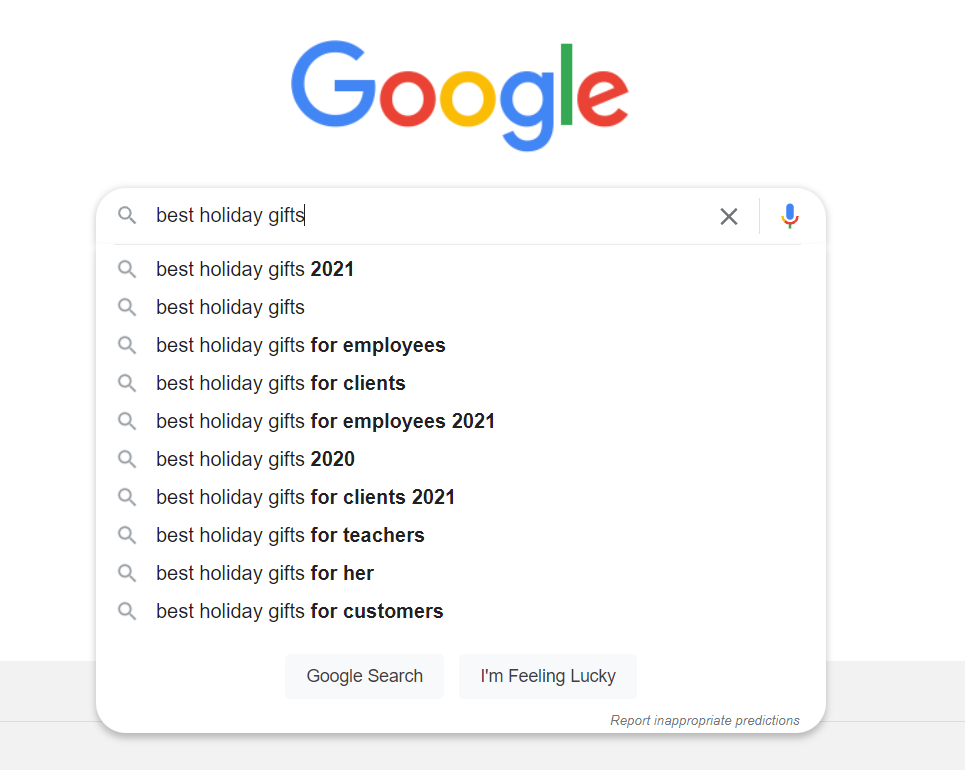
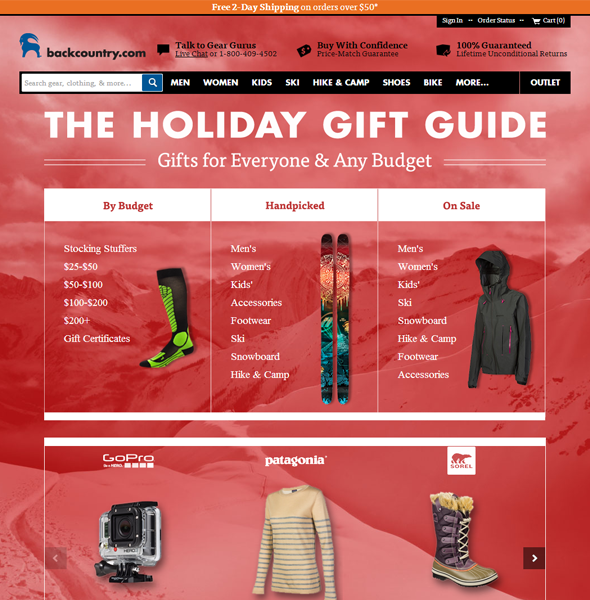
Use these as inspiration for blog posts, promotional ideas and landing pages on your website. Here’s an example of a killer landing page from Back Country:
Once you’ve developed your guides for gift ideas, you can also promote them in dedicated email newsletters and carousels on social media posts — just like Photojojo! have in this eDM:

19. Invest in product videos and gifs
Searching for promotional ideas that will make your campaign stand out and increase holiday season sales? ‘Tis the season to try product videos and GIFs.
Brands that use video increase revenue 49% faster than those that don’t. What’s more, including video on landing pages can increase conversion rates by a whopping 80%.
Think of ways to add movement to your holiday campaigns, either through animation or video content:
- Include GIFs in your social media and email campaigns
- Add review videos to your online store’s product pages
- Create product teaser videos to build awareness for your holiday sales
- Build detailed product guides to explain how your items work, their features, and their benefits
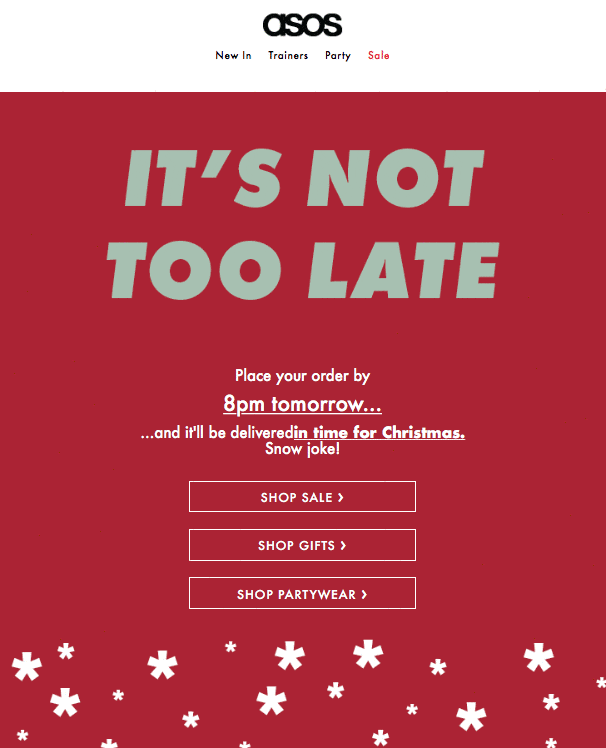
It doesn’t have to be complicated either. Take this GIF from ASOS, which features bold text and background that changes colours:
20. Finetune your checkout process
Checkout is where your buyers seal the deal, so you want to make this as quick and painless as possible. The easier it is to shop with you, the fewer drop-offs you’ll get during this crucial part of the conversion process.
Look for ways to make your business checkout process easier for customers, such as:
- Autofilling essential details like street addresses, in order to avoid any mistakes down the line.
- Introducing support for quick payment options such as Apple Pay, Google Pay and PayPal.
- Adding security icons during checkout to reassure customers that their information is safe.
- Displaying service messages that outline your shipping times, cut-offs, and any possible delays.
- Including tips or micro-copy for any confusing parts of the form, such as the difference between shipping vs. billing address.
- Testing and optimising your call-to-action with heatmaps and A/B testing.
How to Increase Sales During the Holidays: Unwrapping the Power Of AI
AI has shifted from a nice-to-have to a mission-critical advantage in digital marketing, and the festive season is where its impact hits hardest.
The holiday period brings soaring demand and time-sensitive promotions. AI thrives in that kind of pressure cooker. Here’s how to leverage it across SEO, PPC, social, e-commerce and even offline marketing this Christmas.
AI-powered SEO to capture festive search demand and shopping intent
The holidays flip search behaviour on its head. Queries surge for Christmas gift ideas, festive offers, budget buys, last-minute delivery options and niche seasonal needs. Competition gets fierce, and visibility becomes a race against time. Here’s how to use AI tools for your Christmas search marketing:
- Spot trending festive keywords before your competitors: Use tools like Ahrefs Keywords Explorer, SEMrush Keyword Magic Tool and Google Search Console Insights (AI-powered) to uncover rising holiday searches. Track long-tail gems such as “Christmas stocking fillers Australia” or “next-day gift delivery Sydney”.
- Identify voice-search and question-based queries: Use AnswerThePublic, AlsoAsked and SEMrush Topic Research to pull natural-language queries like “what to buy for office Kris Kringle under $30” or “best last-minute Christmas gifts near me”.
- Generate complete content clusters in minutes: There’s a plethora of AI tools you can use tobuild holiday landing pages, gift guides and festive blogs. Surfer AI, Frase, MarketMuse or Jasper are great choices here. They create SEO briefs, structure content, pull semantic keywords and produce drafts ready for refinement.
- Optimise your pages with AI-enhanced on-page tools: Platforms like Surfer SEO, Clearscope and Yoast SEO Premium (AI suggestions) refine meta tags, headings, internal linking and schema; perfect for lightning-fast optimisation during the Christmas rush.
- Scale content production without sacrificing quality: Use ChatGPT, Jasper or Writer.com to draft product descriptions, holiday FAQs, category blurbs and announcement bars. These tools speed up output while keeping your Christmas search marketing fresh.
- Run local SEO at scale for high-intent buyers: Create geo-specific content with AI (“Christmas delivery Brisbane”, “New Year sale Perth”) using ChatGPT, Jasper or Frase. Pair with Whitespark or BrightLocal to optimise local listings for holiday hours, stock availability and click-and-collect.
- Predict seasonal shifts and update content instantly: Monitor real-time search behaviour with Google Trends, Glasp, Exploding Topics and SEMrush Sensor to adjust your festive content as trends spike.
AI-Driven PPC and Paid Media Campaigns with a Holiday Focus
Holiday advertising is competitive and often unpredictable. Intent spikes come and go in hours, CPCs climb aggressively and audience behaviour shifts faster than any manual team can track. AI gives marketers the edge by making paid campaigns adaptive, precise and capable of keeping pace with festive buying momentum.
How to use AI to elevate your holiday PPC:
- Find high-intent gift buyers using predictive audience modelling: With tools like Google Ads Smart Audiences, Meta Advantage+ and Skai, AI analyses browsing patterns, buying signals and behavioural triggers to pinpoint shoppers who are actively researching gifts or ready to purchase. This can help maximise spend where conversion likelihood is strongest.
- Automate bidding for rapid auction shifts: Platforms such as Google Smart Bidding, Target ROAS and MarinOne react instantly to fluctuations in CPC, demand surges and real-time conversion data. While human teams operate in batches, AI adjusts every second, keeping your ads visible without overspending.
- Generate and test ad variations at scale: Tools like ChatGPT, Pencil AI and Meta’s generative creative suite produce multiple ad variants in minutes. When festive messaging fatigues fast, AI helps refresh copy, visuals and angles so each audience segment sees what resonates most.
- Run hyper-personalised dynamic remarketing: Using Google Dynamic Remarketing, Meta Advantage+ Retargeting and Klaviyo PPC integrations, AI tailors ads to each shopper’s behaviour: products viewed, carts abandoned, price sensitivity, urgency or gifting intent. This keeps your brand front-of-mind during the busiest buying window.
- Optimise campaigns with real-time AI performance insights: Platforms like Triple Whale, Hyros, Google Insights and Optmyzr monitor which creatives peak, which keywords soften and which audiences shift. You can then recalibrate campaigns automatically. This turns PPC into a living system that adapts dynamically as holiday demand evolves.
AI + Human Creativity For Your Christmas Social Media
Social media moves at double speed during the holidays as attention spans shrink, and every brand competes to be the post shoppers see at the exact moment they’re ready to buy. AI gives marketers the horsepower to keep up: generating ideas, refining creatives and spotting trends before they peak, while human creativity brings the tone, nuance and brand personality that machines can’t replicate.
How to use AI to elevate holiday social campaigns:
- Produce scroll-stopping content at speed: Tools like ChatGPT, Adobe Firefly and Canva’s AI Suite help create captions, visuals, hooks and short-form video concepts in minutes. These are perfect for high-volume posting during the festive rush, especially when you need gift guides, promo announcements or seasonal storytelling across multiple platforms.
- Spot trending holiday themes early: AI social listening fromplatforms such as Brandwatch, Sprout Social, Meltwater and Emplifi track real-time patterns: rising audio, gifting memes, emerging festive aesthetics, discount chatter and creator-led trends. Jumping on these early lifts engagement, relevancy and reach before feeds become too saturated.
- AI-powered chatbots to handle holiday customer demand: With tools like Intercom, ManyChat, Zendesk AI and Shopify Inbox, you can automate responses for delivery cut-offs, gift suggestions, stock questions and sizing guides. Instant replies reduce drop-offs, remove friction and keep shoppers moving toward checkout without waiting for a human reply.
- Run personalised social retargeting based on real behaviour: Use Meta Advantage+ Retargeting, TikTok Smart Audiences and Google Performance Max to deliver hyper-targeted offers shaped by browsing history, saved items, video engagement and past purchases. AI automatically adjusts messaging, from “still thinking about this gift?” to “last chance for Christmas delivery”, to match each shopper’s intent stage.
- Optimise creative performance continuously: AI analytics tools like Penji, Vidmob, Triple Whale and Smartly.io analyse which visuals, angles or hooks drive festive conversions. AI flags what’s peaking, what’s fatiguing and what needs refreshing so your best-performing creative stays at the front of the pack.
If you’d rather have experts steering the ship, a dedicated social media agency can help you capitalise on every trend, creative spike and buying moment throughout the season.
E-commerce enhancements & AI-enabled backend for festive sales
During the holiday rush, eCommerce performance hinges on more than great marketing. Your backend (recommendations, inventory flow, pricing and email automation) has to move with the same speed as your customers. AI transforms these operational layers into engines that anticipate demand, personalise experiences and keep revenue flowing even when traffic surges.
How to use AI to strengthen your e-commerce backend this Christmas:
- Use AI-driven recommendation engines to increase cart value: Tools like Klevu, Nosto, Dynamic Yield and Shopify’s AI Recommendations analyse browsing history, purchase behaviour and real-time signals to surface personalised gift suggestions. From “frequently bought together” to other tailored gift guides, your goal is simple: show shoppers the exact items that feel relevant and boost average order value.
- Forecast holiday demand accurately with predictive analytics: Platforms such as Inventory Planner, Linnworks, Google Cloud Forecasting and SAP IBP use AI to predict product demand spikes, helping you stock smarter ahead of Christmas and New Year. This reduces the risk of stock-outs, trims excess inventory and ensures your bestsellers stay available during peak buying moments.
- Automate email marketing with intelligent segmentation: With tools like Klaviyo, Mailchimp AI, HubSpot Marketing Hub and Omnisend, you can build personalised sequences based on behaviour. Think abandoned cart reminders, “still time for Christmas delivery” nudges, budget-friendly gift ideas or last-minute deals. AI can fine-tune send times, subject lines and content to maximise opens and conversions.
- Run dynamic pricing and optimised promotions in real time: Using platforms like Prisync, BlackCurve, Intelligence Node or Shopify AI Pricing, you can adjust pricing based on demand, inventory levels, competitor activity and shopper behaviour. This helps you stay competitive during flash-sale periods while protecting margins when traffic spikes.
Offline/omnichannel integrations: Bridging digital & real-world
As we’ve covered, holiday shopping doesn’t follow a straight line. Customers discover products online, compare on mobile, pick up in store and return to digital channels for follow-up purchases. AI helps retailers connect these touchpoints into one seamless experience, turning fragmented behaviour into consistent, high-value journeys.
How to use AI to bridge online intent with offline sales:
- Use AI analytics to guide in-store promos and merchandising: Tools like Google Analytics 4, Adobe Experience Platform and Treasure Data identify online demand hotspots: trending products, rising search interest, local spikes in traffic. Retailers can mirror this with in-store displays, seasonal bundles and promotions that match what shoppers are actively hunting for.
- Run smart geo-targeted retargeting to drive foot traffic: Platforms such as Meta Advantage+, Google Performance Max, AdRoll and Blis use behavioural and location data to target shoppers near your stores. Think messages like: “Available at your nearest location,” “Pick up today,” or “In-store only gift bundle”. These are perfect for last-minute holiday buyers who value speed and convenience.
- Support click-and-collect with AI chatbots and assistants: Using tools like Intercom, Zendesk AI, ManyChat or Shopify Inbox, brands can automate updates on store pickup times, stock levels, queues and gift availability. Instant answers keep shoppers moving smoothly from online browsing to offline collection.
- Build unified customer profiles across channels: Platforms like Salesforce Commerce Cloud, Emarsys, mParticle and Segment merge online activity, social engagement and in-store purchases into one profile. AI then uses this data to serve personalised New Year offers, gift add-ons, returns incentives or loyalty rewards, closing the loop from discovery to repeat purchase.
The Ethical, Human-in-the-Loop Approach: Balancing AI With Brand Voice and Trust
While it’s true that AI can supercharge your holiday marketing, it can’t replace the human touch, especially when your audience values transparency, nuance and genuine connection more than any generation before them. Over-automated campaigns risk sounding generic or mechanical, and shoppers pick up on that instantly.
A human-in-the-loop approach keeps your brand values intact while still benefiting from AI’s speed and scale. Let AI handle the heavy lifting (data, optimisation, personalisation, production), while your team shapes the tone, adds emotional depth and sense-checks every output for authenticity.
This balance not only protects brand integrity, but also builds long-term trust. When customers feel they’re engaging with a brand that’s both innovative and human, they’re far more likely to convert, come back and advocate for you well beyond the holiday season.
A Final Word on Your Holiday Season Digital Marketing Strategy in Australia
The holiday period is a make or break time for most online stores. Sure, these holiday marketing tips are gold, but we understand they’re a lot to take in. So if you’d rather skip the heavy lifting and let the experts work their magic, we’ve got you covered.
Turn 2025 into your best-performing year yet with a tailored holiday sales campaign from Online Marketing Gurus. We’ll help you increase your visibility amongst ready-to-buy audiences, increase holiday revenue and customers and achieve an insane ROAS this season.
With over a decade of experience, 40+ industry awards and some of Australia’s leading SEO experts and PPC specialists, OMG builds strategies that dominate peak season. You get insider insights, world-class execution and a team that knows exactly how to turn festive intent into serious revenue growth.
Best of all? It’s free to get started. Claim your complimentary audit and digital marketing game plan (worth $4,000). Our Gurus will show you exactly what you need to increase holiday sales and skyrocket ROI with your digital marketing during the festive season.

About the Author
Danny Andrawes
Share