






 1300 433 071


- Home
-

- Blog
-
- News & Industry Updates
-
- Google I/O and Marketing Live 2026: What the Agentic Shift Means for Your Brand

Google I/O and Marketing Live 2026: What the Agentic Shift Means for Your Brand

Key Takeaways
-
Search has become agentic, with Google rebuilding it around Gemini so an AI agent now researches, answers, and acts for users instead of simply returning ten blue links.
-
The goal has moved from ranking to being cited, with success increasingly measured in brand citations and agentic conversions rather than only clicks, sessions, and rankings.
-
Attribution is breaking, because agentic conversions often leave no click, UTM, or session, so brands that fail to upgrade their measurement will under-report their true return.
-
SEO fundamentals still matter, as organic search drives around 32% of traffic, and the winning approach layers GEO, schema, and E-E-A-T on top of solid technical foundations.
After months of speculation, the moment marketers have been bracing for has finally arrived. In May 2026, Google used its I/O developer conference to unveil the biggest redesign of Search in 25 years, then doubled down a few weeks later at Google Marketing Live with a matching overhaul of its advertising stack.
On stage across both events, the company rolled out a wave of Gemini-powered tools that change how people find information, how they shop, and how brands reach them. The headline takeaway is that Search is no longer a tidy list of ten blue links, but an AI agent that researches, answers, and increasingly acts on the user’s behalf.
These changes have direct, practical implications for how businesses get found and chosen. Whether your focus is Search Engine Optimisation (SEO), Google Ads, or both, the rules have shifted, and this is arguably the most significant change for digital marketing in Australia in years.
We’ve broken both events down into the parts that matter: what changed, why it happened, what it means for you, and what to do next.
The key updates at a glance
Google I/O 2026: Search becomes agentic

Six announcements reset the rules:
- Gemini Omni: a single multimodal model in Search that handles text, image, and video at the same time.
- Gemini Spark: an always-on AI agent built into Gmail, Docs, Sheets, and third-party apps.
- AI-powered search box: running on Gemini 3.5 Flash, it now accepts text, images, files, video, and even open Chrome tabs as input.
- Gmail Live and Docs Live: voice-powered drafting that pulls context from across Drive, Chat, and the web.
- Universal Cart: AI-powered shopping across Search, YouTube, Gmail, and Gemini, with no website visit required.
- Information Agents: autonomous agents that research, plan, summarise, and act, removing the need to click through to a source.
The last two announcements carry the biggest commercial weight, because the user simply asks a question and the agent then does the work that a website visit used to do.
Google Marketing Live 2026: the ad stack follows
A few weeks later, Marketing Live confirmed that paid media is moving the same way:
- Ask Advisor: a unified, Gemini-powered agent that connects Google Ads, Analytics, Merchant Center, and the Google Marketing Platform in one conversational interface.
- Asset Studio: upgraded with Gemini Omni, so advertisers can generate multimodal creative from a plain-language brief.
- Ads in AI Mode: sponsored responses that appear inline as users ask follow-up questions, plus product offers attached to AI-generated answers.
- Universal Commerce Protocol: extends Universal Cart and AI-powered checkout into Demand Gen, YouTube Shopping, and AI Mode.

Across both Search and advertising, AI has become the primary interface through which customers now discover information and choose brands.
Why Google made the move
Three forces made this shift inevitable, and understanding them shows why it is permanent:
- Competitive pressure. ChatGPT passed 800 million weekly users in 2025 and Perplexity crossed 100 million queries a day, so Google could no longer assume it owned the answer.
- Cost efficiency. Gemini 3.5 Flash is roughly four times cheaper to run than comparable frontier models, which finally let Google deploy AI agents across 8.5 billion daily queries without losing money.
- Changed behaviour. Searches are now around three times longer and more conversational, and more than 65% of searches in 2025 ended without a single click. Google followed its users to where they had already gone.
The OMG take: opportunity, not panic
Despite headlines declaring the end of SEO, the data tells a more balanced story. Organic search still drives around 32% of website traffic, while direct LLM referrals sit below 1%. The fundamentals that have always mattered, including technical health, on-page optimisation, quality backlinks, local presence, and strong E-E-A-T signals, still matter just as much today.
What has genuinely changed is the scoreboard by which marketing success is measured, as the goal shifts from “rank number one” to “be cited”. When an agent answers a question and never sends a click, success is measured in brand citations and agentic conversions, not just sessions and pageviews. That creates a real and underappreciated risk, because the measurement model is breaking.
An AI agent can read your page, recommend your brand, and help drive a sale with no UTM, no click, and no session for your analytics to capture. Brands that don’t instrument for this will under-report their return and cut budgets that are quietly working.
Exposure is not equal across the board:
- Higher risk: generic how-to blogs, thin affiliate sites, and broad question-and-answer platforms, because AI now answers those queries with no click required.
- More resilient: transactional e-commerce, local businesses, SaaS providers, and strong branded names, because people still convert directly and agentic shopping surfaces real products.
What your business should do next
The emerging discipline, which many marketers now call AI SEO, combines traditional Search Engine Optimisation fundamentals with new agentic tactics. We recommend six practical moves:
- Get your structured data in order. Implement comprehensive schema markup across Product, Article, FAQ, and LocalBusiness so AI agents can parse and cite your content accurately.
- Adopt a GEO mindset. Generative Engine Optimisation (GEO) means writing clear, citable answers to the questions your audience is actually asking, structured for machine comprehension.
- Double down on E-E-A-T. Author bios, expert contributions, case studies, and visible trust signals now carry more weight than raw link volume.
- Keep your business data live. Accurate pricing, stock, hours, and location keep you visible in Universal Cart and Information Agents, so stale data means missed sales.
- Fix your attribution. Add brand monitoring, build AI-assisted traffic segments in GA4, and invest in first-party data to capture the conversions your current stack misses.
- Go deep on content. Replace thin, generic articles with original, experience-led material that an AI cannot easily replicate or replace.
And a simple sequence keeps it manageable:
- Weeks 1 to 2: audit your schema coverage and clear any crawl errors and Core Web Vitals issues.
- Month 1: identify your top 20 pages and rewrite them for GEO with clear answers, expert authorship, and structured headings.
- Months 2 to 3: stand up brand monitoring and AI-assisted reporting so you can track agentic conversions next to your click data.
- Ongoing: keep adapting, because the agentic toolset will keep evolving quickly through the rest of 2026.
What we’re doing about it
We don’t ask clients to navigate this alone, and we’ve already rebuilt our own playbook around the agentic shift. Our technical teams audit schema coverage and fix crawl and Core Web Vitals issues as standard, so your foundations are agent-ready from day one. Our content strategists then prioritise your highest-value pages and rewrite them for GEO, with clear answers, expert authorship, and structured headings that AI can read and cite with confidence.
On measurement, we built GEO Booster to solve the exact blind spot Google’s redesign created. It tracks AI Overview appearances, brand citations across Gemini and ChatGPT, LLM share of voice, and Universal Cart visibility, then reports agentic conversions alongside your traditional click data. You get one clear view of how visible your brand is across both the old web and the new agentic one, and you keep adapting as these tools evolve.
What it takes to win from here
The shift from “rank number one” to “be cited” is the defining marketing story of 2026. The brands that win will be the ones AI agents trust, cite, and recommend, and reaching that position takes schema-first foundations, genuine authority, a GEO content strategy, and attribution you can actually believe. That’s exactly what we do, every day, for businesses big and small.
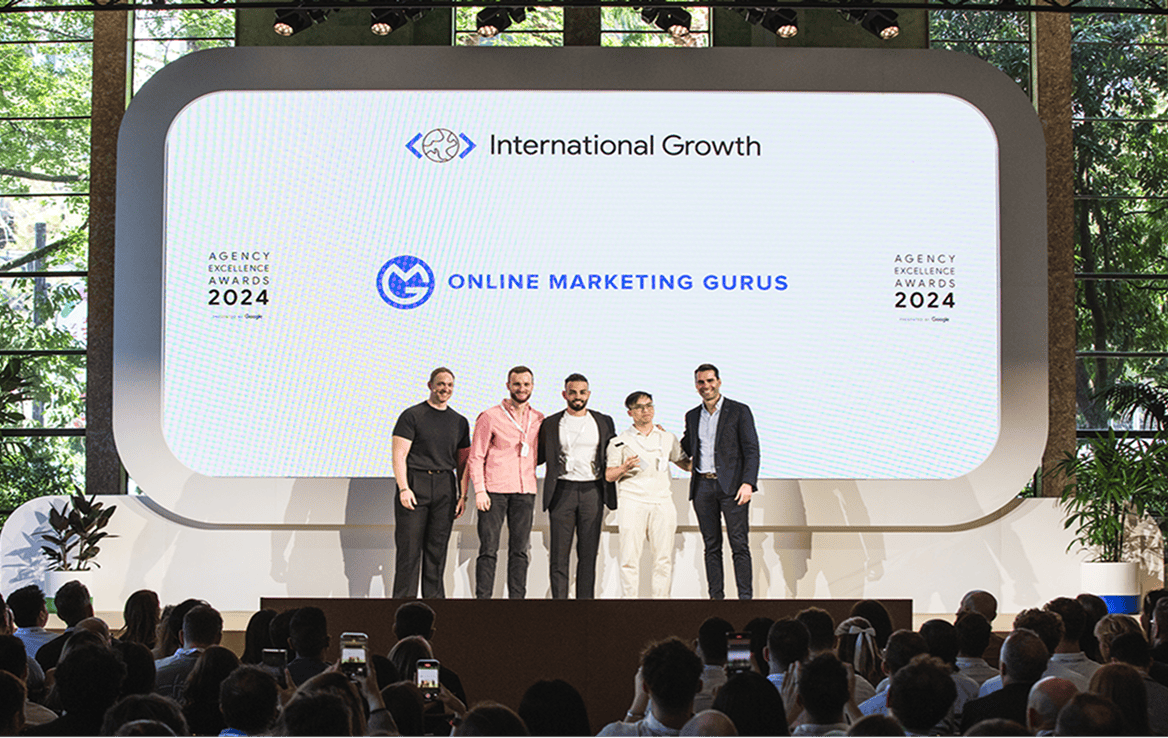
Online Marketing Gurus is an award-winning, evidence-based agency and a trusted name in digital marketing in Australia, with 200+ expert Gurus on staff, deep AI SEO and Google Ads expertise, and premier partnerships with Google, Meta, TikTok, and Pinterest.
If you want to know how visible your brand really is in the agentic era, and how to grow it from here, talk to us about GEO Booster. It is exactly the kind of evidence-based work that delivers real results for real people like you.

About the Author
Andrew Raso
Share