







 1300 433 071


- Home
-

- Blog
-
- AI Marketing Blogs
-
- Generative Engine Optimisation (GEO) vs SEO: What’s Changed?
Generative Engine Optimisation (GEO) vs SEO: What’s Changed?
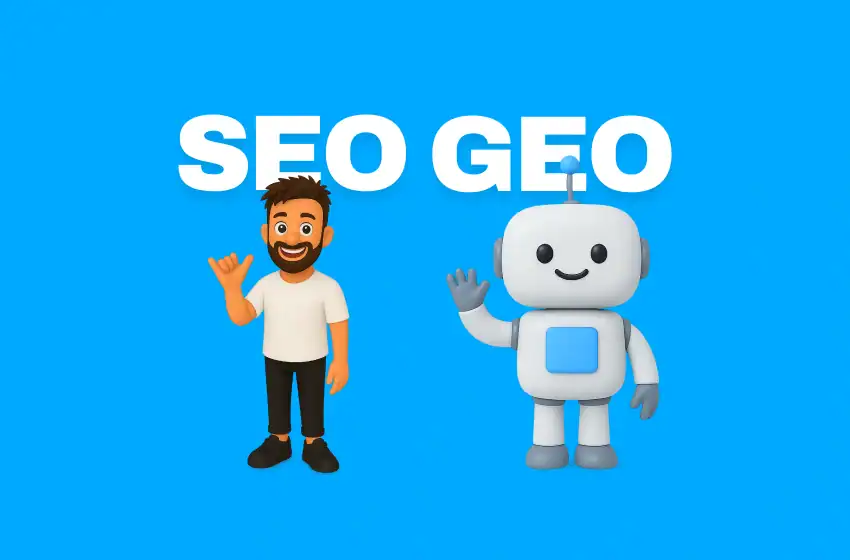
Generative Engine Optimisation (GEO) is the practice of structuring content so AI search engines can extract, verify and cite it directly in AI-generated answers such as Google’s AI Overviews.
SEO focuses on ranking webpages to win human clicks.
Both are essential, but they optimise for different behaviours: humans vs generative engines.
Key Takeaways
-
SEO is still essential, but AI search introduces a new layer: generative engine optimisation (GEO).
-
GEO focuses on helping AI extract, verify and cite your content directly in AI-generated answers, such as Google’s AI Overviews.
-
While SEO wins clicks, GEO wins citations — and both are now critical for maintaining visibility.
-
GEO demands stricter factual accuracy, structured data and topic completeness to become a trusted source for AI.
-
Businesses should optimise for humans and machines simultaneously: engaging content for readers, structured clarity for AI.
-
The brands that adopt GEO early will gain long-term authority as AI becomes the dominant discovery channel.
What Is Generative Engine Optimisation (GEO)?
Generative Engine Optimisation (GEO) is the practice of structuring and presenting information so AI engines can extract, verify and cite it directly in their generated answers.
In other words: SEO helps traditional search engines find and read your content for humans to make sense of it; GEO helps machines understand and trust it.
GEO is an AI-first optimisation strategy designed to make your content the authoritative source used inside generative answers.
How GEO Works in AI Overviews
The New Search Reality: From Blue Links to AI Answers
Just when you’d finally gotten the entire C-suite to understand E-E-A-T, the ground shifts again. You’ve spent years mastering Google’s algo, you know your SERPs from your sitemaps and your link building strategy is so good it practically runs itself over a weekend barbie.
Then, you open your browser, type in a query and BAM. Instead of the familiar list of ten blue links, Google writes you a novel.
That, right there, is the new frontier, called Generative Engine Optimisation (GEO). It’s driven by AI, such as Google’s AI Overviews (AIO) and a host of other answer engines that aren’t just trying to point you to the best source – they’re trying to be the source. They synthesise, summarise and serve up a direct answer, often pulling information from multiple websites.

A new game requires a new playbook
GEO isn’t just another algorithm update to analyse over a flat white. It’s a fundamental change in how information is delivered, and it calls for a new strategy across the board. We’re moving beyond just getting seen to fighting to become part of the AI’s own narrative.
For years, Search Engine Optimisation (SEO) has been the undisputed champion of digital visibility. Now, a new contender has entered the ring. This post will demystify the GEO vs SEO dynamic, unpack how they work together and give your business the actionable strategies needed to win in this brave new world of search.
Defining the terms
Before we pit these two heavyweights against each other, let’s make sure we’re all on the same page.
SEO: The reigning champion we know and respect
You know this one. SEO is the entire practice of convincing search engines that your website is the most relevant, authoritative and trustworthy answer for a given query. Its primary goal is to secure a top spot in the organic search results – those classic blue links – and earn a click.
The core pillars remain crucial – a fact that is unlikely to ever change:
- Technical SEO: Ensuring your site is built flawlessly for search engine crawlers.
- On-page content: Creating high-quality, relevant content that satisfies user intent.
- Off-page authority: Building a stellar reputation through backlinks and brand mentions.
In the world of SEO, you’re optimising for a human to see your link, be compelled and click through to your domain. You win by being the best destination.
Generative Engine Optimisation: The (relatively) new kid on the block
Generative Engine Optimisation, or generative SEO as some pros call it, is the practice of creating and structuring your content so that it’s not just discovered by AI engines, but is actively understood, trusted and used by them to construct their direct answers.
Let that sink in. The goal is no longer just to get a click. The goal is to become a cited source within the AI-generated result itself.
Think of it this way:
- SEO is like writing a brilliant book and optimising its cover and summary so the librarian puts it on the “Recommended” shelf for people to borrow.
- GEO is about writing a book so clear, factual and authoritative that the librarian quotes entire passages from it when someone asks a question.
You’re not just aiming for a recommendation; you’re aiming to be woven into the fabric of the answer. This emerging field is less about keywords in isolation and more about concepts, facts, data and credibility. It’s about proving to a machine that your information is the undeniable ground truth.
GEO vs SEO: The Core Differences

If SEO and GEO were footy players, SEO would be the reliable, star forward who knows exactly how to score goals. GEO is the new, visionary midfielder who’s not just scoring, but setting up plays the other team hasn’t even seen before. They play different roles, but you need both to win the premiership.
The whole GEO vs SEO debate isn’t about which one is better; it’s about understanding their distinct playbooks.
We know you’re looking for this – your GEO vs SEO TL;DR breakdown
| Aspect | SEO | GEO |
| Primary goal | Earn the click from the search results page. Drive traffic to your website. | Get quoted and cited directly within the AI-generated answer. Become the source. |
| Audience | Humans using search engines | AI engines generating summaries |
| Content focus | Engaging humans with E-E-A-T, storytelling and user experience. | Proving factual accuracy to the AI with data, clarity and unambiguous statements. |
| Keyword strategy | Targets specific keywords with high search volume and clear intent. | Covers broad topics, entities, semantic clusters and conversational questions exhaustively. |
| Success metric | High rankings, click-through rate (CTR) and website traffic and conversions. | Being featured as a primary source in AI Overviews and brand mentions within answers. |
| Strengths | Demand capture, long-term organic traffic | Authority building, zero-click visibility, brand trust |
Why GEO Doesn’t Replace SEO
The objective: the click vs. the quote
- SEO’s goal: To earn the click. Every optimisation, from title tags to meta descriptions, is designed to entice a user to choose your link from a list. Success is measured in traffic, rankings and conversions on your site.
- GEO’s goal: To earn the quote. The aim is to be so factually and semantically sound that the AI engine directly incorporates your information into its generated answer and, ideally, cites you as the source. Success here is about becoming a foundational piece of knowledge for the AI.
Content strategy: pleasing people vs. proving facts
- SEO (Human-first): The mantra, as you’re well aware, is E-E-A-T. You’re crafting content that resonates with human emotion and experience. It needs to be engaging, easy to read and build a connection with the user. You might use storytelling, humour and compelling visuals to keep them on the page.
- GEO (AI-First, Human-Second): While still needing to be readable, the focus shifts to unimpeachable factual accuracy. It’s about providing data, statistics and clear, unambiguous statements. Think less like a feature article and more like a university-level textbook or a well-documented API. The AI doesn’t care about your witty anecdotes, sadly – it cares that your data is correct and clearly presented. This is the core of generative engine optimisation.
Keyword research: chasing volume vs. capturing concepts
- SEO: You’re hunting for keywords with significant search volume and clear user intent (informational, transactional, etc.). You’re answering the direct question a user types into the search bar.
- GEO: You’re thinking bigger. Instead of just targeting a single keyword, you’re aiming to cover an entire topic or entity exhaustively. The focus is on long-tail questions and conversational queries that a user might ask an AI assistant. The goal is to create a comprehensive resource that answers not just the initial question, but all the likely follow-up questions, too.
How to Optimise for GEO (Action Plan)
Let’s be crystal clear: GEO isn’t replacing SEO. It’s building on top of it. A house with a cracked foundation will fall, no matter how beautiful the new extension is. Your technical SEO, site speed and mobile-friendliness are the non-negotiable foundations.
The real magic happens when you start optimising for both audiences – human and machine — simultaneously.
1. Speak the AI’s language with structured data
If you’ve been treating Schema markup as a “nice-to-have,” it’s time for a rethink. Structured data (like Schema.org and JSON-LD) is the single most effective way to communicate with an AI.
It’s the difference between describing a recipe in a paragraph versus handing the AI a perfectly formatted list of ingredients, cooking times and temperatures. Structured data removes ambiguity. It explicitly tells the engine:
- “This string of numbers is a price.”
- “This text is a review.”
- “This page is about a specific person, event or organisation.”
- “Got it, AI, your majesty? Good.”
For a successful generative SEO strategy, marking up your content with detailed, accurate Schema is paramount. It’s how you spoon-feed the AI the exact facts you want it to learn.
2. Structure content for dual readership
Your new mantra should be to “Write for a smart human, structure for a genius robot”.
- Be brutally clear: Cut the fluff. Use concise language and short paragraphs. Get to the point quickly. AI models value information density.
- Build an FAQ fortress: Identify every possible question related to your topic and answer it directly in a dedicated FAQ section (marked up with FAQPage Schema, of course). This makes your content a prime target for being lifted into an AI Overview.
- Data is your best friend: Back up your claims with numbers, statistics and citations. Factual, data-driven content is far more likely to be seen as authoritative by an AI than purely opinion-based pieces.
- Think in hierarchies: Use logical H2s and H3s, bullet points and numbered lists. This not only improves human readability but also creates a clear, parsable structure for machines to follow.
3. Scale your content (responsibly)
Yes, you can use AI models to help scale your content production. They are brilliant tools for brainstorming ideas, creating outlines or even crafting a rough first draft.
But (and this is a big but) you cannot simply copy-paste.

Using AI to pump out generic, un-fact-checked content is the fastest way to get ignored by both users and Google. The “Guru” touch is essential. Every piece of content must be rigorously fact-checked, edited for tone and accuracy and infused with your unique expertise and insider insights. Use AI as the apprentice, not the master craftsman.
We’ve all learned this from the recent Google algorithm updates, haven’t we? The great digital clean-up wasn’t subtle. Google took a flamethrower to websites churning out thousands of pages of unhelpful, AI-generated sludge. Entire domains built on nothing but soulless, rephrased content vanished from the SERPs overnight. It was a stark, global reminder that ‘more’ is not ‘better’ if the ‘more’ is absolute rubbish.
Metrics That Actually Matter for GEO
“If you can’t measure it, you can’t manage it”. True, but in this new landscape, our traditional dashboards don’t tell the whole story. This is where the conversation with your clients (or your boss) gets tricky.
You see, the results of a strong generative engine optimisation can feel less tangible than a hockey-stick graph of organic traffic, and clients might struggle to see the immediate financial value. Your job is to reframe the definition of a “win.” While traffic and rankings still matter, we need to add a few new KPIs to our reports and learn how to communicate their strategic importance.
Here are the key metrics and how to talk about them:
1. Citation tracking
This is the ultimate prize. Are you being named as a source in AI Overviews? Tools are emerging to track this, but for now, manual checks for your most important queries are essential.
Reframing: Think of this as the modern equivalent of being quoted in a major industry publication. It’s a powerful, third-party endorsement from the most influential voice in the room – the search engine itself. It builds immense trust and authority.
2. “Zero-click” brand mentions
Even if you aren’t cited with a link, is your brand name, data or product being mentioned in the generated text? This is where many clients will ask, “What’s the value if they don’t click?”
Reframing: This is a top-of-funnel brand play, similar to digital PR or billboard advertising. The goal is brand recall and authority. When a user sees your name as the definitive source for an answer, you cement yourselves as the market leader in their mind. When they are ready to make a purchase, you’re already the most trusted name they know.
3. Shifts in organic traffic
Keep a close eye on your analytics. You might see a dip in traffic to broad, top-of-funnel pages (because the AI answered the simple question) but a surge in traffic to the deep, ultra-specific informational pages that the AI is using as its source material.
Reframing: You’re anticipating a shift from traffic volume to traffic quality. The users who do click through from an AI Overview are highly qualified, as they’ve already received the basic answer and are now seeking deeper expertise. These visitors are further down the funnel and more likely to convert.
For the big fish in the pond (the established market leaders) this isn’t just about offence; it’s about defence. If your brand is already a household name, the biggest risk is letting a smaller, more agile competitor become the AI’s trusted source. Losing your place as the definitive voice in your industry is a long-term threat to your market position. For you, investing in GEO is a strategic necessity to maintain the enterprise authority you’ve worked so hard to build.
Industries Most Impacted by AI Search
Before you start overhauling every page on your site and rework your whole content marketing strategy, let’s inject a dose of reality. The impact of AI in search isn’t a tidal wave hitting all shores equally. Right now, it’s more like a series of targeted storms and rolling out unevenly across query types and industries. Recent SEMrush’s analysis including data from January – March 2025 shows that AI Overviews appear far more often for informational queries than navigational or transactional ones.
If a user is searching for “pizza near me,” they’re not looking for a dissertation on Neapolitan dough. They want a phone number and a map pack. The AI knows this. Highly transactional, local and simple navigational queries are, for now, less affected.
So, who is in the eye of the storm?
- High-consideration industries (e.g. finance, healthcare, B2B software, legal services and complex tech) are experiencing the greatest exposure to AI-driven summarisation. These are the sectors where users typically ask in-depth “What is,” “How to,” or “Which is best” questions, making them prime candidates for AI synthesis (Source: McKinsey – AI Search & Consumer Behaviour).
- Informational and how-to content is also disproportionately impacted. Categories built on explanation (e.g. DIY, recipes, travel guides and educational content) align closely with the query types most likely to trigger AI Overviews.
If your business sits outside these categories, don’t get complacent. Ignoring generative engine optimisation today is like ignoring mobile optimisation in 2010.
“About 50 percent of Google searches already have AI summaries, a figure expected to rise to more than 75 percent by 2028, according to trend analysis. Half of consumers polled in a McKinsey survey now intentionally seek out AI-powered search engines, with a majority of users saying it’s the top digital source they use to make buying decisions. Use of AI-powered search spans all ages, including a majority of older generations (for example, baby boomers) already adopting it. In fact, by 2028, $750 billion in US revenue will funnel through AI-powered search.” – MacKinsey
Although research might include a large sample size in the U.S., this will roll out to the rest of the world. Don’t let your digital marketing efforts in Australia take the back seat.
The Guru’s final take
The rise of AI in search isn’t the end of SEO, but it’s arguably the most significant evolution we’ve ever seen. The GEO vs SEO conversation isn’t about a battle for supremacy but a story of integration. Strong, fundamental SEO is the foundation upon which any successful generative SEO strategy must be built.
You win by creating content that serves two masters – content that’s engaging, empathetic and valuable for your human audience, while also being structured, factual and unambiguously clear for your new machine audience. It’s a challenge, for sure, but it’s also the biggest opportunity we’ve had in a decade to separate ourselves from the pack by committing to genuine quality and expertise.
The future isn’t coming. It’s here. It’s time to get optimised. GEO won’t replace SEO – but the brands who embrace both will dominate the future of search visibility.
Let OMG tame the machines for you
Feeling a bit overwhelmed by the AI revolution? Don’t be. Our team of Gurus lives and breathes this stuff.
Claim your free, comprehensive Digital Audit today, and let’s future-proof your strategy together. We’ll analyse your current SEO and map out your path to mastering generative SEO. Contact us to learn more.

About the Author
Andrew Raso
Share