






 1300 433 071


- Home
-

- Blog
-
- News & Industry Updates
-
- 2026 Starts With AI Messaging, SEO Shifts & Smarter Creator Deals
2026 Starts With AI Messaging, SEO Shifts & Smarter Creator Deals
Key Takeaways
-
Meta’s acquisition of Manus signals messaging becoming a primary conversion channel, not a support layer. Brands should prepare for AI conversations that handle discovery, qualification and follow up.
-
Smarter conversational AI means richer first party data. Chat interactions now reveal real objections, timing and buying readiness, giving marketers a direct feedback loop to improve guides, FAQs, landing pages and content strategies.
-
Google’s December 2025 core update demonstrates that SEO is a long-term system, not a series of fixes. Visibility favours sites with clear intent alignment, depth and consistency rather than those reacting tactically.
-
Analysing pages that held or gained rankings provides clearer direction than chasing losses, helping businesses build more resilient content ecosystems that withstand future algorithm changes.
-
New creator search and management tools inside Google Ads bring influencer marketing closer to paid media discipline. Creator partnerships are now easier to evaluate, manage and optimise.
-
As creators become media partners, brands must plan strategically. Clear objectives, consistent briefs and performance aligned KPIs will separate scalable creator programs from volume-driven campaigns that struggle to stand out.
2026 has arrived with less noise and more signal. Platforms are tightening their algorithms, conversations are getting smarter and brands are being pushed to prove real value (not just presence).
If you work in digital, this year is less about chasing shiny tools and more about reading intent better and making every channel pull its weight. The shifts are already underway, and the businesses paying attention now will feel it first sooner locally.
1. Meta acquires AI chatbot company Manus to expand conversational AI
Meta’s acquisition of Manus focuses more on scale and control than novelty. Manus specialises in AI-driven customer service and messaging tools built to manage high volumes of business conversations across channels. Meta plans to integrate this capability across Facebook, Instagram, WhatsApp and Messenger, so brands get more sophisticated tools to automate, personalise and manage chats at speed.
What changes here is expectation. Messaging is no longer a side channel or support add-on, but is now being positioned as a primary point of interaction, closer to how people already behave inside Meta platforms. Conversations can now handle discovery, qualification and follow up in one continuous thread. For brands thinking about AI SEO, this signals a broader shift away from linear funnels towards intent led interactions that happen in real-time, inside platforms people already trust.
From a broader ecosystem perspective, this also strengthens Meta’s position against search led discovery. As conversational tools improve, users do not need to leave the platform to ask questions, compare options or move towards purchase. This is where generative AI SEO starts to intersect with messaging, as answers, not links, increasingly drive decisions.
The gurus’ take
What stands out is not the chatbot technology itself, but where Meta is placing it: in everyday user behaviour. Messaging is where people already ask questions they would never type into a search bar. That honesty is valuable, and Meta clearly wants brands to capture it.
From experience, the brands that win in these shifts are the ones that design conversations properly, not just automate them. Poor chat flows will stand out faster than poor ads. We’ve all seen how context loss, generic replies and hard selling inside chat turn users off quickly. Manus gives Meta the infrastructure, but brands still need tone and intent mapping to make it work.
There is also a quieter implication. As conversations become smarter, the data behind them becomes richer. Businesses will gain clearer insight into objections, timing and readiness to buy. That intelligence should inform broader marketing decisions, including more targeted copy such as guides, landing page FAQs, product explainers and objection handling content that mirrors what people actually ask in the wild.
Your action plan
- Audit existing chat and messaging flows for friction, repetition and dead ends.
- Shift chat goals beyond support into qualification and intent capture.
- Map conversational triggers to real customer questions, not internal assumptions.
- Align messaging insights with SEO, content and paid media strategies.
- Test automation gradually and monitor drop off points closely.
- Invest in tone and brand voice inside chat, not just functionality.
- Use chat conversation data to shape more targeted guides, FAQs and on-site copy based on real customer questions and objections.
2. Google completes December 2025 core update after 18-day rollout
Google has officially wrapped its December 2025 core update after an 18-day rollout marked by noticeable ranking volatility. As with all core updates, this was not about targeting a single tactic or industry. It was a broad recalibration of how Google evaluates relevance, quality and usefulness across the index.
With this update, Google aimed to reward high-quality content that demonstrates strong E-E-A-T (Experience, Expertise, Authoritativeness, and Trustworthiness). Sites that align closely with user intent saw lifts, while others experienced drops without any obvious technical cause. This update caused ranking volatility for news publishers and YMYL sites, while some sites previously hit by helpful content updates saw signs of recovery.
Core updates work by reassessing signals at scale, and Google effectively re weighs what it believes to be good content based on evolving search behaviour. That means pages aren’t penalised so much as re-ranked against a new benchmark. For businesses invested in long-term growth, this reinforces why search engine optimisation needs to be treated as an ongoing system, instead of a static checklist. Performance swings after an update are signals to investigate, not panic over.
This update also reminds us all about the importance of consistency. Short term fixes rarely correct core update losses. Instead, Google is rewarding sites that demonstrate depth, clarity, trust signals and alignment across content themes. Therefore, reviewing performance through a strategic lens matters more than chasing individual ranking changes. This is where a strong, sustainable approach to search engine optimisation pays off.
The gurus’ take
The update reinforced that Google is moving toward more frequent, “invisible” quality adjustments, making consistent topical authority more important than chasing specific algorithm triggers.
From experience, the biggest mistake we see after a core update is reacting too quickly. Sure, ranking drops create urgency, but urgency often leads teams to make surface level changes that miss the real issue. Core updates usually expose weaknesses that have existed for months. We all know that thin content clusters, overlapping pages, unclear intent or authority gaps tend to be the real culprits.
What often gets overlooked is what stayed stable. Pages that held or improved rankings during the update are just as important to analyse. They show you exactly what Google is rewarding right now. Too many specialists focus only on losses. That is a missed learning opportunity. Also, don’t forget to check query mix shifts. Sometimes, rankings dip because the SERP changed, not because your page suddenly became ‘worse’.
There is also a mindset shift required. Core updates are less about pleasing an algorithm and more about proving usefulness at scale. If your content answers questions clearly, supports decision-making and shows real expertise, updates become less disruptive over time. The more your content is built around real needs, the less you rely on timing and luck.
Your action plan
- Compare pre- and post-update performance at page and content group level.
- Identify pages that gained visibility and replicate their structure and intent.
- Audit declining pages for overlap, thin coverage or unclear purpose.
- Strengthen topical authority rather than refreshing pages in isolation.
- Avoid knee-jerk technical changes unless clear issues are present.
- Track performance over several weeks before drawing conclusions.
- Use core updates as a benchmark for long-term content quality, not short-term fixes.
- Review E-E-A-T signals across key pages, including author credibility, sourcing and freshness.
- Improve internal linking to reinforce topic clusters and help Google understand content relationships.
3. Creator partnerships enhanced with new search and management hub in Google Ads
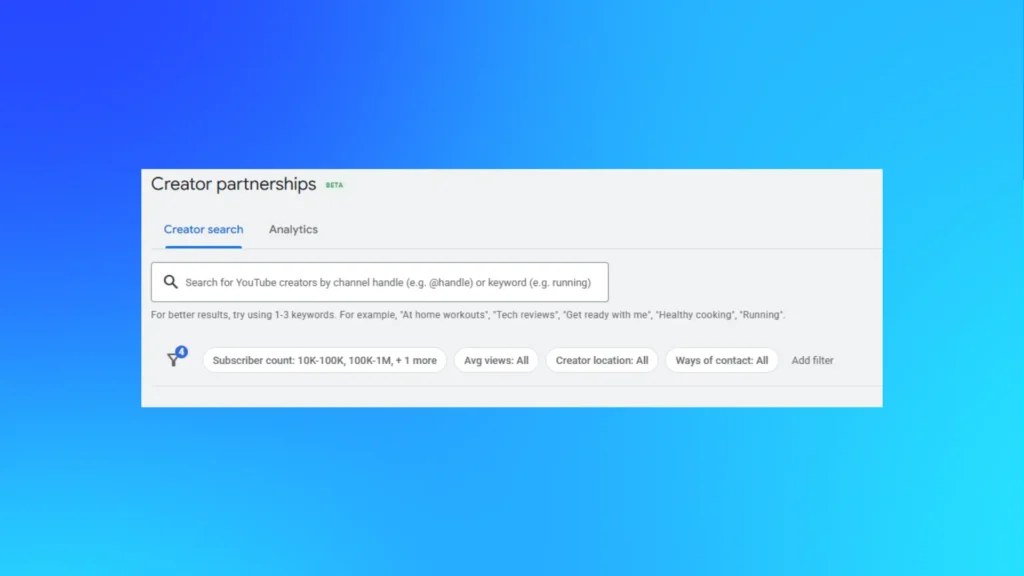
Google has rolled out new creator search and management tools inside Google Ads, designed to centralise how brands discover, organise and measure creator partnerships. The update introduces a creator search experience that allows advertisers to find relevant YouTube creators based on content themes, audience alignment and performance signals. Alongside this sits a Management Hub where brands can track collaborations, streamline outreach and monitor results in one place.
Functionally, this brings creator activity closer to paid media operations.
Instead of treating influencer marketing as a separate discipline, brands can now evaluate creators with the same performance mindset used for campaigns. Reporting becomes clearer, workflows tighten and expectations around outcomes increase. This also signals a shift in how creator content is valued, not just for reach or engagement, but for its role in driving measurable business impact. For teams already investing heavily in paid media, this is Google closing the gap between creators and scalable media execution, supported by clearer accountability and cleaner data.
This move also reflects a broader trend towards professionalising influencer marketing. Casual partnerships still exist, but the direction is clear. Creators are becoming media partners, not just brand advocates, and brands are expected to manage them accordingly.
The gurus’ take
From what we’ve seen in the field in the last decade, the biggest challenge with creator partnerships has never been finding talent. It has been managing them consistently. Briefs drift, reporting varies and outcomes are often difficult to compare. Bringing creator discovery and management into Google Ads addresses that gap directly, but it also raises the bar for marketers.
What many teams underestimate is how quickly creator performance expectations will tighten. Once creators sit alongside paid placements, questions around ROI, audience quality and message alignment become unavoidable. This is a good thing, but only if brands approach it strategically. Throwing creators into campaigns without clear roles or success metrics will expose weak planning faster than ever.
There is also an opportunity here that goes beyond efficiency. When creators are evaluated properly, they can inform broader messaging, creative direction and audience insights. The brands that use this hub as more than a directory will get the most value. Those that simply use it to scale volume will struggle to stand out. Build testing frameworks, rotate hooks and brief creators with the same clarity you expect from your best ad creatives.
Your action plan
- Define clear objectives for creator partnerships before using the hub.
- Align creator KPIs with paid media goals, not vanity metrics.
- Use creator insights to refine ad creative and messaging strategy.
- Build consistent briefs to reduce performance variance.
- Review creator performance regularly and optimise like any other channel.
- Integrate creator reporting into broader Google Ads management dashboards.
- Treat creators as long-term partners, rather than one-off placements.
- Set brand safety and approval workflows upfront to avoid delays and off brand messaging.
- Track assisted conversions and incrementality to measure creator impact properly.
Why these shifts matter more than they seem
2026 is already drawing a clear line between brands that react and brands that lead. AI-driven messaging, tighter search evaluation and more accountable creator partnerships are not isolated updates. They’re signals that digital marketing is maturing fast, and the gap between activity and impact is getting harder to hide.
The winners will be the teams that connect the dots. Conversation data should sharpen content and offers. Core update learnings should guide long-term search engine optimisation priorities (not quick fixes). Creator programs should run with the discipline of paid media. The point we’re trying to drive home is that siloed tactics and surface-level optimisation will not hold up in this environment.
Turn change into competitive advantage with OMG
With over a decade in the industry and 40 plus prestigious awards to our name, Online Marketing Gurus has seen every cycle, shift and so-called silver bullet come and go. Our edge is knowing what actually moves the needle and what quietly drains the budget. Our world-class SEO experts, paid media specialists and strategists work together to build systems that scale. We stay ahead because we live inside the data, the platforms and the updates. From AI and SEO to Google Ads and creator strategy, we translate insider insight into commercial outcomes.
If you want clarity on what these changes mean for your business, contact us for a free strategy session. We’ll show you where the opportunities are and how to capitalise on them for sustained growth.

About the Author
Andrew Raso
Share