







 1300 433 071


- Home
-

- Blog
-
- News & Industry Updates
-
- Smarter AI Hits ChatGPT, Google Ads & TikTok Together
Smarter AI Hits ChatGPT, Google Ads & TikTok Together
Digital marketing just levelled up again this past week, and the pace is getting a bit ridiculous. Fresh AI upgrades are rolling through the biggest platforms at once, quietly reshaping how brands create, optimise and get noticed.
If you’ve felt the industry heating up lately, you’re not imagining it. Things are about to get very interesting.
Key Takeaways
-
ChatGPT 5.1 brings faster reasoning and steadier outputs, pushing generative engine optimisation into real day-to-day marketing workflows.
-
Google Ads introduces AI-powered advisors that analyse campaigns, explain performance shifts and guide optimisation with conversational insights.
-
Reddit’s new interactive ads let brands build quizzes, games and dynamic units to drive deeper engagement inside relevant communities.
-
Google Merchant Center now supports product video uploads, giving brands a richer way to showcase features and lift shopping performance.
-
Google Ads Editor 2.11 streamlines bulk edits, adds smarter controls and supports modern creative formats to speed up campaign management.
-
TikTok and LinkedIn roll out new AI-driven discovery tools, shifting how social content is found, recommended and aligned with user intent.
OpenAI rolls out ChatGPT 5.1
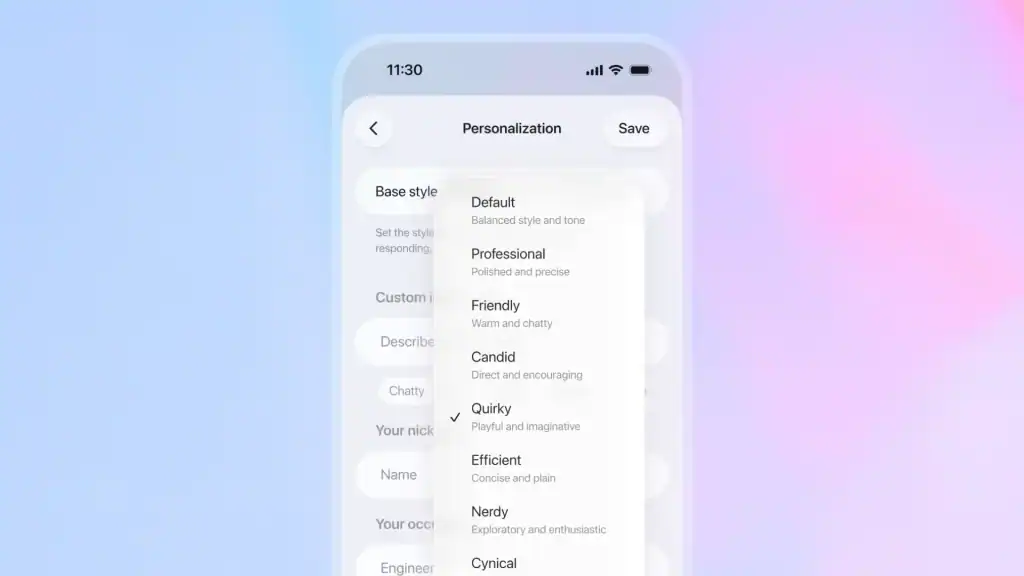
ChatGPT 5.1 arrives at a moment when marketers are pushing harder for speed, clarity and fewer iterations. The new model steps things up with sharper responses and a cleaner way to work through complex prompts. It’s more stable, more predictable and far better at following layered instructions.
This update also strengthens long-form thinking. Instead of drifting off-track or looping, 5.1 handles structured tasks like briefs, outlines and strategy frameworks with clarity. It feels purpose-built for teams juggling multiple moving parts. More brainpower, less friction.
The gurus’ take
The jump from earlier models to 5.1 is noticeable in real production work. It’s faster at shaping content that reads human and aligns with brand tone from the first pass. Research tasks are more reliable, too, which cuts down on the stop-start rhythm that usually slows teams. The lift in structured reasoning means you can move from idea to execution without the usual back-and-forth fuss.
For marketers, this is also where generative engine optimisation (GEO) becomes impossible to ignore. As AI search starts shaping how people discover brands, GEO is the new visibility play. And with 5.1 lifting the quality and consistency of AI outputs, brands need to start thinking about how they’ll show up in these emerging search experiences.
Your action plan
- Use the new prompting guide to tighten your instructions before generating anything.
- Break tasks into short, purposeful chunks to maximise 5.1’s reasoning gains.
- Document your best-performing prompts and turn them into reusable workflows.
- Run GEO-focused content through structured iterations to improve clarity and ranking potential.
- Let 5.1 handle first-round research so you spend more time refining strategy.
- Test it on briefs, outlines and messaging frameworks to speed up internal alignment.
- When using it to write, pair human edits with AI consistency to scale content quality without the rewrites.
Google Ads introduces AI-powered advisors
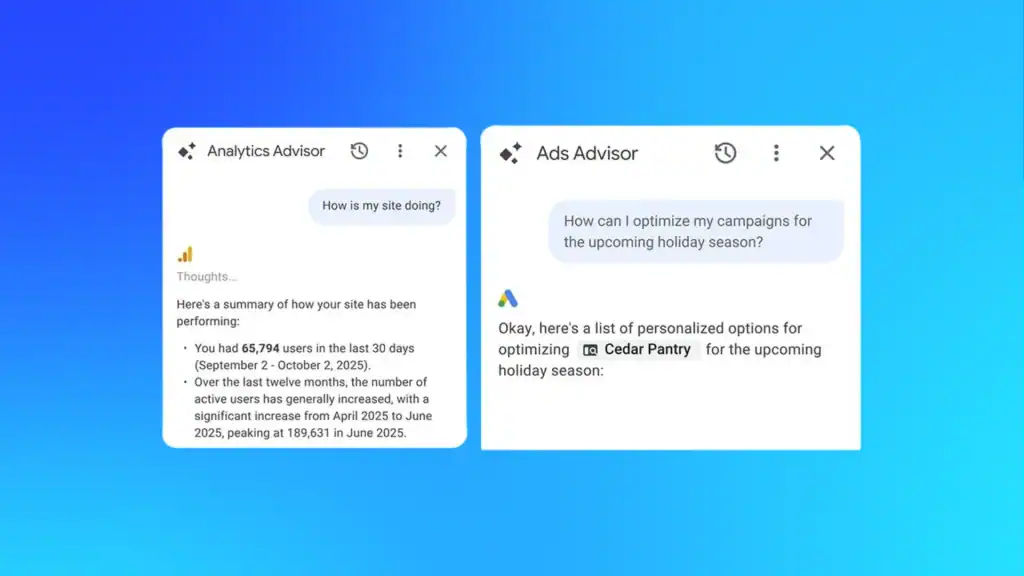
Google Ads has added two AI-driven assistants (Ads Advisor and Analytics Advisor) that sit inside the platform and offer conversational analysis, diagnostics and actionable suggestions. Built on the latest Google Gemini models, these tools help marketers ask real-world questions (“Why did conversions drop on 23 Sep?”) and get clear answers plus next-step guidance. You can even propose or apply campaign changes (with approval) like adding site links or shifting targets.
For many practitioners, this means campaign optimisation moves out of the spreadsheets and into a dialogue. Rather than manually extracting insights from data dumps, you engage in a conversational workflow that surfaces priorities, flags issues and recommends fixes in near-real time.
The gurus’ take
The introduction of AI advisors in Google Ads means marketers must rethink how they use the platform. The smartest teams will treat the advisor not as a replacement for human judgement but as a force multiplier. Less time is spent deciphering data and more on testing creative and deeper strategy.
One insight many miss: the value isn’t just in acting on suggestions, but in auditing the suggestions. Use the advisor’s recommendations as a benchmark against your data and intuition, and ask “why is this being suggested?” rather than “should I approve it?” That’s how you maintain control. Spot where the AI is conservative or off-track, and make sure your brand’s voice and goals stay front and centre.
Your action plan
- Give the AI advisors access to key campaigns with defined goals so they learn in context.
- Run parallel tests: let the advisor suggest changes, track results separately to baseline your performance.
- Create a checklist for each suggestion: has the tool checked the right audience, data window, seasonal context?
- Reserve final approval to a human team member, and never auto-approve all changes without oversight.
- Track the advisor’s suggestions over time and look for patterns: what types of changes recur, and which yield the best impact?
- Align editorials and strategy with the insights generated. If the advisor flags creative fatigue, tie it back to your messaging calendar.
- Train your team to ask better questions: “What’s the root cause of the dip?” rather than “What should I tweak?”
Reddit unveils interactive ads for higher engagement
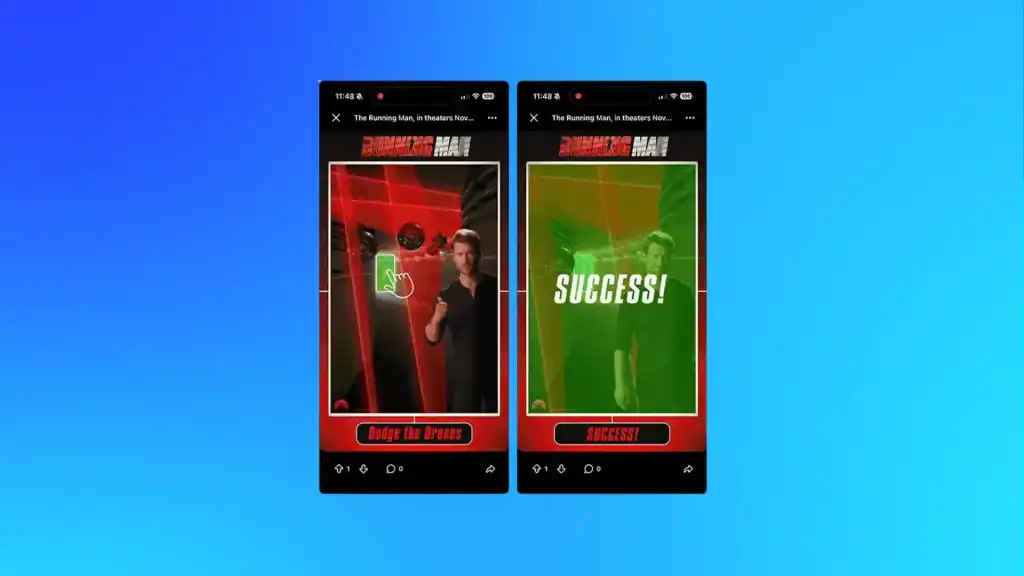
Reddit has launched a new “Interactive Ads” format that turns brand promotions into playable in-feed experiences. These ads allow users to tap, swipe or otherwise engage with branded content right within Reddit’s 100,000+ communities, using formats like quizzes, mini-games, dynamic reveals and countdowns.
The idea is to move beyond static image or video ads and make the brand interaction part of the content users already consume. Early use cases with Red Bull, Paramount Pictures and EA involved escape-games, countdowns and live community challenges inside Reddit feeds.
The gurus’ take
At OMG, we see this shift in Reddit’s ad format is a signal that the platform is doubling down on experience-based advertising, something many marketers still under-leverage. The benefits are clear: longer dwell time, deeper involvement and advertising that feels native to the platform’s culture. But to succeed, you’ll need creatives that match Reddit’s tone, not just reuse what worked on other networks.
Treat the ad like part of the community culture. If your quiz feels forced, or your reveal feels like a YouTube shortcut, you’ll lose the Reddit crowd fast. Use humour, common references or even user input as part of the build-in. We believe that’s how immersion happens and why the ad isn’t skipped.
Your action plan
- Map which Reddit communities align with your audience and tailor the interactive format to their style (quiz vs game vs reveal).
- Start with a template variant (e.g., quiz or countdown) to test how your audience responds before committing to bespoke build-out.
- Build your interactive content to respect mobile experience (taps/swipes optimised) and keep load times minimal.
- Frame the interaction with a clear brand value (fun + utility) not just a gimmick.
- Besides clicks, monitor interaction metrics (completion rate, time spent, repeat visits).
- Combine the ad with follow-through assets (landing page, community thread) to prolong engagement beyond the unit.
- Align your creative team early: interactive ads need slightly different hooks, landing tactics and community-sensitive language compared to standard formats.
Brands can now upload product videos in Google Merchant Center
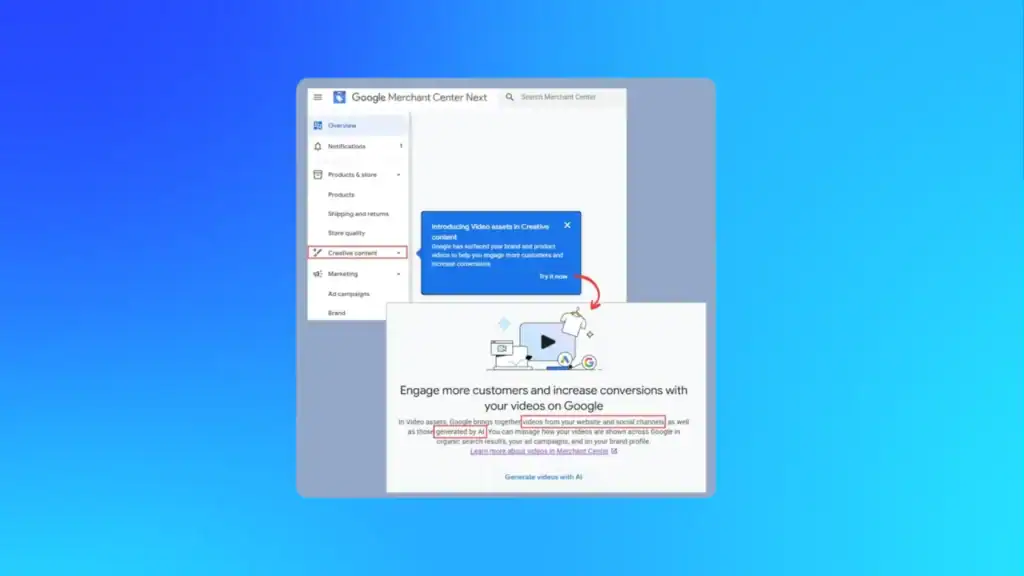
Google Merchant Center has added a new “Video assets” section under Creative Content that lets brands upload, map and manage video content alongside their product listings. Videos can originate from your website, social channels or Google’s AI-powered Product Studio; all of which link directly into ad assets and organic surfaces.
By enabling direct mapping of videos to specific product listings, the platform gives marketers a new way to enhance visibility, highlight usage and improve engagement via video across paid and free placements. The integration is especially relevant as search increasingly favours rich media, which helps brands stand out and build trust in crowded marketplaces.
The gurus’ take
Video inside the Merchant Center is a small change with a big downstream impact. It moves product discovery from static tiles to richer, more persuasive storytelling. We believe this matters most for categories where touch, scale or function are hard to communicate through images alone. Think furniture, beauty tools, kitchen gear, fitness equipment or anything shoppers want to see in action before they commit.
Treat this update as an opportunity to refresh how you present your catalogue, not just an extra asset slot to fill. Remember to maintain consistency across ecosystems. If your brand videos already live on social or your site, bring that same energy into Merchant Center rather than creating disconnected clips. Cohesion strengthens recognition and gives your listings more stopping power.
Your action plan
- Upload your strongest product demo or feature-focused videos to Merchant Center first.
- Map each video to the specific products it supports for tighter relevance.
- Prioritise videos under 15 seconds for faster viewing and better mobile performance.
- Refresh older listings with video to lift visibility across free and paid surfaces.
- Use Product Studio clips if you need quick variations without reshooting content.
- Test different formats (how-to, unboxing, usage moments) to see what drives higher click-through.
- Maintain visual consistency across ads, website and Merchant Center to strengthen brand recall.
Google drops Ads Editor 2.11 with major workflow upgrades
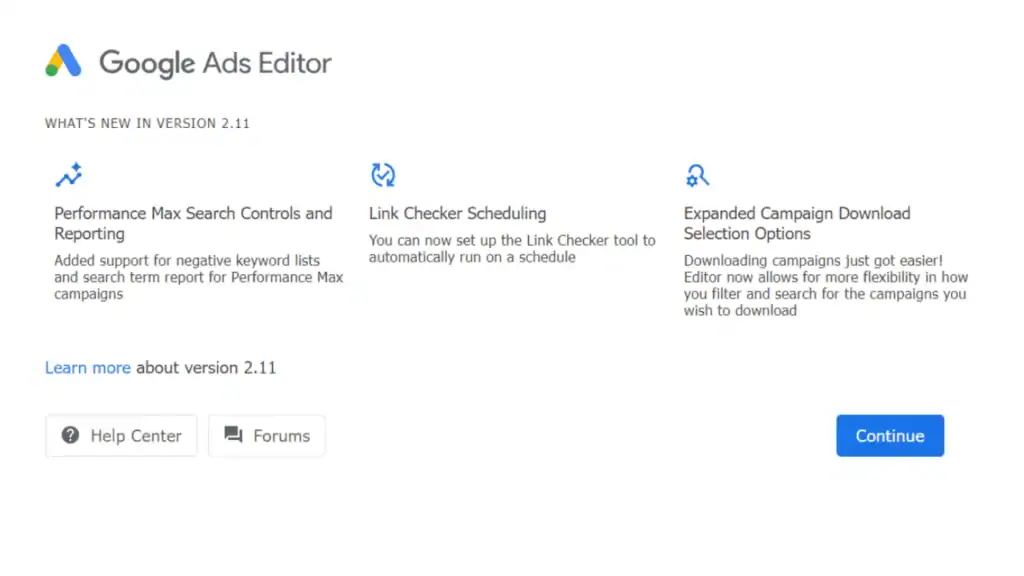
Google Ads Editor version 2.11 brings a hefty set of updates that cut down manual grunt work and tighten control across campaign operations. Major enhancements include:
- Campaign-level negative keyword lists for Performance Max
- Search-term reporting for PMax
- Scheduled link-checks for broken URLs
- Account-level placement and IP exclusions
- Improved CSV import/export
- AI-powered video generation from existing assets
This matters because the update signals where Google is heading: automation, asset-rich formats and tighter oversight. For brands, agencies and practitioners scaling campaigns, it means less time wrestling spreadsheets and interfaces and more time executing strategy. Plus, legacy formats are being phased out, so staying on top of these workflow upgrades isn’t optional.
The gurus’ take
This update doesn’t feel flashy, but it does feel necessary. In our workflows, the ability to apply campaign-level negative keywords inside Editor has already saved hours of manual clean-up and improved spend efficiency. The transparency passes for PMax search terms also mean fewer blind spots and more strategic control rather than chasing performance in the dark.
We recommend treating the link-check and account-wide exclusion features as hygiene tools, instead of just add-ons. When your housekeeping is tight, you reduce noise and increase the meaningful signal. It’s the kind of smart detail that separates good campaigns from great ones.
Your action plan
- Upgrade to version 2.11 as soon as possible across your team.
- Review all active campaigns for Performance Max and apply negative keyword lists where gaps exist.
- Set up scheduled link-checks and fix broken URLs promptly to protect conversion flow.
- Use account-level exclusions for low-margin placements, irrelevant IP ranges or risky content themes.
- Test the auto-video generation feature using brand assets to create fresh creative with less effort.
- Update your CSV import/export workflows to take advantage of the enhanced functionality and sync process.
- Audit any legacy ad types in your account (especially older Display or mCPV formats) and migrate to supported formats.
TikTok launches bulletin boards to organise trends
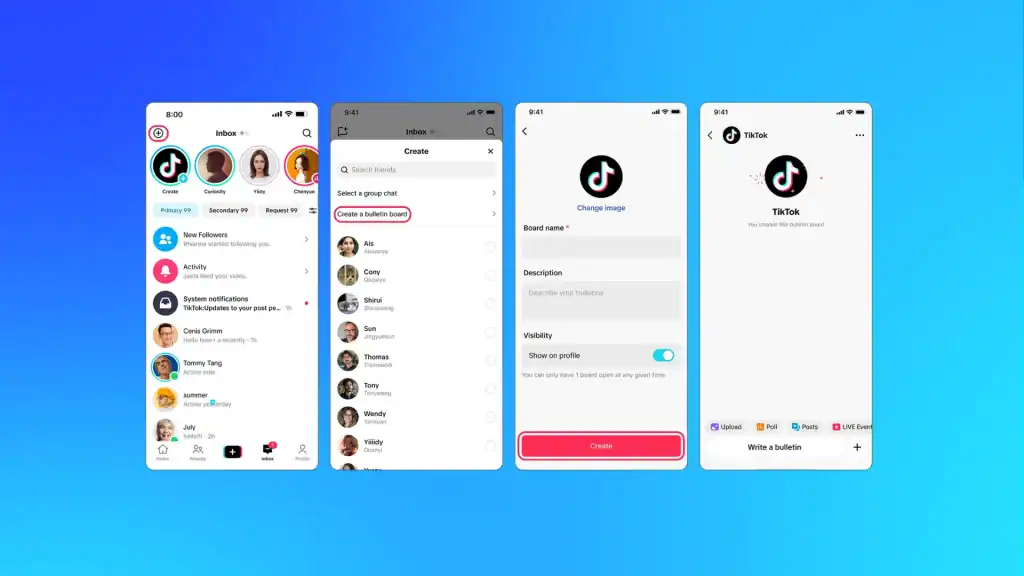
TikTok has introduced a new “Bulletin Boards” feature: curated message-channels where brands and creators share updates, themes and evergreen content directly with followers. Posts can include text, images or video and are broadcast through a dedicated channel users opt into.
This shift matters for social media advertising because it creates a new discovery surface where evergreen and educational content can thrive. Bulletin Boards also influence what TikTok recommends, so brands have a stronger hand in shaping visibility. The rollout is limited for now and is being rolled out to 18 years and over who meet that 50k follower threshold.
The gurus’ take
Bulletin Boards open a new engagement layer where you’re not just chasing views in the feed, anymore, but building an opt-in channel. From a strategic lens, the brands that will thrive here are those that won’t treat it like another repost channel. The opportunity sits in creating rhythm, offering recurring updates and delivering insights followers can’t get elsewhere. Because the connection is more direct than the feed, the tone can be more authentic and less polished, which suits TikTok’s culture perfectly.
The immediate move we see is to use the board as a bridge between announcement and action. If your board signals “insider” content, you can bring followers into other channels or push them toward product launches with less friction. The key is maintaining quality and consistency.
Your action plan
- Set up a Bulletin Board on TikTok if your brand account meets the eligibility criteria.
- Define a clear theme for the board (e.g., “Trend alerts”, “Product drops”, “Creator collabs”) that aligns with your broader content strategy.
- Map out a posting cadence: aim for regular output (e.g. 3-5 updates per week) to build habit.
- Use mixed formats: short video snippets, behind-the-scenes images or quick tip posts that feel native to TikTok.
- Promote the board via your main profile and other platforms to drive “Join” subscriptions.
- Monitor interaction metrics (join rate, view rate, reaction rate) and adjust content accordingly.
LinkedIn launches AI conversational search
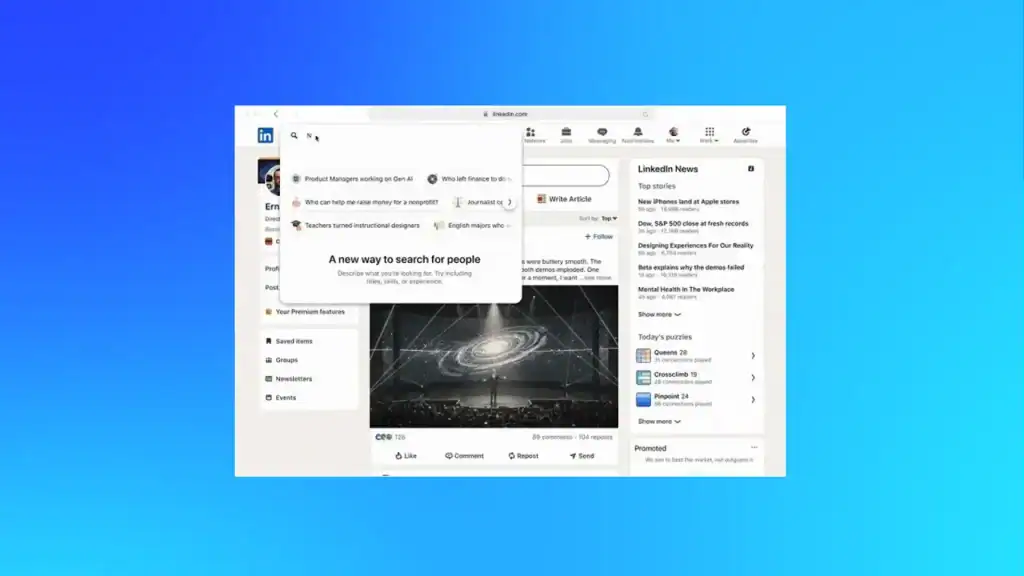
LinkedIn now lets users type conversational queries like “entrepreneurs who exited in fintech” or “marketers skilled in generative AI models” to surface people, pages and posts using natural-language input.
For brands and agencies that leverage LinkedIn advertising, this could be a game-changer. The system now interprets intent rather than relying on strict keyword matching, drawing from its professional graph of skills, experience, connections and content. It currently appears for eligible Premium users with an “I’m looking for…” prompt in the search bar, signalling that conversational mode is active.
Because the AI ranks results using context, relevance and relationship strength, marketers need to think about how their expertise is described in natural language, not just how it appears in metadata.
The gurus’ take
LinkedIn’s conversational search pushes the platform closer to how people naturally look for expertise, partners and opportunities. That means your positioning, phrasing and even how you describe outcomes matter more than ever. It rewards brands and professionals who speak plainly about what they do, not those hiding behind jargon.
It’s also not an entirely new concept. Google has trained users to search in natural language for years, and LinkedIn is finally catching up by applying the same logic to professional discovery.
We think it’s worth aligning your content cadence with the types of queries your audience is likely to ask. If users search for “leaders sharing practical marketing insights”, then posts demonstrating that value stand a higher chance of surfacing. It’s a nudge to create content that answers real questions, not just content that fills your feed.
Your action plan
- Review your profile and company page for conversational phrasing that reflects how users naturally describe your expertise.
- Refresh your About sections with intent-driven language (who you help, what you solve, how it benefits them).
- Optimise posts around problem-solving narratives rather than keyword stuffing
- Add richer context to featured content, so LinkedIn can interpret relevance for related queries.
- Create posts that mirror the questions your target audience might ask in conversational search.
- Encourage team members to publish thought leadership that demonstrates expertise in plain, accessible language.
- Track changes in profile views, content discovery and search appearances to spot early shifts in visibility.
- Consider partnering with a LinkedIn advertising agency if you want expert help refining your content, targeting and visibility strategy under the new search model.
Move your digital marketing forward with confidence
AI is reshaping digital marketing faster than most teams can keep up, and the brands that win are the ones that lean into it early. With new tools landing across ChatGPT, Google Ads, TikTok, LinkedIn and more, you’re looking at a rare moment where strategy, speed and creativity all get a lift at once.
This is exactly where Australia’s leading digital marketing agency thrives. Our world-class experts, award-winning specialists and decade-deep experience help you turn these platform updates into practical gains, instead of just more noise on your to-do list.
If you want guidance on how to apply any of these shifts to your brand, contact us for a free strategy session. We’ll map the smartest moves, highlight the real opportunities and get your marketing running with the clarity and confidence the new landscape demands.

About the Author
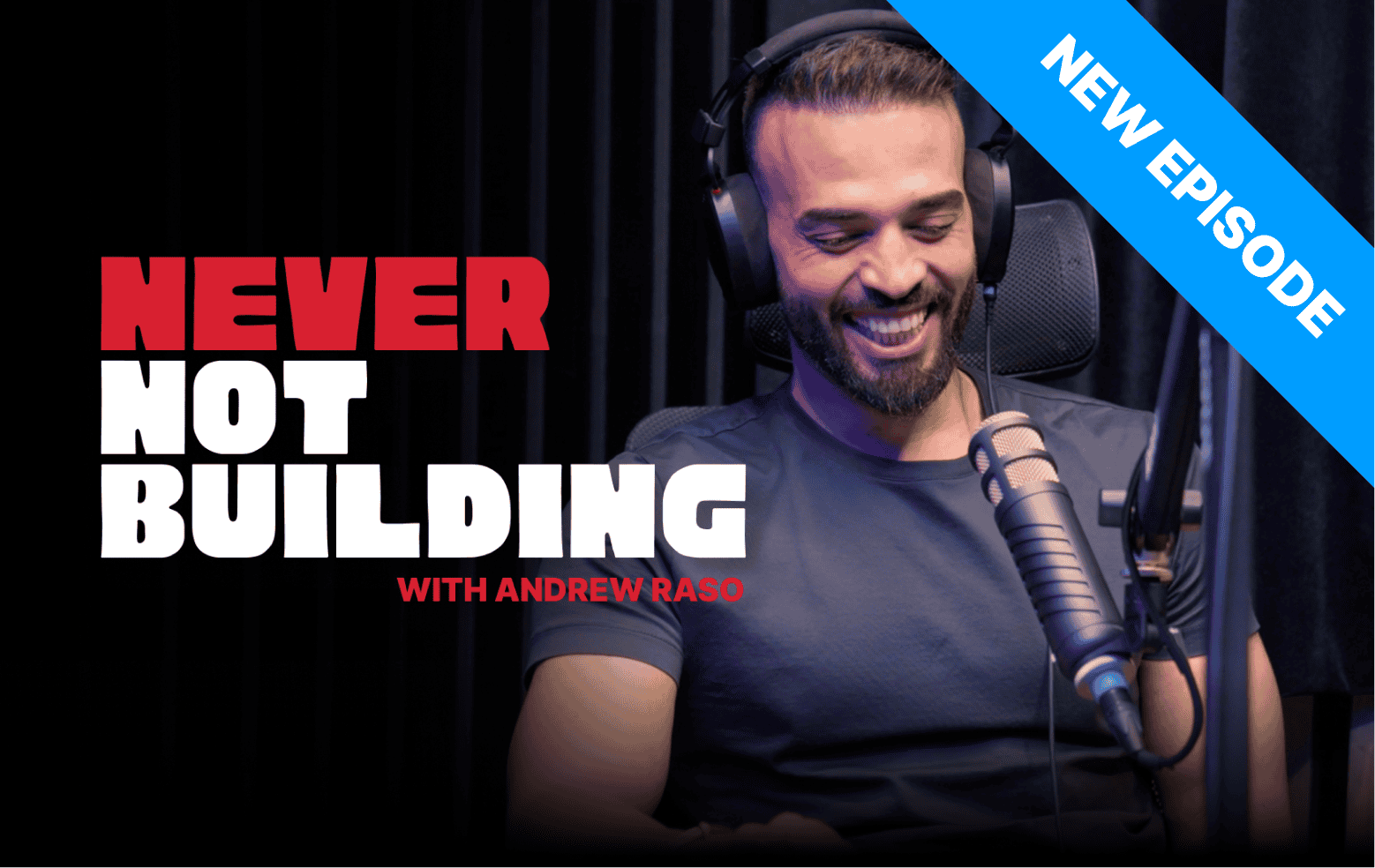
Andrew Raso
Share