






 1300 433 071


- Home
-

- Blog
-
- News & Industry Updates
-
- Advice On Investing In GEO & Other Digital Marketing Updates
Advice On Investing In GEO & Other Digital Marketing Updates
Early January updates are revealing a pattern rather than isolated platform changes. Search visibility is being reassessed at scale, ad platforms are tightening how automation is surfaced and controlled and AI-driven discovery continues to edge closer to measurable commercial impact. None of these digital marketing shifts are dramatic on their own. They point to a quieter recalibration happening across how visibility, trust and performance are evaluated.
This week’s digital marketing updates focus on where that recalibration is already visible, where experimentation is still underway and where businesses should be paying closer attention before changes become harder to unwind.
Key Takeaways
-
Search and platform performance is being recalibrated continuously, and structural resilience is more important than reacting to individual updates.
-
As platforms push AI-driven controls forward, performance depends on how well teams govern automation rather than how quickly they adopt it.
-
GEO-related signals and AI products are already shaping how users find information, even while measurement and consistency remain uneven.
-
Fragmented or volume-led content strategies are increasingly exposed as platforms prioritise coherence, authority and intent.
-
Security, access control and workflow discipline now have direct impact on campaign continuity and performance.
1. Some News Publishers Saw Big Declines with the Google Core Update
Several well-known news publishers recorded sharp declines in Google Search visibility following the December 2025 Core Update. The update has now fully rolled out, with clearer visibility into its impact across large-scale content sites. Early analysis shared within the SEO community highlights sustained ranking losses across multiple high-authority publishers rather than short-term volatility. The changes appear broad rather than page-specific, suggesting systemic reassessment rather than isolated quality issues.
The Gurus’ take
Large publishers often sit at the edge of Google’s ranking tolerance because of scale, automation and legacy content volume. When Google core updates land, these sites become early indicators of how Google is recalibrating trust signals, authority weighting and content usefulness at scale.
What stands out here is not that publishers were hit, but that the declines appear sustained. Visibility is increasingly tied to content governance, not just output. Scale amplifies both strengths and weaknesses in search engine optimisation.
Your action plan
- Audit content quality at scale, not page by page. Look for patterns across templates, syndicated content and older sections rather than isolated URL fixes.
- Review authority signals beyond backlinks. Evaluate author attribution, content ownership clarity and consistency across related topic clusters.
- Treat core updates as structural feedback. Avoid reactive rewrites. Focus on long-term content frameworks that align with how Google evaluates usefulness.
2. Google Ads Adds “Go to” Button for Faster Change History Navigation
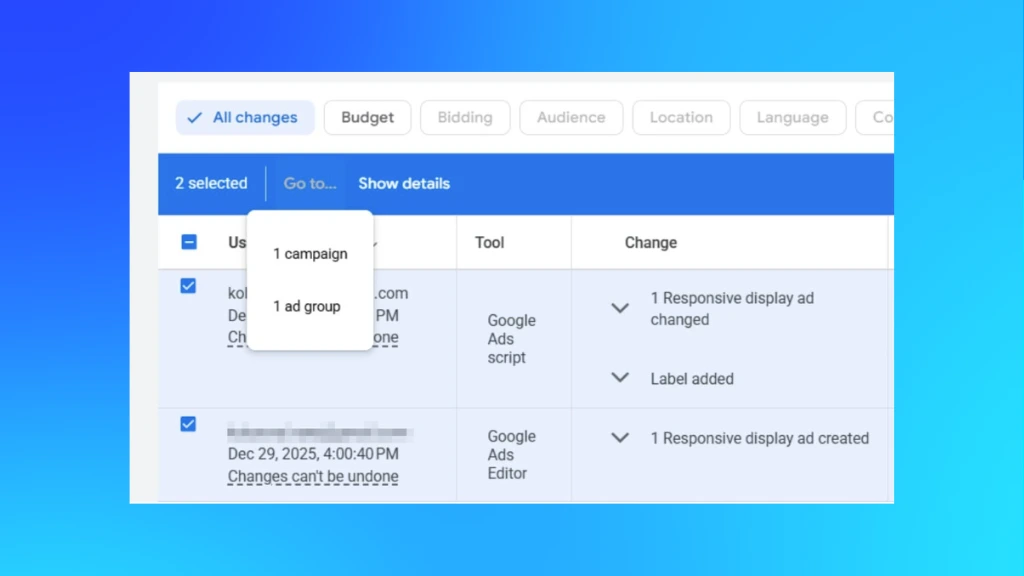
Google Ads has introduced a new “Go to…” button within the Change history report. The update allows advertisers to jump directly from a logged change to the specific campaign, ad group or asset affected. This change improves navigation within accounts, particularly for teams managing frequent edits across large structures.
The Gurus’ take
Change history has always been useful for accountability, but it was slow to action. The new navigation removes friction between diagnosis and resolution. Speed matters for agencies and in-house teams managing complex Google Ads accounts. Faster navigation shortens audit cycles and reduces the likelihood of missed configuration errors during performance investigations.
Your action plan
- Incorporate Change History into routine checks. Use the feature during weekly or fortnightly reviews to trace performance shifts faster.
- Improve accountability across teams. Pair logged changes with documented intent so navigation leads directly to informed decisions.
- Use it to streamline audits. Reduce time spent manually tracking where changes occurred across large accounts.
3. Google Added LLMs.txt to Its Websites for Other Reasons than Discovery
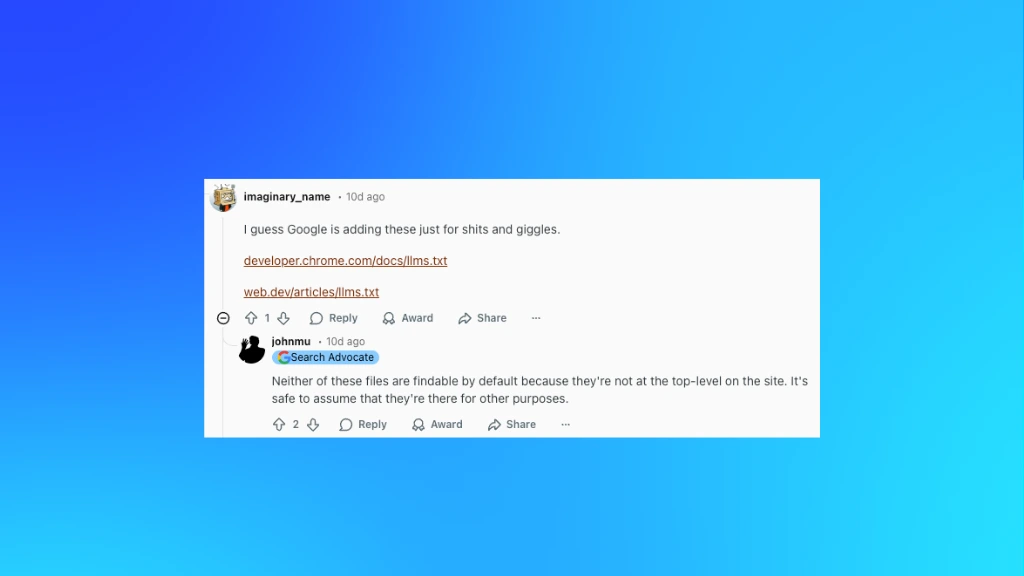
Google has added LLMs.txt files across several developer and documentation sites, although they were briefly removed from Search developer documentation shortly after appearing. The files remain present across other Google-owned properties. As per a Reddit thread, Google has not stated that these files are intended for discovery or ranking purposes.
The Gurus’ take
LLMs.txt sits firmly in the category of signal watching rather than confirmed strategy. The presence of these files indicates internal experimentation rather than a defined ranking mechanism. At this stage, the effect on AI platforms is currently limited due to “official” adoption, therefore its impact on AI agents is more about proactive preparation for a future “agentic web” than immediate, guaranteed results.
Google is actively testing how large language models interact with web content infrastructure. That alone makes LLMs.txt worth monitoring. From a Generative Engine Optimisation perspective, implementation carries minimal risk and low cost. The uncertainty lies in impact, not intent.
Your action plan
- Implement LLMs.txt cautiously. Treat it as a low-risk exploratory step rather than a ranking lever.
- Avoid restructuring content around speculation. Do not fragment or rewrite content solely for assumed AI consumption.
- Track visibility shifts holistically. Measure search, AI-driven referrals and content usage together rather than in isolation.
4. Google: Don’t Turn Your Content into Bite-Sized Chunks
Danny Sullivan confirmed on Google’s Search Off the Record podcast that content should not be broken into bite-sized chunks to rank better in large language models. He stated that this approach does not work for Google Search and is unlikely to be effective long term, even if it appears to work temporarily elsewhere. The recommendation remains to write content for users rather than systems.
The Gurus’ take
This is a timely correction to a growing misconception. As AI surfaces become more visible, content fragmentation has been positioned as a shortcut to inclusion. Google’s stance is clear that usefulness, coherence and depth matter more than format manipulation.
Optimising purely for LLM extraction risks weakening content quality. When ranking systems evolve, fragmented content often loses context and authority. This reinforces the need to write content with clear intent, structure and substance. Working with teams that understand how to write content for users while maintaining search performance remains critical.
Your action plan
- Maintain content integrity. Focus on completeness and clarity rather than artificial segmentation.
- Align content structure with user needs. Use headings and hierarchy to support understanding, not extraction.
- Continue investing in quality content frameworks. Prioritise expertise and depth when you write content through your content marketing strategy.
5. Google’s John Mueller Answers if You Should Invest in GEO
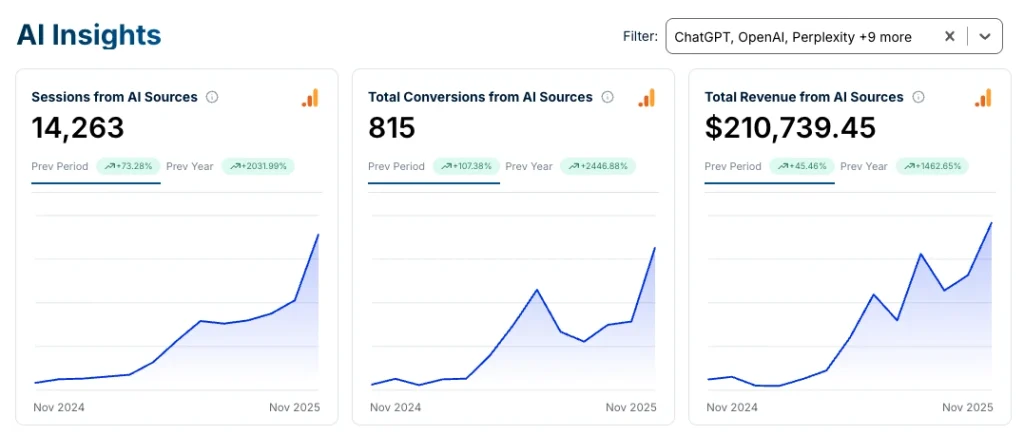
John Mueller addressed whether businesses should prioritise Generative Engine Optimisation alongside SEO. His guidance was to assess the full picture and prioritise based on where traffic and revenue are likely to come from. He noted that businesses reliant on referred traffic should actively evaluate AI-driven discovery as part of their broader strategy.
The Gurus’ take
This is not a directive to abandon SEO. It is recognition that discovery paths are diversifying. AI platforms are becoming referral sources, even if volumes remain inconsistent today.
The key takeaway is prioritisation. GEO is not a universal requirement, but it is increasingly relevant for businesses where informational discovery influences buying decisions. The goal is to understand the potential of AI in contributing to visibility, influence and revenue before scaling investment.
Your action plan
- Assess AI-driven referral impact. Track where AI surfaces already influence traffic or leads.
- Map GEO relevance by industry and funnel stage. Prioritise GEO where discovery precedes conversion.
- Test before scaling. Treat GEO as an evolving channel and validate impact before heavy investment.
6. Meta Ads update Promotions May Now Appear before People Tap on Your Ads
Meta Ads now allows promotions to appear directly within ads before users tap. When a promotion is added, Meta may display it automatically and adjust the call to action to “See offer.” Advertisers can manually control promotions at the ad level or allow Meta to source them automatically.
The Gurus’ take
This update shifts how offers influence click behaviour. By surfacing promotions earlier, Meta Ads reduces friction between incentive and action. However, automation introduces risk when multiple promotions exist across a site.
That’s why relevance matters in Facebook advertising. Showing the wrong offer damages trust and undermines performance. This update reinforces the need for tighter creative governance rather than hands-off automation.
Your action plan
- Manually review promotion selection. Avoid relying on automatic sourcing when multiple offers exist.
- Align promotions with campaign intent. Match offers closely to audience and funnel stage.
- Monitor CTA changes. Track how “See offer” impacts click quality and conversion rates.
7. Millions of Instagram Users Receive ‘Password Reset’ Emails
Millions of Instagram users received password reset emails following reports of a potential data breach. While the breach remains unconfirmed, reports suggest that profile data from millions of accounts may have been scraped in late 2024. Users have been advised to remain alert to suspicious communications.
The Gurus’ take
Account security is an operational issue. Compromised social accounts create risk across advertising access, brand reputation and customer trust. Any business running Instagram ads needs to understand that security lapses can interrupt campaigns and expose ad accounts to unauthorised changes.
Your action plan
- Verify password reset emails carefully. Check sender domains and avoid clicking links from unknown sources.
- Enable two-factor authentication. Apply it across personal profiles and business accounts.
- Review access permissions regularly. Remove inactive users and audit connected tools linked to Instagram ads activity.
8. Google Ads Moves to Motion with Free AI Video Generation in Merchant Center
Google Ads now allows advertisers to generate short AI-driven videos directly within Google Merchant Center at no cost. Static images can be animated, and Google provides an initial prompt automatically upon upload. The feature is designed to accelerate motion creative adoption.
The Gurus’ take
Google is signalling that motion is becoming a default expectation rather than a premium format. Lowering production barriers encourages wider adoption, particularly for eCommerce advertisers.
The risk lies in overuse. AI-generated motion still requires creative oversight to align with brand standards and performance goals.
Your action plan
- Test AI-generated motion selectively. Use it for supplementary creative rather than replacing core assets.
- Review prompts and outputs manually. Maintain brand consistency and message control.
- Align video testing with YouTube marketing objectives. Measure performance beyond click-through rate.
9. Reddit Launches Max Campaigns Beta for AI-Powered Ad Performance and Audience Insights
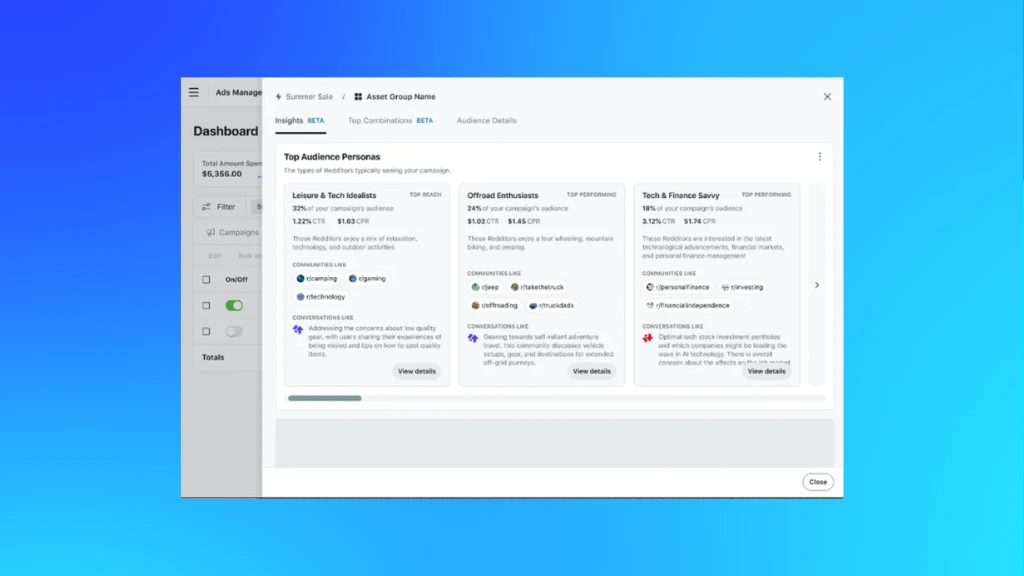
Reddit has introduced Max Campaigns in beta, using AI and community intelligence to automate targeting, creative selection, placements, and budget allocation. Early tests showed lower costs and improved conversions. The beta is rolling out to selected advertisers.
The Gurus’ take
Reddit is positioning itself as a performance platform rather than a niche awareness channel. Automation lowers entry barriers while leveraging Reddit’s community signals.
This opens up new opportunities for advertisers willing to test emerging platforms. However, transparency and control remain key considerations during beta phases of Reddit ads.
Your action plan
- Evaluate Reddit ad relevance by audience fit. Prioritise industries with strong community alignment.
- Approach beta testing with controlled budgets. Treat early performance data as directional.
- Prepare for future service expansion. Monitor platform maturity before committing at scale.
10. ChatGPT Health Launches to Offer Secure Personalised Health Insights and Support
OpenAI has launched ChatGPT Health, a secure experience combining personal health data with AI-driven insights. The feature connects medical records and wellness apps, with strong privacy protections and clinical oversight. Access is currently limited via waitlist in the United States.
The Gurus’ take
This development has implications beyond healthcare delivery. AI-mediated health discovery changes how patients seek information and recommendations. LLMs still has to drastically improve the output in order to comply with the same Your Money, Your Life (YMYL) content standards, so it’s interesting how this space will change.
For healthcare providers, visibility within AI-driven environments will matter. This makes early investment in GEO considerations particularly relevant for health-related industries. Trust and authority are critical to digital marketing strategies in the healthcare space.
Your action plan
- Monitor AI-driven discovery in healthcare. Track how patients engage with AI platforms for information.
- Review content authority signals. Prioritise accuracy, credentials and transparency.
- Plan GEO strategy early. Prepare for AI platforms to influence patient decision-making.
Apply the changes before they compound with Online Marketing Gurus
These updates are easier to respond to early than after performance shifts are locked in. If you are reviewing search volatility, refining paid media workflows or assessing where AI-driven discovery fits alongside SEO, the priority is alignment rather than acceleration. The right response depends on how these changes intersect with your current traffic sources, conversion paths and operational maturity.
Online Marketing Gurus works with businesses to translate platform shifts into practical decisions for digital marketing in Australia. We work across AI SEO, paid media, content and emerging channels like Generative Engine Optimisation. Instead of chasing updates, let’s apply them in ways that support long-term growth.

About the Author
Andrew Raso
Share